Last updated:
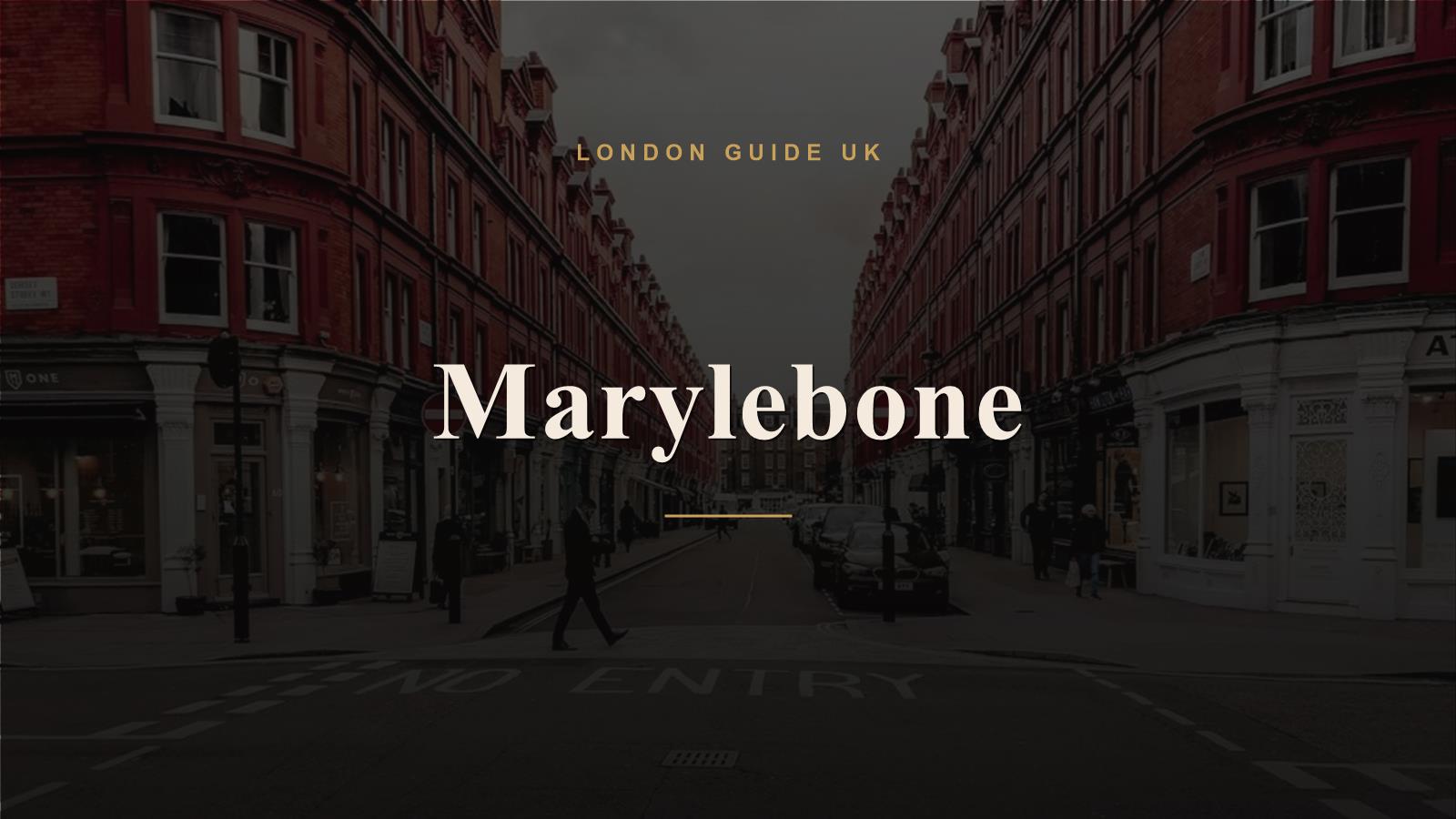
Marylebone is the rare central London district that feels like a village, a Georgian grid of cream terraces wrapped around a high street of independent shops, with a world-class art collection, a beloved bookshop and the southern edge of Regent's Park all within walking distance. This guide is for the discerning visitor who wants culture, considered shopping and calm, without the crush of the West End a few streets south.
Where is Marylebone and how do you reach it
Marylebone sits in central London, north of Oxford Street and west of Fitzrovia, bounded roughly by Regent's Park to the north and Edgware Road to the west. It is exceptionally well connected: Baker Street station serves five Underground lines, while Bond Street, Marble Arch, Regent's Park and Great Portland Street stations ring the area.
- Baker Street: Jubilee, Metropolitan, Bakerloo, Circle and Hammersmith and City lines
- Bond Street: Central, Jubilee and the Elizabeth line, useful for fast cross-London journeys
- Marylebone mainline station: trains towards the Chilterns and Oxford, handy for day trips
- Regent's Park and Great Portland Street: quietest approaches from the east
The district is compact and flat, so walking is the natural way to explore. Most visitors arrive at Baker Street or Bond Street and find the rest of Marylebone unfolds on foot within fifteen minutes.
The Wallace Collection
The Wallace Collection is a national museum housed in Hertford House, a grand townhouse on Manchester Square, displaying an extraordinary array of paintings, French furniture, porcelain and arms and armour assembled by the Marquesses of Hertford and Sir Richard Wallace. Admission is free, and the collection is famous for Frans Hals's The Laughing Cavalier.
It is one of London's finest small museums and a defining reason to visit the neighbourhood. The galleries retain the feel of a private home, with old master paintings hung salon-style and a glazed courtyard at the centre. Highlights worth seeking out include:
- Eighteenth-century French painting, including works by Watteau, Boucher and Fragonard
- Dutch and Flemish masters such as Rembrandt, Hals and Rubens
- One of the finest collections of European and Oriental arms and armour in the country
- Sevres porcelain, gilt furniture and a renowned holding of decorative arts
For more cultural anchors across the capital, the London museums hub sets the Wallace alongside the city's larger institutions.
Marylebone High Street and the village
Marylebone High Street is the heart of the district, a curving thoroughfare of independent boutiques, design shops, delicatessens and cafes that has kept its village character despite its central location. It runs roughly north to south through the neighbourhood and is anchored by a well-loved independent bookshop and a weekly food market on the surrounding streets.
The high street is where Marylebone earns its reputation as a calmer, more curated alternative to the chain-dominated streets nearby. Expect a deliberate mix of fashion, homeware, stationery and food, with side streets such as Marylebone Lane and Chiltern Street adding their own character.
- Daunt Books on Marylebone High Street, an Edwardian shop famed for its galleried travel section bathed in light from a long skylight
- Marylebone Lane, a narrow lane lined with small specialist shops and old-fashioned storefronts
- Chiltern Street, known for its red-brick architecture and concentration of menswear and design boutiques
- The Sunday farmers' market held off the high street, one of central London's better produce markets
For deeper exploration of independent retail across the capital, browse the London shopping guide and the markets hub.
Regent's Park and the wider area
Regent's Park forms Marylebone's northern boundary, a vast royal park designed in part by John Nash and ringed by his stuccoed terraces. Within it you will find Queen Mary's Gardens and its celebrated rose beds, an open-air theatre in summer, boating lake and, at the northern edge, London Zoo.
The park offers a green counterpoint to the high street and is one of the great pleasures of staying in the area. From the park's high ground at Primrose Hill, just beyond the northern boundary, you get one of London's finest skyline views. Closer in, Marylebone borders several other notable streets and landmarks.
- Baker Street, forever associated with Sherlock Holmes, whose fictional address sits at 221B
- Harley Street and Wimpole Street, long the home of private medical practice in London
- Marylebone Road, a busy artery linking the district to King's Cross and Paddington
- The southern reach towards Oxford Street, putting flagship shopping minutes away
Green space and grand architecture make this corner ideal for unhurried walking. The wider things to do in London hub gathers more ideas for filling a day in this part of town.
How to plan a day in Marylebone
A satisfying Marylebone day pairs culture with strolling: begin at the Wallace Collection when it opens, move on to Marylebone High Street and Daunt Books for browsing and lunch, then walk north into Regent's Park in the afternoon. The whole circuit is walkable and rarely feels rushed, which is the district's particular charm.
- Morning: the Wallace Collection at Manchester Square, before the galleries fill
- Midday: Marylebone High Street, Marylebone Lane and Chiltern Street for shops and a bite
- Afternoon: Regent's Park, Queen Mary's Gardens and, time allowing, London Zoo
- Optional: a stroll up to Primrose Hill for the view, or south to Oxford Street
For structured routes through the area and beyond, see the London itineraries hub.
Where to stay near Marylebone
Marylebone is a discreet, well-heeled place to stay, prized for its quiet streets, village feel and easy reach of the West End and Regent's Park. The area offers a mix of refined townhouse properties and larger hotels, particularly around the high street, Portman Square and the streets near Baker Street, making it a calm base for a culture-led visit.
Because it sits between Oxford Street, Mayfair and the park, Marylebone suits visitors who want central convenience without late-night noise. Browse the London hotels hub for guidance on choosing where to stay, and the restaurants hub for dining ideas across the city.
Marylebone FAQ
Is the Wallace Collection free to visit
Yes. The Wallace Collection is a free national museum at Hertford House on Manchester Square, displaying paintings, furniture, porcelain and armour. As a major institution it does not charge for general admission, though special exhibitions or events may differ. Always check the museum's official site before visiting for current opening details.
What is Marylebone best known for
Marylebone is best known for its village-like high street of independent shops, the Wallace Collection, Daunt Books, and its position beside Regent's Park. It is also associated with Baker Street and Sherlock Holmes, and with Harley Street's medical practices. The combination gives it a refined, cultured character distinct from the busier West End.
Which Underground station is best for Marylebone
Baker Street is the most useful Underground station, served by five lines including the Jubilee and Bakerloo. For the high street and the Wallace Collection, Bond Street, served by the Central, Jubilee and Elizabeth lines, is also convenient. Regent's Park and Great Portland Street offer quieter approaches from the eastern side.
Is Marylebone walkable to Oxford Street
Yes, very. Marylebone sits directly north of Oxford Street, so the southern end of the district is only a few minutes' walk from the flagship stores. This proximity is one of the area's draws, letting visitors combine quiet, curated streets with major shopping in a single, easy stroll.
How much time should I spend in Marylebone
Allow at least half a day to do Marylebone justice, and a full day if you include Regent's Park. A typical visit covers the Wallace Collection, the high street and Daunt Books in a morning, leaving the afternoon for the park, the zoo or a walk up to nearby Primrose Hill.
Where to go next
Continue exploring with the London neighbourhoods hub, or compare Marylebone with two contrasting districts: the historic streets of the City of London and the riverside warehouses of Bermondsey.
Cafes