Last updated:
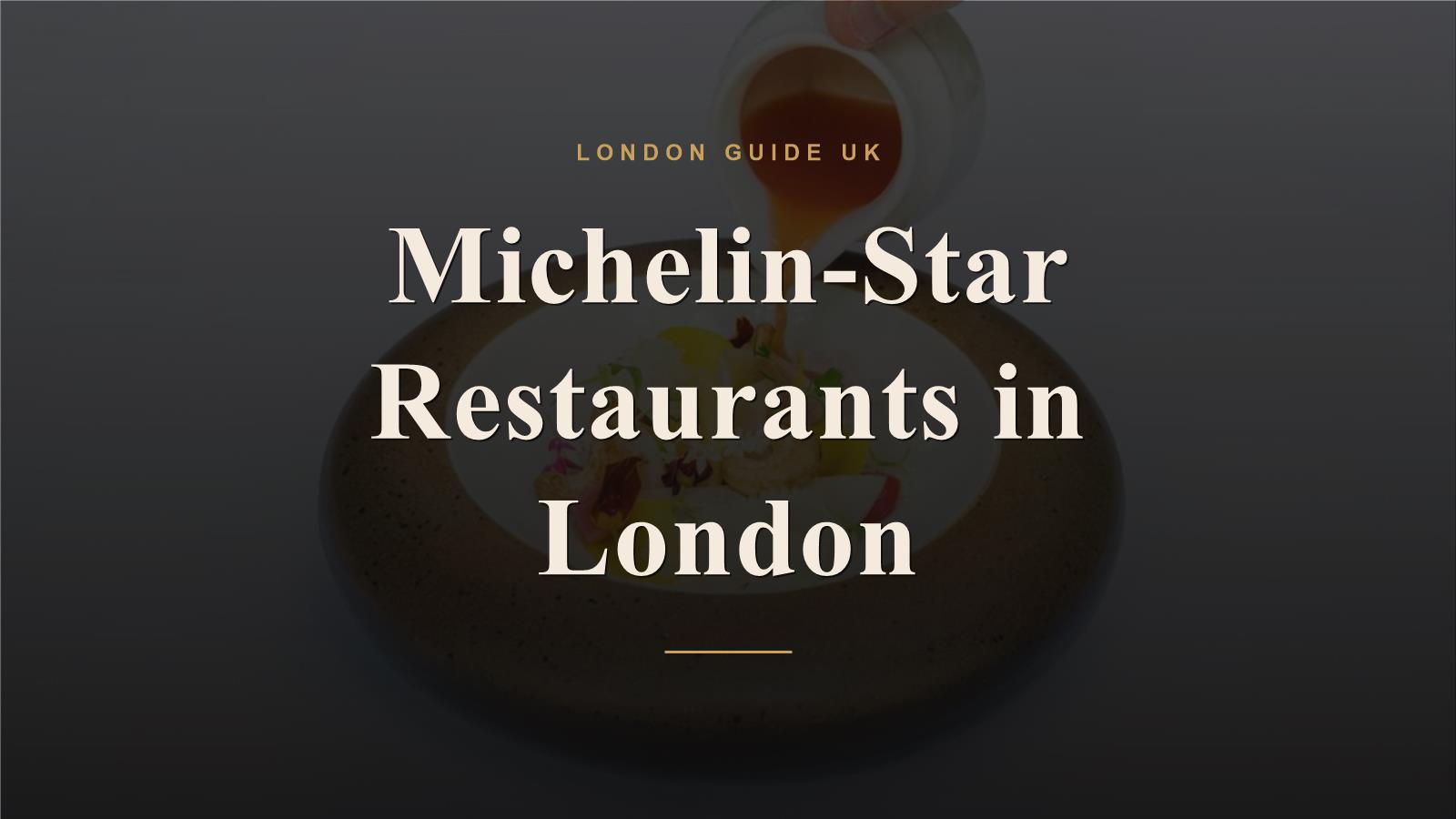
London carries more Michelin stars than any other city in the United Kingdom, and for the discerning visitor that abundance is both a gift and a puzzle. This guide maps the capital's starred dining by tier, cuisine, chef and area, so you can plan a meal that fits your trip rather than chase a list. It is written for travellers who want the city's culinary high points handled with clarity and honesty, including the plain fact that the guide is revised every year.
What a Michelin star actually means
A Michelin star is a mark of cooking quality awarded by anonymous inspectors who judge ingredient quality, technique, harmony of flavours, the chef's personality on the plate and consistency across visits. One star signals a very good restaurant in its category, two means cooking worth a detour, and three means cooking worth a special journey. Crucially, stars reward the food, not the decor or service.
- One star: a very good restaurant in its class, well worth a stop.
- Two stars: excellent cooking that justifies going out of your way.
- Three stars: exceptional cuisine that justifies a dedicated trip.
- The separate Bib Gourmand recognises good value rather than star-level cooking.
London's three-star tier
The capital's three-star addresses are very few and represent the pinnacle of fine cooking in Britain. These are destination restaurants where tasting menus run long, tables are booked far ahead, and the kitchen's reputation rests on years of consistency. For most visitors this tier is a once-in-a-trip occasion rather than a casual booking, so plan early and treat the meal as the centrepiece of a day.
The longest-standing name in this group is Restaurant Gordon Ramsay in Chelsea, a refined French kitchen on Royal Hospital Road that has held the top rating for many years. Three-star status in London has historically been a small and shifting club, which is exactly why it rewards checking the current edition before you commit. If you want this level, reserve the moment your dates are fixed.
Two-star kitchens worth a detour
London's two-star restaurants offer ambitious, highly technical cooking across a range of cuisines, and they are arguably the sweet spot for a serious food visitor. You get kitchens of genuine distinction without the rarity and lead time of the three-star handful. Expect tasting menus, a strong sense of a chef's signature style, and dining rooms designed for a long, considered meal rather than a quick bite.
- Sketch (Lecture Room and Library) in Mayfair, known for elaborate French cooking inside a celebrated Conduit Street townhouse.
- A. Wong near Victoria, widely admired for refined regional Chinese cuisine.
- Ikoyi in St James's, praised for inventive cooking built around spice and West African influences.
- The Clove Club in Shoreditch, a modern British kitchen set in the old Shoreditch Town Hall.
This tier shifts more than the top one, with restaurants rising and occasionally slipping between editions, so treat any two-star list as a snapshot. The pleasure here is variety: you can choose by cuisine and neighbourhood rather than simply by prestige.
One-star choices by cuisine and area
One star is where London's breadth really shows, with dozens of kitchens spanning French, Indian, Japanese, Italian, Chinese and modern British cooking. For visitors this tier is the most practical, since it offers genuine excellence at a slightly more approachable scale and is easier to slot into a sightseeing itinerary. Choosing by cuisine and location is the most efficient way to navigate it.
- For Indian cooking, Gymkhana and Benares in Mayfair are long-admired names.
- For Japanese, look toward Umu in Mayfair and The Araki in Mayfair for sushi.
- For modern British, Pollen Street Social off Regent Street is a reliable Mayfair fixture.
- For French, Le Gavroche's legacy district and the wider Mayfair and St James's area remain the heartland of classic technique.
Mayfair and St James's hold a strikingly high concentration of starred kitchens, which makes them efficient bases for a food-led day. If you want to broaden beyond the starred list, our wider guide to fine dining in London sets these places in context alongside other high-end rooms.
Where the stars cluster
Most of London's Michelin-starred restaurants sit in a compact band of central and west London, with Mayfair, St James's, Chelsea, Knightsbridge and Marylebone holding the densest concentration. East London, particularly Shoreditch, adds a more contemporary cluster. This geography matters for planning, because it lets you pair a starred meal with nearby galleries, parks and shopping rather than crossing the city.
- Mayfair and St James's are served by Green Park and Bond Street stations, close to the Royal Academy and the parks.
- Chelsea and Knightsbridge sit near Sloane Square and Knightsbridge stations, handy for the museums of South Kensington.
- Shoreditch is reached via Liverpool Street and Old Street, in the heart of the City fringe.
For broader context on these districts, see our neighbourhoods guide, which is useful for building a day around a single area.
How to book and what to expect
Securing a table at a starred London restaurant rewards early planning, since the most sought-after rooms release bookings weeks or months ahead and fill quickly, especially at weekends. Lunch is often easier to get and frequently better value than dinner, many kitchens serve a fixed tasting menu, and smart-casual dress is widely expected. Confirm any dietary needs when you reserve rather than on arrival.
- Book as soon as your dates are fixed, and consider weekday lunch for availability.
- Check whether the kitchen offers a set tasting menu or a la carte before you go.
- Flag allergies and dietary requirements at the point of booking.
- Allow two to three hours for a tasting menu and avoid scheduling anything tight afterwards.
Why the guide changes every year
Michelin reassesses restaurants annually, so stars are gained, retained and occasionally lost with each new edition, and chefs move between kitchens as well. This is the honest caveat behind any starred list: it is accurate at a moment in time, not forever. Before booking, always verify a restaurant's current standing against the latest official guide rather than relying on an older recommendation.
If a particular star matters to you, treat this page as a starting map and confirm the present rating directly. The underlying quality of a respected kitchen rarely vanishes overnight even when a star shifts, so a former or current starred restaurant is still likely to deliver a memorable meal.
Michelin-Star Restaurants in London FAQ
How many Michelin stars does London have?
London holds more Michelin stars than any other city in the United Kingdom, spread across dozens of restaurants at one, two and three-star levels. The exact total changes with each annual edition as stars are awarded and removed, so check the latest official guide for the current count before planning around a specific number.
Which area has the most starred restaurants?
Mayfair and the neighbouring St James's hold the densest concentration of Michelin-starred restaurants in London, with further clusters in Chelsea, Knightsbridge, Marylebone and Shoreditch. This compact geography makes central and west London the most efficient bases for a food-led visit, since several kitchens sit within walking distance of each other.
Is lunch cheaper than dinner at starred restaurants?
At many London starred restaurants, lunch offers a shorter or fixed menu at better value than dinner, and tables are often easier to secure. It is a sensible choice for visitors who want the experience without the longest evening tasting menu, leaving the afternoon free for sightseeing nearby.
How far ahead should I book?
For the most in-demand kitchens, book as soon as your travel dates are confirmed, ideally several weeks ahead and longer for three-star rooms. Weekend dinner slots disappear fastest, so weekday lunch is often the most realistic option for visitors with limited flexibility in their schedule.
Do starred restaurants have a dress code?
Most London starred restaurants expect smart-casual dress, and a few of the more formal dining rooms prefer a jacket. Trainers and very casual wear can feel out of place at the higher tiers. If in doubt, check the restaurant's own guidance when you confirm your booking to avoid any awkwardness on arrival.
Where to go next
Continue planning your dining with our restaurants hub, then explore the wider field through our fine dining in London guide and our pick of the best restaurants in London. For the chefs behind many of these kitchens, see our guide to celebrity chef restaurants in London.