Last updated:
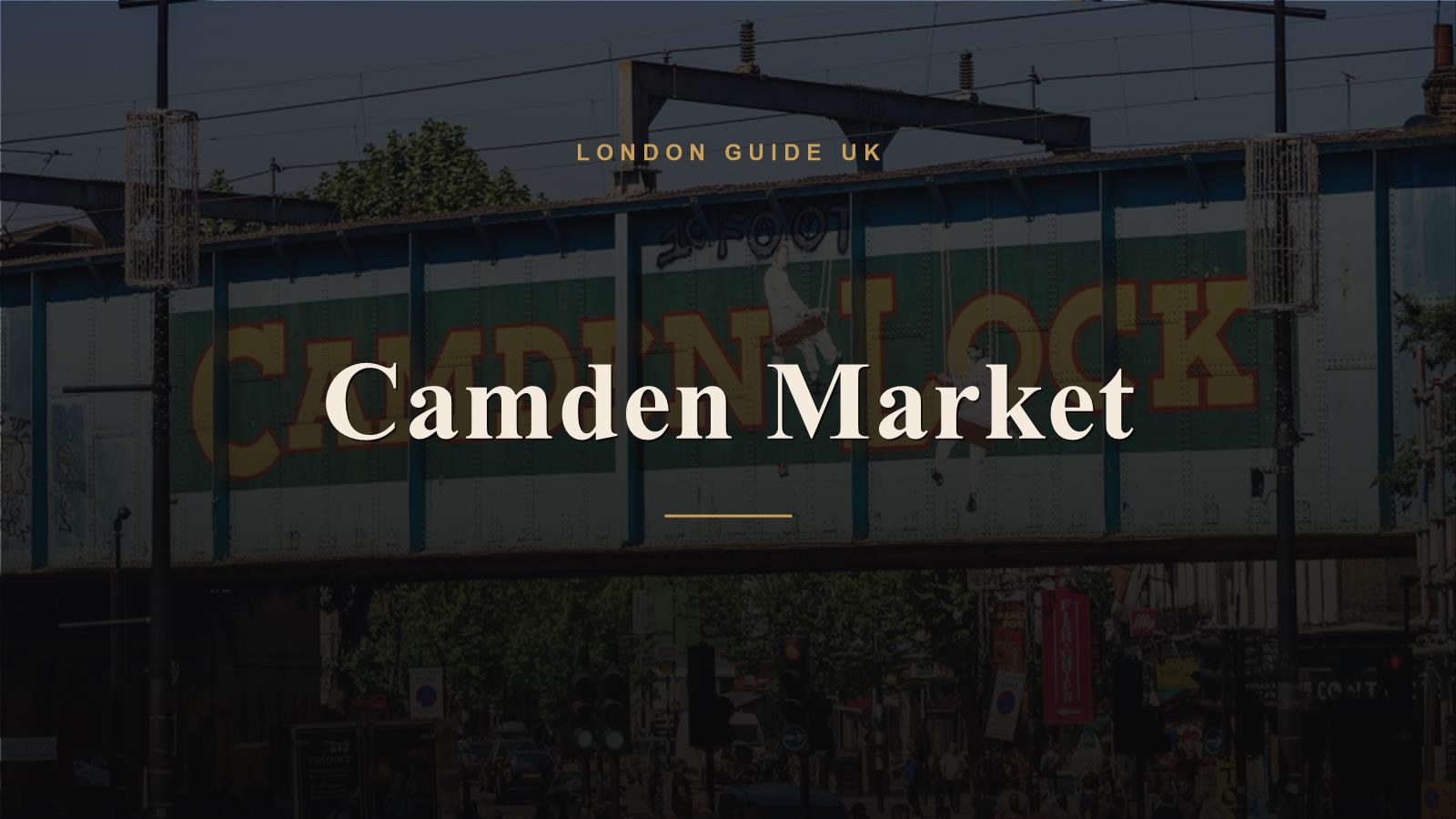
Sprawling north from the canal at Camden Lock, Camden Market is less a single market than a warren of interconnected markets, yards and tunnels selling vintage clothing, global street food, jewellery, vinyl and design pieces. It is London's most famous alternative shopping district, and it rewards visitors who arrive with a plan, comfortable shoes and a sense of curiosity rather than a fixed shopping list.
What Camden Market actually is
Camden Market is a cluster of distinct trading areas around Camden Town, not one building. The best known are Camden Lock Market and the Stables Market, set in former Victorian horse hospital buildings beside the Regent's Canal, alongside the street-level shops of Camden High Street and the Buck Street Market.
Each section has its own character, and the boundaries blur as you walk. Knowing the main areas helps you navigate what can feel chaotic on a first visit:
- Camden Lock Market by the canal, the original 1970s market and the heart of the crafts and food trade.
- Stables Market, the largest section, built into the old horse hospital and stables, strong on vintage, antiques and design.
- Camden High Street, lined with the famous oversized shop signs, boots, dragons and aircraft bolted to the facades.
- Buck Street Market, a redeveloped container market near the Tube station.
The best things to buy
Camden is at its strongest for vintage and second-hand clothing, independent jewellery, leather goods, vinyl records and one-off design and craft pieces. It is a place for the unexpected find rather than the household-name brand, so the most rewarding approach is to browse widely, compare stalls and haggle politely on higher-value items.
- Vintage and retro clothing, from denim and band T-shirts to genuine period pieces.
- Independent and handmade jewellery, much of it from designers who sell nowhere else.
- Vinyl, posters, prints and pop-culture memorabilia.
- Leather jackets and bags, a long-standing Camden speciality.
- Homeware, ceramics and small design objects from emerging makers.
Quality varies, as it does at any market of this scale. Inspect stitching and materials before you commit, carry some cash for smaller stalls, and treat the asking price on antiques and vintage as the opening of a conversation.
The street food, explained
Camden's food market is one of the largest and most international in London, with dozens of stalls clustered around the canal and in the West Yard serving cuisines from across the world. It is built for grazing rather than a sit-down meal, so the usual tactic is to walk a full loop first, then return to whatever drew the longest, most enthusiastic queue.
Expect everything from East Asian dumplings and noodles to Ethiopian platters, Venezuelan arepas, halloumi wraps and elaborate desserts. Many traders offer free samples, seating is limited and informal, and the canal-side steps are the traditional spot to perch with a box of food and watch the boats pass through the lock.
When to go
Camden Market is open every day, but it is busiest at weekends, when crowds can be dense and slow-moving through the narrower passages. For a calmer, more browsable visit, come on a weekday morning, when stalls are setting up and traders have time to talk. A bright dry day also makes the canal-side areas far more pleasant.
- Weekday mornings for space, conversation and easier photography.
- Weekends for the fullest range of stalls and the liveliest atmosphere, if you do not mind the crowds.
- Late afternoon if your priority is food and the canal-side mood rather than serious shopping.
Opening hours vary by trader and season, so always check before a special trip. If you want a quieter, more refined market experience to compare, the covered halls of Old Spitalfields Market offer a very different mood in the east of the city.
Getting there and getting around
The market sits a short walk from Camden Town station on the Northern line, with Chalk Farm station closer to the Stables Market end. On busy weekend afternoons Camden Town station sometimes operates as exit-only or one-way to manage crowds, so allow extra time and consider walking to Chalk Farm or Mornington Crescent for your return journey.
The whole area is best explored on foot, and one of the most enjoyable routes is along the Regent's Canal towpath, which links Camden with Little Venice in one direction and King's Cross in the other. Wear sturdy shoes, keep valuables secure in the crowds, and accept that getting slightly lost among the yards is part of the experience.
How Camden compares to other London markets
Camden is the city's alternative and vintage market, where other London markets each have their own speciality. If Camden is about youth culture, music and one-off finds, the others are defined by antiques, food or curated craft, and a discerning visitor often pairs two or three across a trip rather than treating any one as definitive.
- Portobello Road Market in Notting Hill, the classic destination for antiques and bric-a-brac.
- Borough Market near London Bridge, the city's foremost food and produce market.
- Brick Lane Market in the East End, strong on vintage, street art and Sunday trading.
Camden Market FAQ
Is Camden Market free to enter?
Yes, entry to Camden Market is free, and you can wander all the open trading areas without paying. You only spend when you choose to buy from a stall or shop. It is an open public market rather than a ticketed attraction, so you can browse for as long as you like.
How long should I spend at Camden Market?
Allow at least two to three hours to walk the main areas, browse properly and eat. Dedicated vintage shoppers and food enthusiasts can easily fill half a day, especially if they add a canal walk. If time is short, focus on Camden Lock and the Stables for the most concentrated experience.
Is Camden Market suitable for families?
Camden Market welcomes families, and children tend to enjoy the giant shop signs, the canal boats and the variety of street food. Be aware that weekend crowds are dense and the passages are narrow, so keep young children close, and consider a weekday or earlier visit if you are bringing a pushchair.
Can you haggle at Camden Market?
Polite haggling is accepted on many stalls, particularly for vintage, antiques and higher-value items where there is room in the price. Be friendly, buy more than one piece if you can, and pay in cash to strengthen your position. Fixed-price independent shops and food stalls are not generally open to negotiation.
What is the nearest Tube station to Camden Market?
Camden Town on the Northern line is the nearest station to the main market, a few minutes' walk away. Chalk Farm, also on the Northern line, is closer to the Stables Market. On busy weekends, Camden Town can become exit-only, so plan an alternative station for your return trip.
Where to go next
Continue planning with our wider guide to London's markets, or compare Camden with the antiques stalls of Portobello Road Market and the food halls of Borough Market to build a market-hopping day that suits you.