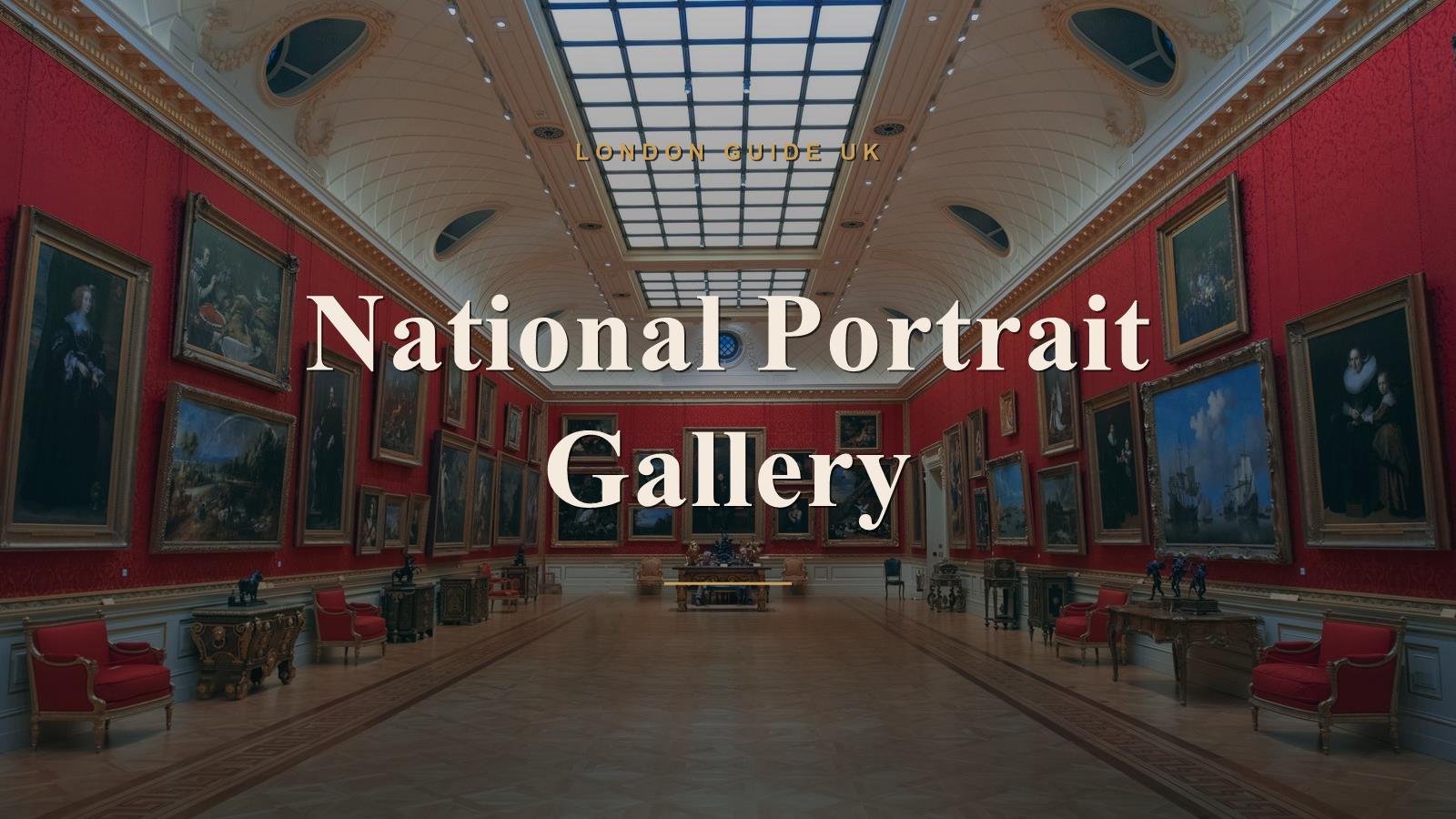
The National Portrait Gallery stands just off Trafalgar Square, around the corner from its larger neighbour the National Gallery, and it tells the story of Britain through the faces of the people who shaped it. From Tudor monarchs to contemporary scientists, writers and sporting figures, the collection is a roll call of national life rendered in paint, photography, sculpture and drawing. Entry to the permanent collection is free, which makes it one of the most rewarding stops for any visitor with an hour or an afternoon to spare in the West End.
Why visit National Portrait Gallery
The National Portrait Gallery is the place to see Britain's history through the people who made it, with free entry to a collection spanning Tudor royalty to living public figures. It is compact enough to enjoy in a single visit, central enough to fold into any sightseeing day, and consistently one of London's most engaging galleries.
Where other institutions organise around movements or periods of art, this gallery organises around lives. The result is a museum that reads like a national biography, where the famous likenesses you half remember from textbooks suddenly stand before you at full scale. A major redevelopment reopened the building with refreshed galleries, a reimagined visitor route and a striking new entrance, sharpening its appeal for first-time visitors and returning Londoners alike. For anyone interested in British culture, politics, science or the arts, few collections offer a more direct human connection.
What to see
The collection is best approached chronologically, beginning on the upper floors with the Tudors and working down through the centuries to the present day. Among the highlights worth seeking out:
- The Tudor galleries, home to celebrated likenesses of Henry VIII, Elizabeth I and their court, including some of the most recognisable royal images in the world.
- The only known contemporary portrait of William Shakespeare painted in his lifetime, the so-called Chandos portrait, a founding work of the collection.
- Romantic and Victorian rooms featuring figures such as the Bronte sisters, captured in a famous group portrait by their brother Branwell.
- Twentieth-century and contemporary galleries with portraits of monarchs, prime ministers, musicians, writers and scientists, many by leading modern artists and photographers.
- The annual portrait and photographic prize exhibitions, which bring fresh contemporary work into the building each year.
- The rooftop restaurant and upper-floor windows, which offer memorable views across the Westminster skyline.
Special exhibitions, which usually carry a separate admission charge, run alongside the free permanent displays, so it is worth checking what is on before you go.
How to visit
The gallery sits on St Martin's Place, immediately north of Trafalgar Square in the heart of central London. The nearest Underground stations are Leicester Square (Northern and Piccadilly lines) and Charing Cross (Northern and Bakerloo lines), both a short walk away, while Embankment and Piccadilly Circus are also within easy reach. Charing Cross mainline station is moments away for those arriving by train.
Entry to the permanent collection is free, though some special exhibitions are ticketed. Opening hours, late-opening evenings and current exhibition tickets can change, so check the official National Portrait Gallery website before you set out. The building is busiest at weekends and during school holidays, and a weekday morning tends to offer the calmest experience.
What's nearby
Few corners of London pack in as much within a few minutes' walk. The National Gallery shares the same square and offers a vast free collection of European painting, making the two an easy pairing. Trafalgar Square itself, with Nelson's Column and its fountains, is on the doorstep, while Covent Garden and its piazza lie a short stroll to the north east. St Martin-in-the-Fields church sits beside the square, and the theatres of the West End, the bookshops of Charing Cross Road and the green expanse of St James's Park are all close at hand. Explore more in our guide to the area's central London neighbourhoods.
National Portrait Gallery FAQ
Is the National Portrait Gallery free?
Yes, entry to the permanent collection is free, as it is at many of London's national museums and galleries. Some temporary and special exhibitions carry a separate admission charge, and booking ahead for those is often advisable. Check the official website for current exhibition details and any timed-entry arrangements before your visit.
How long should I spend there?
Most visitors find one to two hours comfortable for the highlights of the permanent collection, while enthusiasts can easily linger longer. The gallery is compact compared with some London institutions, which makes it well suited to a focused visit or an addition to a wider day of sightseeing around Trafalgar Square and the West End.
What is the nearest Underground station?
Leicester Square and Charing Cross are the closest Underground stations, both within a few minutes' walk. Charing Cross is served by the Northern and Bakerloo lines, while Leicester Square sits on the Northern and Piccadilly lines. Embankment and Piccadilly Circus are also nearby, giving you several convenient routes across the network.
What is the gallery best known for?
It is best known for telling Britain's story through portraits of the people who shaped it, rather than through art movements. Famous works include Tudor royal likenesses and the lifetime portrait of Shakespeare, alongside contemporary portraiture and acclaimed photographic prizes that keep the collection feeling current and connected to national life.
Plan your visit
Pair the National Portrait Gallery with more of the capital's cultural riches in our guide to London's museums and galleries, fold it into a wider day among the city's top attractions, or browse our suggested London itineraries to build a visit around Trafalgar Square and the West End.