The Royal Botanic Gardens, Kew is one of the most important botanical institutions in the world and a UNESCO World Heritage Site set across more than 300 acres in south-west London. Spread along the south bank of the River Thames in the borough of Richmond, Kew Gardens combines historic Victorian glasshouses, vast living collections and ornamental landscapes with serious scientific work. For the visitor it offers a rare thing in a capital city: space, calm and a genuine sense of the natural world, all within easy reach of central London.
Why visit Kew Gardens
Kew Gardens is worth visiting because it is the largest and most diverse botanical collection on earth, blending world-class glasshouses, sweeping landscapes and over 250 years of horticultural history into a single, walkable estate. Beyond the headline attractions, Kew rewards the unhurried. The scale means you can spend a full day moving between tropical rainforest, arid desert houses, formal gardens and quiet woodland without retracing your steps. It is at once a major London attraction and a living research centre, which gives the place a depth that ordinary parks cannot match. Each season brings a different character, from spring bulbs and blossom to autumn colour and winter structure, so repeat visits never feel the same.
What to see at Kew
Kew is large, so it helps to set your priorities before you arrive. These are the landmarks and collections most visitors will want to see:
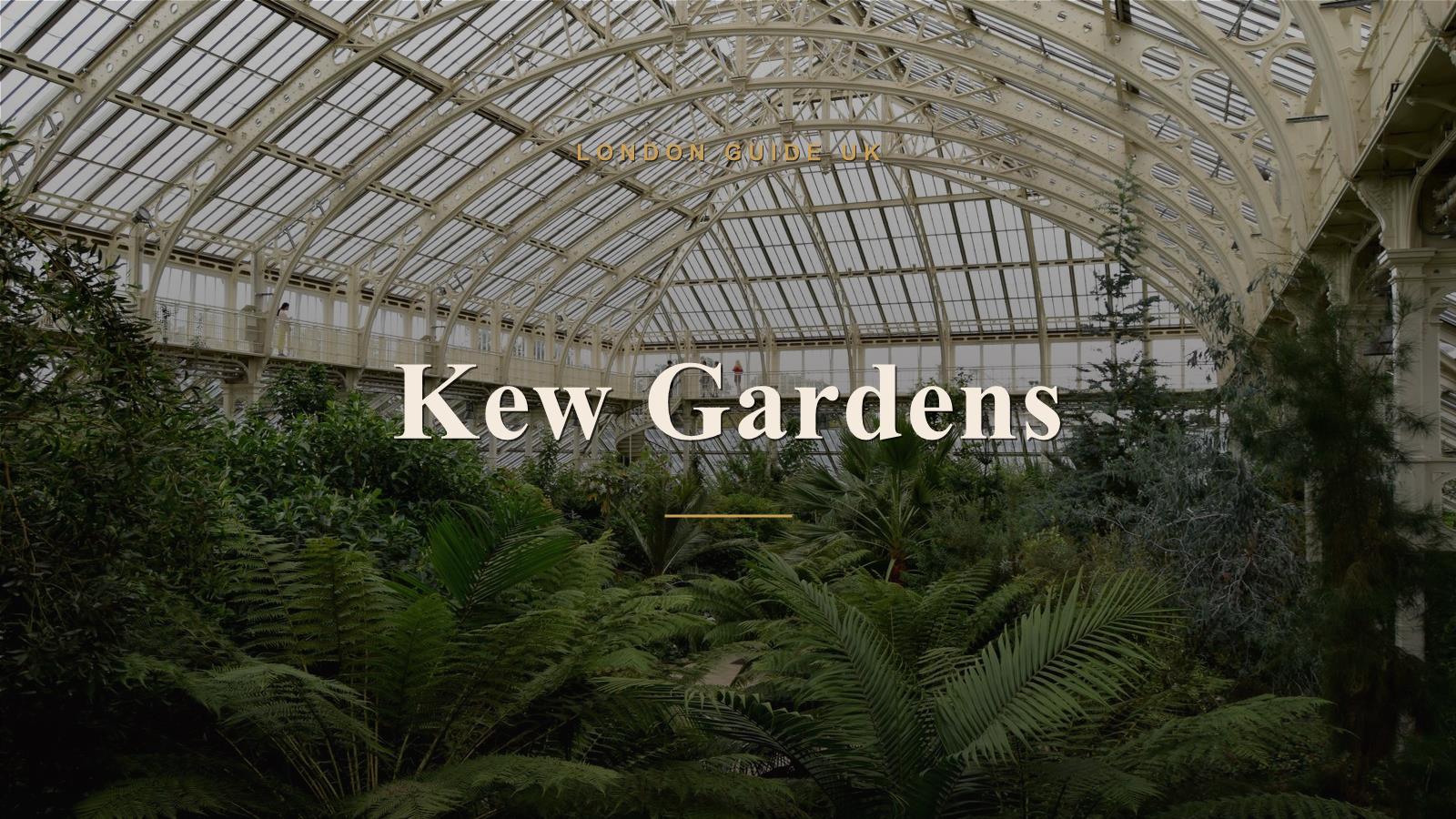
- The Palm House, the iconic Victorian glasshouse of curved iron and glass, sheltering a steamy tropical rainforest you can walk through and view from a high walkway.
- The Temperate House, the largest surviving Victorian glasshouse in the world, home to plants from temperate regions across the globe.
- The Princess of Wales Conservatory, where ten climate zones under one roof range from desert cacti to orchids and carnivorous plants.
- The Treetop Walkway, a raised walk that lifts you into the canopy for a different perspective on the gardens.
- The Great Pagoda, an eighteenth-century ten-storey tower offering views out across the estate.
- Kew Palace, the smallest of the royal palaces, with strong links to King George III and the Georgian court.
- The Arboretum and Woodland Garden, with thousands of trees, plus the Japanese Gateway and the tranquil lake.
How to visit and getting there
Kew Gardens sits in Richmond, south-west London, beside the Thames. The most convenient arrival point is Kew Gardens station, served by the District line on the London Underground and by the London Overground, a short walk from the Victoria Gate entrance. Kew Bridge National Rail station is also within walking distance, and river boats run to Kew from central London in the warmer months. Because the site is so large, comfortable shoes and a map are sensible, and you should allow at least half a day, ideally a full one. Ticketing and entry are managed by the gardens, so check the official Royal Botanic Gardens, Kew website for current admission prices, opening hours and any seasonal events before you travel, and consider booking in advance at busy times. For more on planning a wider day in the area, see our guide to the best London attractions.
What's nearby
The surrounding area rewards a longer stay. The village of Kew has handsome streets and riverside pubs, while a stroll or short bus ride leads to Richmond, with its riverside walks, independent shops and the vast Richmond Park, famous for its free-roaming deer. Across the river lies Syon Park and its house, and a little further along the Thames you reach the elegant town of Twickenham. For visitors building a longer itinerary out of the centre, Kew pairs naturally with other western Thames-side stops on a wider London day trip.
Kew Gardens FAQ
How much time should I allow for Kew Gardens?
Allow at least half a day, and a full day if you want to see the major glasshouses, the Treetop Walkway, the Great Pagoda and the wider arboretum without rushing. The site is genuinely vast, so plan a route in advance, pace yourself and build in time to rest and eat between the main attractions.
Which Underground station is nearest to Kew Gardens?
Kew Gardens station is the closest, served by the District line and the London Overground, and it is a short walk from the Victoria Gate entrance. Kew Bridge National Rail station is also within walking distance, and seasonal river boats run to Kew from central London piers along the Thames.
Is Kew Gardens suitable for families?
Yes. Kew is well set up for families, with wide paths suitable for buggies, open lawns, a children's garden and the Treetop Walkway, which younger visitors tend to enjoy. There is plenty of space to run and explore, and the variety of glasshouses keeps the experience engaging across different ages and weather conditions.
Do I need to book Kew Gardens tickets in advance?
Booking ahead is advisable, especially at weekends, during school holidays and for popular seasonal events, when entry can be busy. Admission, prices and opening times are set by the gardens, so always check the official Royal Botanic Gardens, Kew website for current information and to secure your tickets before you visit.
Plan your visit
Kew Gardens makes an ideal centrepiece for a day spent away from the centre of the city. Pair it with other green spaces and sights on our roundup of London attractions, fit it into a relaxed London day trip beyond zone one, or work it into a longer plan using our suggested London itineraries.