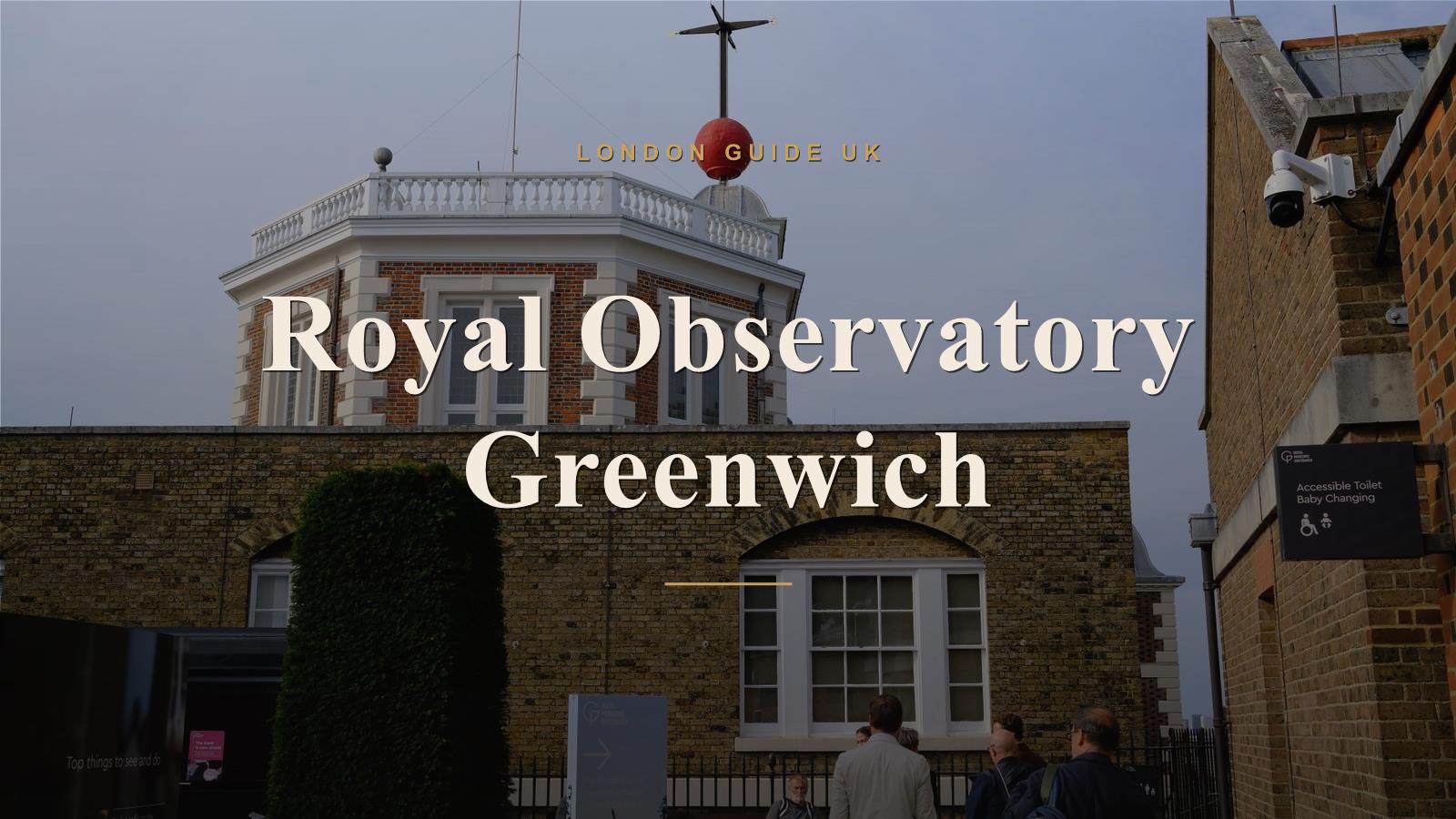
The Royal Observatory Greenwich stands on a hill in Greenwich Park, in south east London, looking out across the Thames towards Canary Wharf and the City. Founded in 1675 by King Charles II, it is the historic home of British astronomy and timekeeping, and the place where the world agreed to measure both longitude and time. For the visitor it offers a rare combination of scientific heritage, sweeping views and the simple thrill of standing astride the Prime Meridian, the imaginary line that divides the eastern and western hemispheres.
Why visit Royal Observatory Greenwich
Visit the Royal Observatory because it is the birthplace of Greenwich Mean Time and the home of the Prime Meridian of the world, where you can stand with one foot in each hemisphere. It also houses a planetarium, historic telescopes and the instruments that helped solve the great navigational problem of measuring longitude at sea.
Few attractions condense so much world history into one site. The Observatory is where time itself was standardised: from 1884, the meridian running through Greenwich became the reference point from which every other time zone is calculated. The story told here is not abstract, but a very human tale of astronomers, clockmakers and sailors trying to chart the oceans safely. Set within the wider Maritime Greenwich UNESCO World Heritage Site, it rewards anyone curious about science, exploration or the way Britain shaped the modern map.
What to see at the Royal Observatory
The site combines historic rooms, working astronomy and one of the finest views in London. Highlights include:
- The Prime Meridian Line, marked in the courtyard, where visitors traditionally pose straddling the eastern and western hemispheres.
- The Shepherd Gate Clock at the entrance, displaying Greenwich Mean Time for all to see.
- The Time Ball on top of Flamsteed House, which has dropped daily since 1833 to signal the time to ships on the Thames.
- Flamsteed House, the original observatory building designed by Sir Christopher Wren, including the elegant Octagon Room.
- The collection of historic timekeepers, among them John Harrison's celebrated marine chronometers that cracked the longitude problem.
- The Great Equatorial Telescope, the largest of its kind in the United Kingdom, housed beneath its distinctive onion dome.
- The Peter Harrison Planetarium, London's only planetarium, offering immersive shows beneath a digital sky.
- The panoramic terrace view over Greenwich, the Thames and the towers of Canary Wharf.
Getting there
The Royal Observatory sits at the top of the hill in Greenwich Park, a short uphill walk from the riverside heart of Greenwich. The nearest stations are Cutty Sark on the Docklands Light Railway and Greenwich, served by the DLR and National Rail. Maze Hill and Blackheath stations are also within walking distance for those approaching from the east. A scenic alternative is the Thames Clipper river bus from central London to Greenwich Pier, followed by a stroll up through the park.
Note that the climb up to the Observatory is steep, so allow time and wear comfortable shoes. Some areas are free to enter, while the historic galleries, the Meridian Line courtyard and planetarium shows are ticketed. Tickets, planetarium show times and current opening hours change seasonally, so check the official Royal Museums Greenwich website before you travel to confirm prices and availability. Browsing our wider London attractions guide can help you build the visit into a fuller day.
What's nearby
Greenwich is one of London's most rewarding districts to explore on foot, and the Observatory is only the start. At the foot of the park lies the National Maritime Museum, the largest of its kind in the world, alongside the graceful Queen's House with its free art collection. Down by the river, the restored tea clipper Cutty Sark sits in dry dock, while the bustling Greenwich Market offers crafts, antiques and street food under its Victorian roof. The grand Old Royal Naval College, with its spectacular Painted Hall, completes the maritime ensemble. To plan a broader itinerary, see our guides to London museums and characterful neighbourhoods.
Royal Observatory Greenwich FAQ
What is the Royal Observatory Greenwich famous for?
It is famous as the home of the Prime Meridian, longitude zero, and the origin of Greenwich Mean Time. Founded in 1675, it was Britain's centre of practical astronomy, where astronomers mapped the stars to help sailors navigate. Today visitors come to straddle the meridian line and explore its scientific heritage.
Can you stand on the Prime Meridian line?
Yes. The Prime Meridian is marked in the Observatory's courtyard, and standing with one foot either side of it, placing yourself in both the eastern and western hemispheres at once, is the site's signature photograph. Access to the meridian courtyard is part of the ticketed visitor experience, so check the official website.
How do I get to the Royal Observatory?
Take the DLR to Cutty Sark or travel by DLR or National Rail to Greenwich, then walk up through Greenwich Park to the top of the hill. A Thames Clipper river bus to Greenwich Pier is a scenic alternative. Be prepared for a steep uphill climb to reach the Observatory itself.
Is there a planetarium at the Royal Observatory?
Yes. The Peter Harrison Planetarium is London's only planetarium, presenting immersive shows about the night sky, the solar system and the wider universe beneath its digital dome. Show times and tickets vary, so consult the official Royal Museums Greenwich website to plan around the schedule before your visit.
Plan your visit
The Royal Observatory pairs naturally with a full day in Greenwich. Browse more of London's landmark attractions, plan around the city's world-class museums, and find ideas for an unhurried day out among our London itineraries.