Last updated:
January is London at its most honest: the festive crowds have thinned, the lights are coming down, and the city settles into a clear, cold rhythm that rewards the visitor who plans well. For discerning travellers it is quietly one of the best months to come. Galleries empty out, restaurant tables open up, hotel rates soften, and the great institutions feel almost private. This guide covers what to do, what to wear, and how to make deep winter work in your favour.
Why visit London in January
London in January is cold, often grey and frequently quiet, which is precisely its appeal for cultural travellers. The post-Christmas lull means thinner crowds at major attractions, easier restaurant bookings and lower hotel rates, all set against the city's winter sales. It is the month to prioritise indoor culture, long lunches and unhurried museum mornings.
The trade-off is daylight and weather. Days are short, with the sun low and the light gone by late afternoon, and rain is more common than snow. None of that need spoil a trip if you build your days around indoor anchors and treat the cold, bright spells as a bonus rather than the plan. The reward is a London that locals recognise: working, calm and free of summer's congestion.
The January sales and winter shopping
The January sales are London's biggest annual discounting period, running from late December through much of the month across department stores, designer boutiques and the major shopping streets. The best reductions appear early, but stock thins quickly, so serious shoppers arrive in the first days and shop on weekday mornings to avoid the crush.
For luxury and flagship shopping, head to the West End and Knightsbridge. The grandest stores sit within a short walk of one another, and the experience is as much about the buildings as the bargains.
- Harrods and Harvey Nichols in Knightsbridge for designer fashion and food halls.
- Selfridges, Liberty and the boutiques of Bond Street and Regent Street for flagship fashion.
- Fortnum & Mason on Piccadilly for British provisions and gifts.
- Burlington Arcade and the smaller Mayfair arcades for jewellery, leather and old-world specialists.
See our wider London shopping guide for neighbourhood breakdowns, and the markets guide if you prefer browsing to bagging discounts.
Museums and galleries at their quietest
January is the ideal month for London's museums, because the school holidays end early and the tourist crowds have not yet returned. Permanent collections at the national museums are free to enter, galleries feel spacious, and major paid exhibitions are far easier to see without the long queues of warmer months. Mornings midweek are quietest of all.
Use the cold to your advantage and spend whole days indoors among world-class collections.
- The British Museum in Bloomsbury for antiquities under its great glass-roofed court.
- The National Gallery on Trafalgar Square for European masterpieces.
- Tate Modern on Bankside and Tate Britain in Pimlico for modern and British art.
- The Victoria and Albert Museum and the Natural History Museum in South Kensington, an easy pairing on one rainy day.
- The Wallace Collection near Manchester Square, a serene townhouse gallery that rewards a slower visit.
Browse the full London museums guide to plan exhibitions and combinations, and the attractions guide for landmarks worth braving the cold.
Ice skating and the last of winter
Ice skating is January's signature outdoor pleasure, with several seasonal rinks set against some of London's finest architecture. The most atmospheric occupy the courtyards and grounds of historic buildings, and many run into the second half of the month before dismantling for spring. Booking a timed slot in advance is essential, as sessions sell out quickly.
The settings are the point. Skating below a floodlit facade is a memory that summer simply cannot offer.
- Somerset House on the Strand, the classic rink in a grand neoclassical courtyard.
- The Natural History Museum rink in South Kensington, beneath the museum's Romanesque towers.
- Hampton Court Palace by the Tudor gatehouse, a short train ride south-west of the centre.
- The Tower of London rink within the moat, framed by the medieval walls.
Beyond skating, January is a fine time for bracing walks in the royal parks, with Hyde Park, St James's Park and Richmond Park all stark and beautiful under winter skies.
Theatre, music and indoor culture
January is a strong month for London's performing arts, with the West End in full swing, the opera and ballet seasons running, and the major concert halls programming through the winter. Because demand dips after the holidays, tickets are often easier to secure and better value than at peak times, making it a smart month to see something ambitious.
For an evening out of the cold, consider the Royal Opera House in Covent Garden, the Southbank Centre and Royal Festival Hall on the river, the Barbican in the City, or a long-running West End production around Shaftesbury Avenue. Many of these sit close to dinner options, so a single neighbourhood can fill an entire evening.
For where to eat between cultural outings, see the London restaurants guide, and the things to do guide for more cold-weather ideas.
Weather, daylight and what to pack
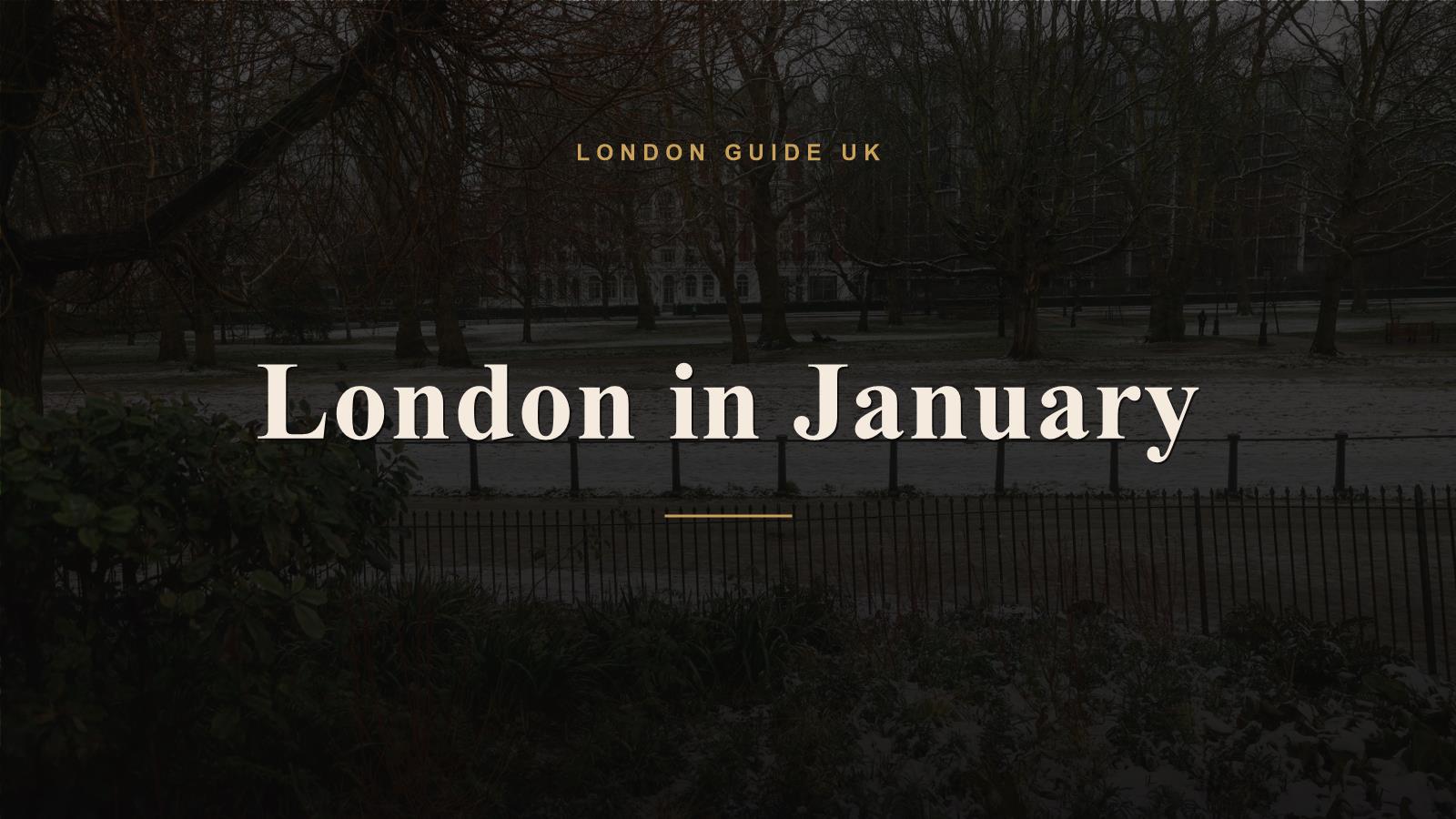
January is London's coldest month, typically grey and damp with temperatures hovering a little above freezing and only short hours of daylight. Snow is rare and rarely settles; persistent drizzle and cold winds are the real conditions to plan for. Dress in warm layers, pack a genuinely waterproof coat, and wear shoes that handle wet pavements.
A few practical habits make the short days work harder.
- Start early to use the limited daylight for outdoor sights and walks.
- Book a warm, indoor anchor for the late afternoon as the light fades.
- Carry a compact umbrella and gloves; the wind off the river bites.
- Use the Underground liberally to stay dry between neighbourhoods, with contactless payment for the easiest fares.
For deeper logistics, transport and money advice, see our practical guide to London.
London in January FAQ
Is January a good time to visit London?
Yes, particularly for culture-focused travellers. January brings thinner crowds, easier restaurant and theatre bookings, softer hotel rates and the winter sales. The trade-off is cold, grey weather and short daylight, so it suits visitors happy to centre their days on museums, galleries and indoor pleasures rather than outdoor sightseeing.
When do the January sales start in London?
The major sales typically begin in the days after Christmas and continue through much of January across department stores and shopping streets. The deepest reductions and best stock come early, so committed shoppers visit in the first week and aim for weekday mornings to avoid the busiest crowds.
Is it cold in London in January?
January is usually London's coldest month, typically damp and grey with temperatures a little above freezing. Snow is uncommon and seldom settles, but cold winds and persistent drizzle are likely. Warm layers, a waterproof coat and sturdy shoes will keep a winter trip comfortable across long days outdoors.
Can you still go ice skating in London in January?
Yes, several seasonal rinks run into January, often at landmark settings such as Somerset House, the Natural History Museum and the Tower of London. Many close in the second half of the month, so check dates and book a timed slot in advance, as popular sessions sell out well ahead.
What is there to do in London in the cold and rain?
Plenty. London's free national museums, paid exhibitions, theatres, concert halls and historic department stores are all indoor and at their least crowded in January. Build days around two or three indoor anchors, link them by Underground, and keep outdoor walks short and well timed around the daylight.
Where to go next
Keep planning your winter and spring trip with these guides:
- Browse the full seasonal guide to London for month-by-month planning.
- Look ahead to London in February as the days slowly lengthen.
- Plan further forward with London in March and the first signs of spring.