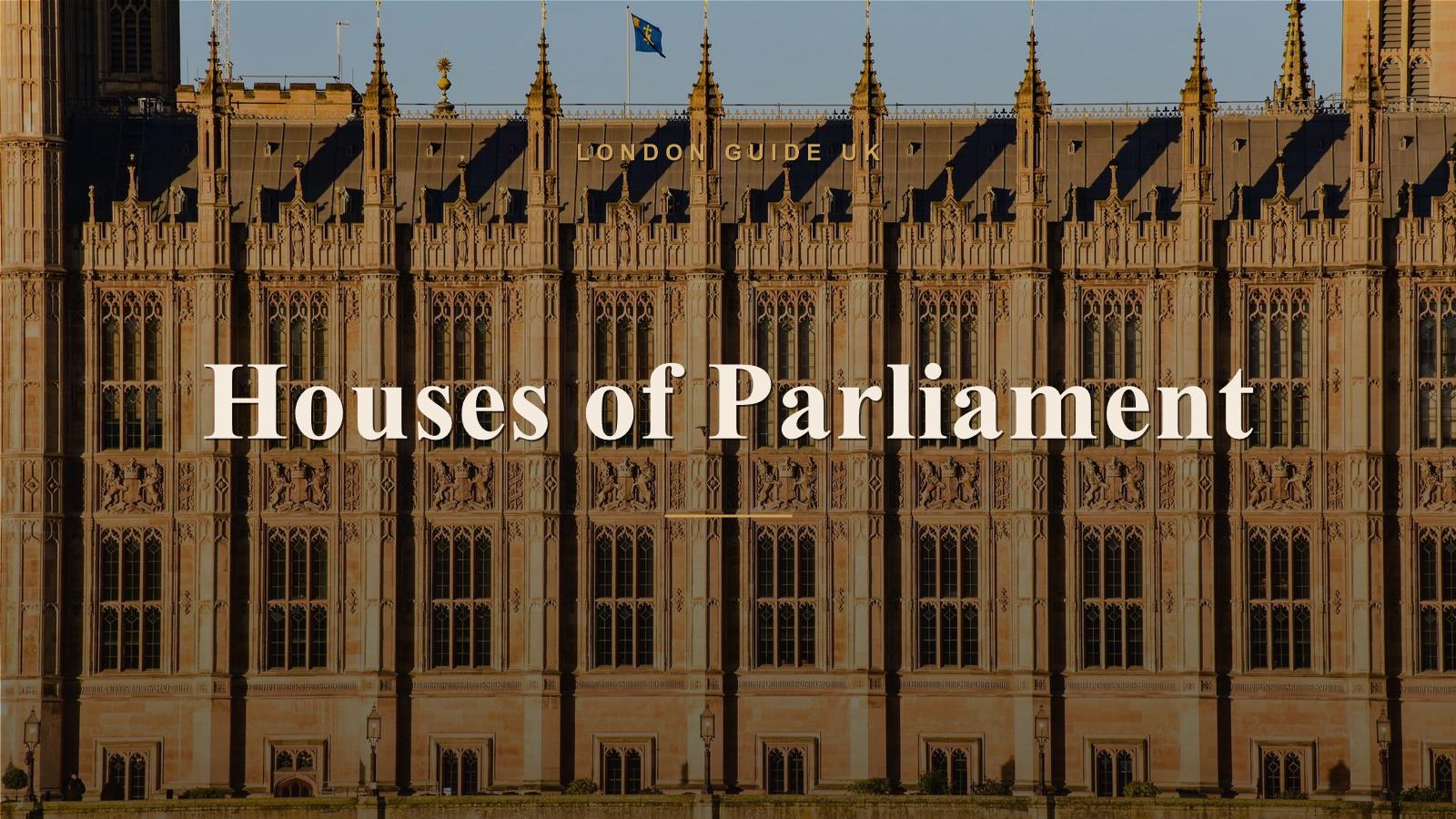
The Houses of Parliament, formally the Palace of Westminster, stand on the north bank of the River Thames in the heart of Westminster, a short walk from Westminster Bridge and Parliament Square. This is the working seat of British democracy, home to the House of Commons and the House of Lords, and one of the most recognisable buildings in the world thanks to the clock tower that holds Big Ben. For the visitor, it offers a rare chance to step inside a living institution that has shaped governance for centuries, set within a masterpiece of Victorian Gothic architecture.
Why visit Houses of Parliament
The Houses of Parliament let you see the actual chambers where British laws are made, walk through some of the finest Gothic Revival interiors in the country, and stand beneath the iconic tower that holds Big Ben. It is history, politics and architecture in a single landmark beside the Thames. Few buildings combine national significance and visual drama so completely. The current palace was rebuilt by Charles Barry and Augustus Pugin after a fire destroyed much of the medieval complex in 1834, yet it incorporates surviving older fabric, most notably the immense Westminster Hall. To visit is to read the layers of British history written into stone, timber and gilded detail, while watching a parliamentary democracy still very much at work.
What to see at the Houses of Parliament
The palace is vast, and the most rewarding visits focus on a handful of remarkable spaces and features. Look out for the following highlights.
- Westminster Hall, the oldest part of the palace, dating to the late eleventh century, crowned by a magnificent hammer-beam oak roof and steeped in centuries of trials, ceremonies and lyings-in-state.
- The House of Commons chamber, with its famous green benches, the dispatch boxes and the Speaker's Chair, where debates and questions to the government take place.
- The House of Lords chamber, far more ornate in red and gold, dominated by the gilded throne used by the monarch at the State Opening of Parliament.
- The Central Lobby, an elaborately decorated octagonal meeting point between the two chambers, rich with mosaics and statuary.
- The Elizabeth Tower, which houses the Great Bell known as Big Ben, instantly recognisable above the riverside skyline.
- The Robing Room and the Royal Gallery, lined with grand paintings and used during royal ceremonial occasions.
- The intricate craftsmanship of Pugin's interiors throughout, from wallpapers and tiles to woodwork and metalwork.
How to visit
The Houses of Parliament sit on Parliament Square in Westminster, beside the Thames. The nearest Underground station is Westminster, served by the Jubilee, District and Circle lines and just steps from the entrance. St James's Park on the District and Circle lines is also within easy walking distance, and the area is well connected by numerous bus routes. Westminster Bridge and the South Bank lie directly across the river.
Visitors can take a guided or self-guided tour of the palace, and UK residents may also be able to arrange access through their Member of Parliament. It is possible to watch debates and committee proceedings from the public galleries when Parliament is sitting. Security screening applies to all visitors on arrival, so allow extra time and travel light. Tour availability varies with the parliamentary calendar, and some areas may be closed during sittings or ceremonial events. For current ticket options, tour types, opening times and booking, check the official UK Parliament website before you travel, as these change with the political year.
What's nearby
The Houses of Parliament sit at the centre of one of London's richest clusters of landmarks. Directly opposite stands Westminster Abbey, the coronation church of English and British monarchs. A short walk away are the Churchill War Rooms and the green expanse of St James's Park, leading on towards Buckingham Palace. Whitehall stretches north towards Trafalgar Square, passing Downing Street and the Cenotaph along the way. Cross Westminster Bridge to reach the South Bank and the London Eye for sweeping views back across the river to the palace itself. Many of these sights can be linked into a single day of sightseeing on foot.
Houses of Parliament FAQ
Can you go inside the Houses of Parliament?
Yes. The public can visit through guided and self-guided tours, and you can watch debates from the galleries when Parliament is sitting. UK residents may also arrange visits via their Member of Parliament. Tour availability changes with the parliamentary calendar, so check the official UK Parliament website for current options and booking.
Is Big Ben part of the Houses of Parliament?
Yes. Big Ben is the nickname of the Great Bell housed in the Elizabeth Tower, which forms part of the Palace of Westminster. The name is now commonly used for the tower and clock as a whole. The tower rises at the northern end of the palace and is one of London's most photographed landmarks.
What is the difference between the Houses of Parliament and the Palace of Westminster?
They are the same building. The Palace of Westminster is the formal name for the structure, while Houses of Parliament refers to its role as the meeting place of the House of Commons and the House of Lords. Both terms are used interchangeably for this riverside landmark in Westminster.
What is the nearest Underground station?
Westminster station is the closest, served by the Jubilee, District and Circle lines, with the palace just steps from the exit. St James's Park station on the District and Circle lines is also within walking distance. Numerous bus routes serve the area, and the South Bank lies a short walk across Westminster Bridge.
Plan your visit
The Houses of Parliament are one of the essentials on any London itinerary. Browse more of the city's landmarks and sights on our guide to London attractions, and find ideas for filling the surrounding day in our roundup of things to do in London. For more historic interiors and collections nearby, explore our pick of London museums, then consult our practical London guide to plan travel, timing and getting around with ease.