Last updated:
Few buildings hold a thousand years of English history within a single set of walls, but the Tower of London does exactly that. Royal palace, fortress, prison, mint, menagerie and treasury in turn, it now guards the Crown Jewels and remains one of the capital's most visited sights. This guide is for the discerning visitor who wants the substance behind the spectacle, plus the practical knowledge to see it well and avoid the worst of the crowds.
Why the Tower of London matters
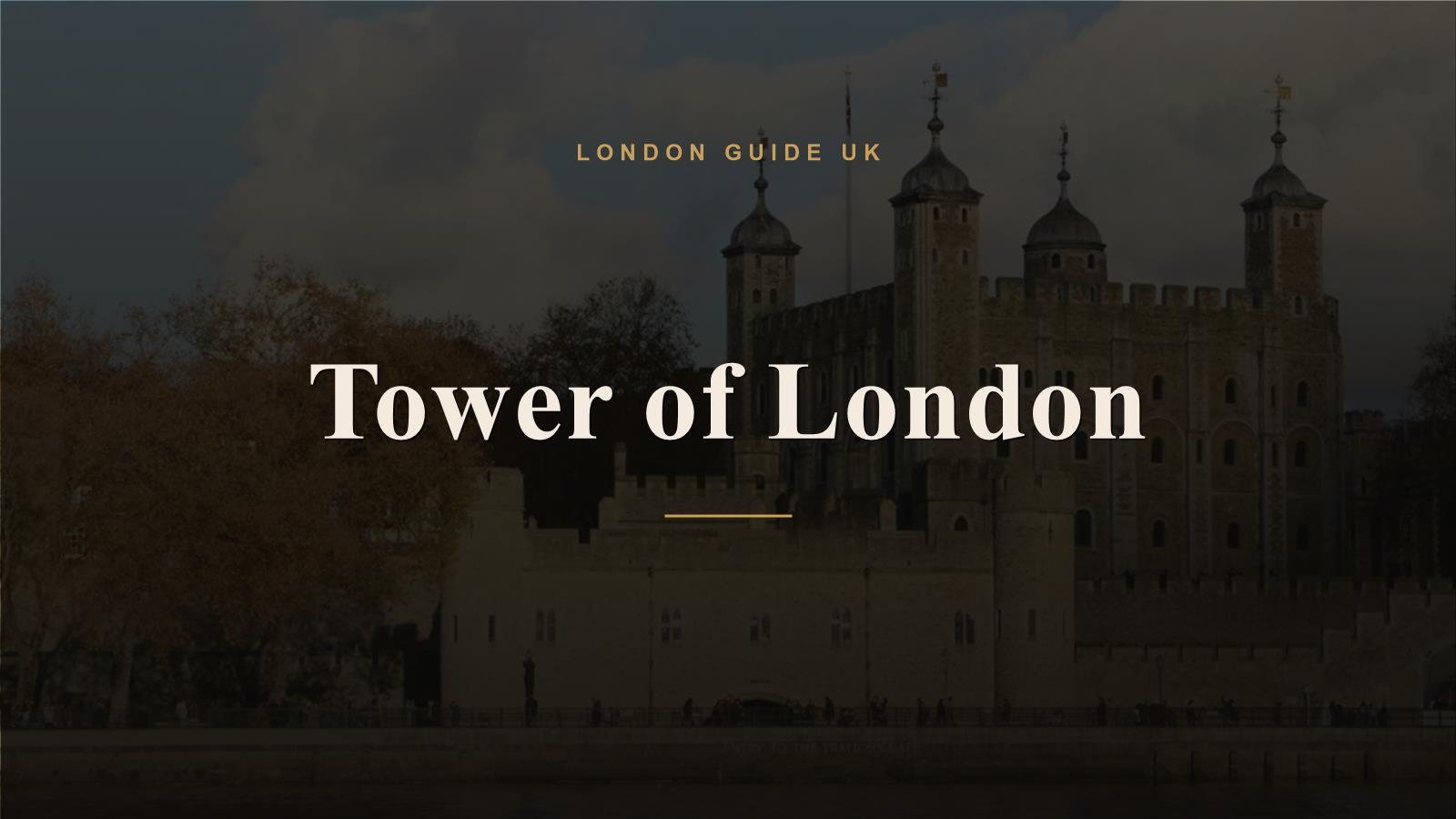
The Tower of London is a historic castle on the north bank of the River Thames, founded by William the Conqueror after 1066. Across nearly a millennium it has served as fortress, royal residence, state prison and home of the Crown Jewels, making it one of the most layered and significant monuments in Britain. Its stone tells the national story.
The oldest and most imposing part is the White Tower, the great Norman keep that gives the whole complex its name. Successive monarchs added walls, towers, gates and a moat, producing the concentric fortress you walk through today. Within these defences kings were crowned in waiting, queens were imprisoned, and prisoners scratched their names into the stone, much of which survives.
The Crown Jewels
The Crown Jewels are the working regalia of the British monarchy, kept under armed guard in the Jewel House at the Tower. The collection includes crowns, sceptres, orbs and swords used in coronations, among them some of the largest cut diamonds in the world. They are still used by the sovereign, which makes them a living treasure rather than a museum piece.
Highlights to look for include the Imperial State Crown and the Sovereign's Sceptre, which holds the great Cullinan I diamond. A moving walkway carries visitors past the most famous pieces, so the experience is brisk. If you want a second look, you can usually rejoin the queue and ride past again.
- Visit the Jewel House first thing in the morning or in the final hour before closing, when queues are shortest.
- Photography is not permitted inside, so put the camera away and simply look.
- Allow time, as this is the single busiest point in the whole site.
The Beefeaters and the ravens
The Beefeaters, properly called Yeomen Warders, are the ceremonial guardians of the Tower and your best guides to its history. All are former senior members of the armed forces, and they live within the walls. They lead free, theatrical guided tours full of grim tales and dry wit, included with admission and well worth joining the moment you arrive.
The Tower's resident ravens are equally famous. Legend holds that should the ravens ever leave, the kingdom and the fortress will fall, so a Ravenmaster cares for them daily. You will usually spot them near the White Tower and the green where two queens were executed, glossy and surprisingly large at close quarters.
What else to see inside
Beyond the jewels, the Tower rewards slow exploration of its towers, walls and the inner ward. The White Tower houses the Line of Kings and the Royal Armouries, the medieval palace recreates royal apartments, and the wall walk links several towers used to hold prisoners. Plan on at least three hours to do the site justice.
- The White Tower and its arms and armour, including pieces associated with Henry VIII.
- The Bloody Tower, linked to the disappearance of the young princes.
- Tower Green and the scaffold site, with its quiet memorial.
- The wall walk and the prisoners' graffiti carved into the Beauchamp Tower.
- Traitors' Gate, the river entrance through which condemned prisoners once arrived.
Tickets, timing and skipping the queues
The smartest move is to book a timed ticket online in advance and arrive for the earliest slot of the day. Doing so secures entry, often costs less than buying at the gate, and lets you reach the Crown Jewels before the coach parties arrive. Midweek mornings outside school holidays are by far the quietest times to visit.
- Buy online ahead of your visit and choose the first available entry time.
- Head straight to the Jewel House on arrival, then double back for the Beefeater tour.
- Members of the body that runs the Tower enjoy free entry, which can pay for itself over a long trip.
- Wear comfortable shoes, as the cobbles and wall walks are uneven.
Getting there and what is nearby
The Tower sits beside the river in the City of London and is easy to reach. The nearest Underground station is Tower Hill on the District and Circle lines, a few minutes' walk away, while Tower Gateway serves the DLR and London Bridge is a short stroll across the river. River boats also stop at Tower Pier, an atmospheric way to arrive.
It pairs naturally with neighbouring landmarks. Step straight out to Tower Bridge, the Victorian bascule bridge often mistaken for the Tower itself, then walk west along the river towards St Paul's Cathedral. For more ideas in this part of town, browse our full London attractions guide.
Tower of London FAQ
How long should I spend at the Tower of London?
Allow at least three hours, and a half day if you want to see everything without rushing. The Crown Jewels, a Beefeater tour, the White Tower and the wall walk each take time, and queues can add to it. Visitors who love history happily stay longer, so build in a margin.
Can you see the Crown Jewels for free?
No. The Crown Jewels can only be seen inside the Tower of London, so you need a valid admission ticket. There is no separate charge once you are inside, and members of the organisation that runs the Tower enter free. Booking online in advance is the most reliable and usually cheapest route.
Why are there ravens at the Tower of London?
A long-standing legend says that if the ravens ever leave the Tower, both the fortress and the kingdom will fall. To honour this superstition, a dedicated Ravenmaster keeps and cares for a small group of ravens on the grounds. They have become one of the Tower's best loved and most photographed sights.
What is the best time to visit the Tower of London?
Arrive at opening on a weekday outside school holidays for the calmest experience. Going straight to the Jewel House means you can see the Crown Jewels before crowds build, then explore the rest at a relaxed pace. Late afternoon entry can also be quieter, though you will have less time inside.
Is the Tower of London suitable for a half-day visit?
Yes. A half day is the ideal length for most visitors, covering the Crown Jewels, a Beefeater tour, the White Tower and the main towers. Combine it with a walk over Tower Bridge next door, and you have a full and satisfying morning or afternoon by the river.
Where to go next
Carry on exploring the riverside and the wider city with these guides:
- Cross the river on the iconic Tower Bridge, the perfect companion to the Tower.
- Walk west to the dome of St Paul's Cathedral.
- See more of the capital's landmarks in our attractions guide.