Last updated:
London can feel like a tangle of lines and lights on first arrival, but it is one of the most navigable great cities on earth once you understand a few simple rules. This guide is for the visitor who wants to move with confidence rather than hesitation: from the Underground and the red double-decker bus to contactless payment, daily fare caps and the quiet pleasures of travelling on foot. Master these basics and the whole city opens up.
The London Underground
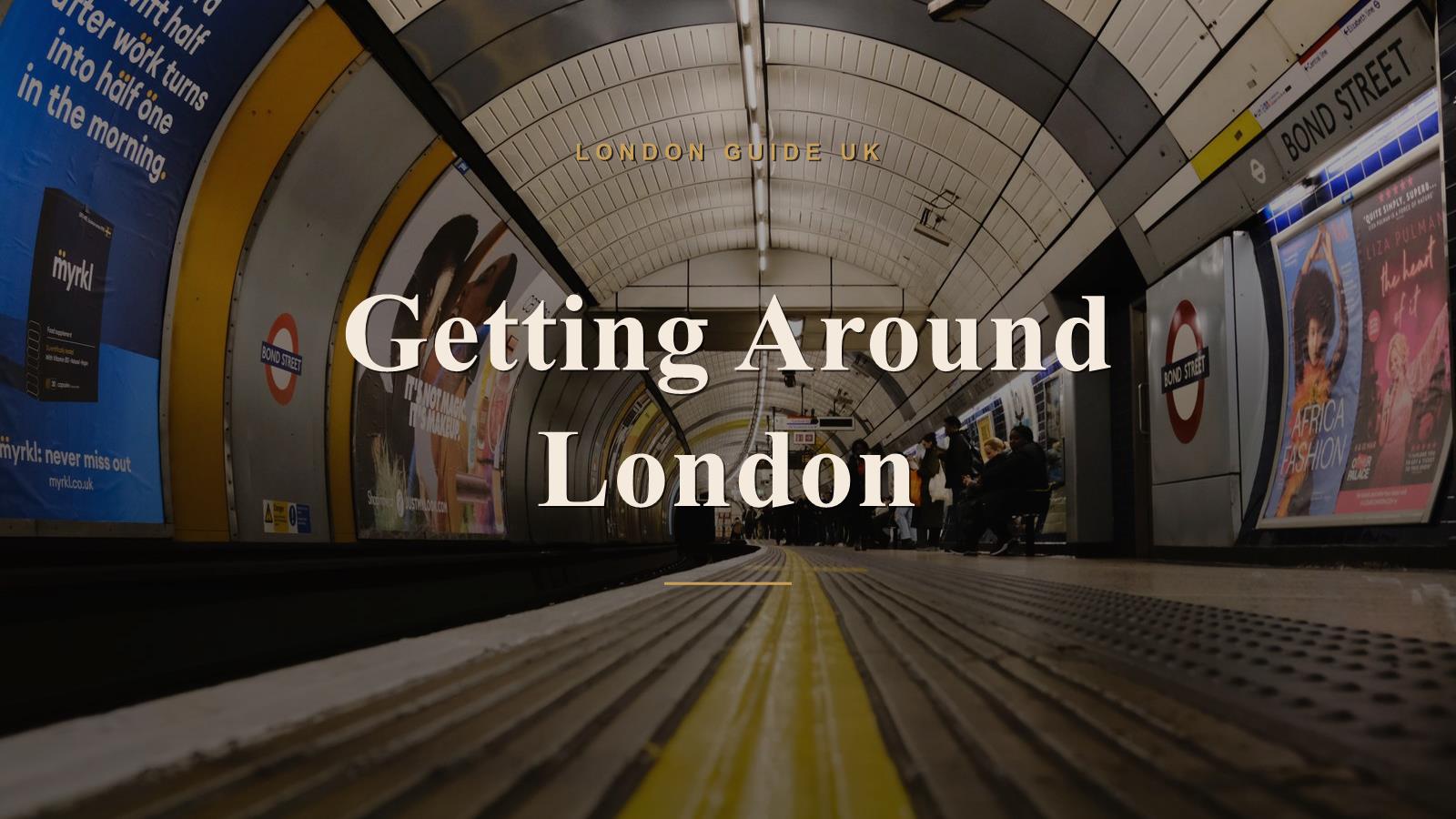
The Underground, known universally as the Tube, is London's fastest way to cross town and the backbone of most visitors' trips. It runs across multiple colour-coded lines and travel zones radiating out from the centre, with frequent trains for most of the day. Stations are signposted by the famous round red-and-blue roundel, visible from streets all over the city.
A few lines do most of the sightseeing work. The Piccadilly line connects Heathrow with the West End and runs through Covent Garden and Knightsbridge. The Jubilee line links Westminster, the South Bank and the towers of Canary Wharf. The Central line cuts east to west through Oxford Circus and the City. Learn to read the map by colour and direction, noting whether you need eastbound, westbound, northbound or southbound, and you will rarely go wrong.
- Stand on the right of escalators and let others walk past on the left.
- Let passengers off the train before you board.
- Keep to one side of stairways and passages, as Londoners move quickly.
- Check the platform display for the front-of-train destination, as some lines branch.
Buses, the Overground and the Elizabeth line
Beyond the Tube, London runs a dense network of red buses, the orange-branded Overground and the newer purple Elizabeth line. Buses are slower but let you see the city above ground, the Overground threads through neighbourhoods the Tube skips, and the Elizabeth line speeds across the centre with spacious modern carriages. Together they reach almost every corner of the capital.
The red double-decker is a sightseeing experience in its own right. Ride upstairs at the front for sweeping views, and remember that London buses do not accept cash, so you must tap a contactless card or phone as you board. The Elizabeth line is invaluable for crossing from west to east quickly and connects directly to Heathrow, while the Overground is the smart choice for reaching areas such as Hampstead, Hackney and Richmond without changing in the centre.
Contactless payment and the Oyster card
The simplest way to pay for travel is to tap a contactless bank card, phone or smartwatch on the yellow reader at the gate or on board. There is no need to buy a paper ticket or an Oyster card for most short visits, as contactless payment is accepted across the Tube, buses, the Overground, the Elizabeth line and most National Rail services in London. For a full breakdown of how the card works and whether you even need one, see our guide to the Oyster card explained.
If you prefer not to use a bank card, a pay-as-you-go Oyster card works the same way and can be topped up at machines and many shops. Whichever you choose, the golden rule is to use the same card or device every time so the system can track your journeys and apply the correct fare. On the Tube you must tap in and tap out; on buses you tap only as you board.
- Always tap in and tap out on the Tube and rail to avoid the maximum incomplete-journey fare.
- Each traveller needs their own card or device, as one cannot be shared between people.
- Foreign cards are accepted, though your bank may apply its own conversion charge.
- Keep card and phone separate at the reader so the gate does not read both.
Fare caps and saving money
London uses an automatic daily fare cap, which means that once your tapped journeys reach a set limit in a single day, all further travel within those zones is effectively free. You never pay more than the cap, so there is rarely any benefit in buying a day travelcard in advance. The system calculates the best value for you automatically.
Caps apply across the Tube, buses, the Overground and the Elizabeth line when you use the same contactless card or Oyster. Travelling within the central zones is cheaper than journeys that stretch to the outer edges, so plan accommodation and sightseeing around the zones you will use most. For deeper budgeting advice, our guide to the best time to visit London can help you align your trip with quieter, better-value periods.
Getting in from the airports
Each of London's airports has its own best route into the centre, and choosing well saves both time and money on arrival. Heathrow connects by the Elizabeth line, the Piccadilly line and a fast express service; Gatwick and Luton are served by frequent mainline trains; and London City sits closest of all, linked directly to the Docklands network.
Because the right choice depends on where you are staying and how much luggage you carry, we cover each airport in detail. See our dedicated guides to Heathrow to Central London, Gatwick to Central London, London City Airport to Central London and Luton to Central London for routes, journey times and the trade-offs between speed and cost.
Walking, cycling and the river
Some of London is best seen on foot, and many central distances that look daunting on the map are surprisingly short. The capital also offers hire bicycles at docking stations citywide and scheduled riverboat services along the Thames, both of which turn ordinary transport into part of the sightseeing itself. For how to hire a bike and the best traffic-free routes, see our guide to cycling in London.
Walking between neighbouring districts often beats the Tube: Covent Garden, Soho and Leicester Square sit within minutes of one another, and the riverside path past the South Bank rewards every step. River services run between piers such as Westminster and Greenwich, accept contactless payment, and offer a memorable, uncrowded way to travel. Remember that traffic drives on the left, so look right first when crossing.
Getting Around London FAQ
Do I need an Oyster card or is contactless enough?
For most visitors, a contactless bank card, phone or smartwatch is all you need, as it is accepted across the Tube, buses, the Overground, the Elizabeth line and London rail. An Oyster card offers the same fares and caps, so choose it only if you would rather not tap a bank card.
Is the Tube or the bus better for sightseeing?
The Tube is faster for covering distance, while the bus is better for seeing the city, since you travel above ground past landmarks and streets. A practical approach is to take the Tube to a district, then explore on foot or hop on a bus for the views between major sights.
How do daily fare caps work?
When you pay with the same contactless card or Oyster, the system totals your journeys and stops charging once you reach the daily cap for your zones. Every trip after that is effectively free for the rest of the day, so you never need to calculate or buy a travelcard in advance.
Can I use the same card for two people?
No. Each traveller must tap their own card or device, as a single card cannot pass two people through a gate or be shared on a bus. If you are travelling as a family or group, ensure everyone carries their own contactless card, phone or Oyster card.
What happens if I forget to tap out?
On the Tube and rail, failing to tap out usually means you are charged a higher incomplete-journey fare. Always tap in at the start and tap out at the end of every Tube or rail trip. On buses you only tap once as you board, so there is nothing to tap out.
Where to go next
Now that the network makes sense, plan the rest of your trip with our wider practical guides to London. If this is your first visit, our London tips for first-time visitors cover the essentials beyond transport, while our guide to the best time to visit London helps you choose when to come.
Putting the whole trip together? Our London trip planning guide covers the rest, including getting in from the airport.