Last updated:
Brixton is one of south London's most characterful neighbourhoods, a place where a covered market hums with the scents of the Caribbean, West Africa and beyond, and where the streets carry a deep musical and cultural heritage. This guide is for the discerning visitor who wants more than a postcard: someone keen to eat exceptionally well, understand the area's history, and explore a corner of the capital that locals fiercely love. Here is how to make the most of a day or an evening in Brixton.
Why visit Brixton
Brixton rewards visitors with a rare combination: a thriving, genuinely diverse food scene, a celebrated live-music legacy, and a market culture that has shaped the area for more than a century. Unlike many central districts, it feels lived-in and self-assured, offering an authentic slice of multicultural London rather than a curated tourist experience.
The neighbourhood sits in the borough of Lambeth, a short hop south of the river. It is best known for its African and Caribbean communities, whose influence runs through the markets, restaurants, record shops and festivals. For visitors who have already explored the polished side of the city, Brixton offers texture, energy and a strong sense of place.
Brixton Market and Brixton Village
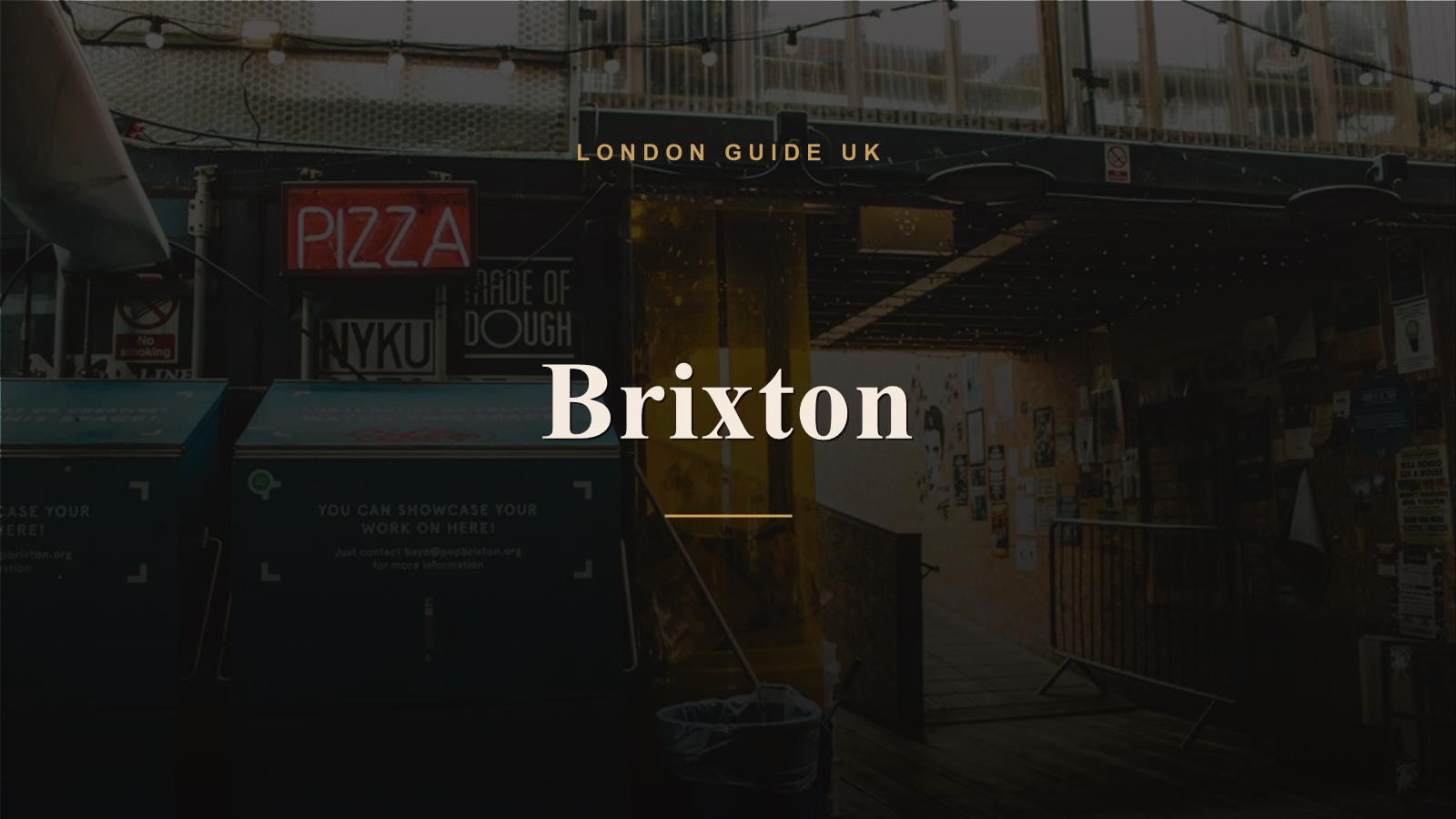
Brixton Market is the beating heart of the area, a cluster of street stalls and covered arcades where you can shop for produce, spices and global ingredients and then sit down to eat from dozens of independent kitchens. The covered sections, known as Brixton Village and Market Row, are particularly rich in small restaurants and cafes.
The market has trading roots stretching back well over a hundred years, and the covered arcades are notable enough to carry heritage protection. Today they shelter a constantly evolving mix of independent operators serving food from across the world. Highlights for the curious visitor include:
- Caribbean and West African stalls selling jerk, plantain, patties and home-style cooking
- Greengrocers and fishmongers stocking ingredients you rarely see elsewhere in London
- Independent restaurants spanning Italian, Colombian, Japanese, Thai and more
- Record shops, bookshops and small design stores tucked between the food units
Arrive hungry, wander first, and let the place set your itinerary. Daytime is best for produce and a relaxed lunch; the arcades grow busier and more sociable as the evening sets in.
Music and cultural heritage
Brixton's reputation as a music destination rests largely on the O2 Academy Brixton, a grand former cinema that has become one of the most storied mid-size live-music venues in Britain. Its sloping floor and ornate interior have hosted countless landmark performances, and a ticket here remains a rite of passage for serious gig-goers.
The area's cultural identity goes deeper than any single venue. Brixton was central to the story of the Windrush generation, and its Caribbean heritage is woven into its streets, sounds and celebrations. Visitors interested in this history will find it expressed in murals, independent bookshops and the area's long tradition of activism and community.
- The David Bowie mural near Brixton Underground station, a place of pilgrimage for fans of the locally born musician
- Street art and murals throughout the side streets, reflecting the area's political and cultural history
- The Black Cultural Archives, dedicated to the histories of African and Caribbean people in Britain
- Independent record shops keeping reggae, soul and dance music traditions alive
Where and what to eat
Eating is the single best reason to visit Brixton, and the choice is genuinely vast. Within and around the covered markets you will find Caribbean classics, West African home cooking, fresh pasta, ceviche, sushi and far more, much of it from small independent kitchens that built their reputations here. Come with an appetite and a willingness to queue for the popular spots.
For the most representative experience, lean into the food the neighbourhood is famous for. Jerk chicken, curried goat, ackee and saltfish, jollof rice and freshly fried plantain are all easy to find and done with real conviction. Beyond the Caribbean and African staples, the arcades reward grazing across cuisines in a single sitting.
- Caribbean kitchens for jerk, patties, hard dough bread and rum-soaked desserts
- West African spots for jollof rice, suya and richly spiced stews
- Independent counters within Brixton Village for pasta, tacos, dumplings and seafood
- Pop circuit favourites that started in Brixton and have since become London names
Getting there and getting around
Brixton is straightforward to reach: it is the southern terminus of the Victoria line, putting it a quick, direct ride from central London hubs such as Victoria, Oxford Circus and King's Cross. National Rail services also serve Brixton station, and numerous bus routes converge on the area, making it well connected from across the capital.
Once you arrive, everything of interest sits within easy walking distance. The Underground station, markets, music venue and main shopping streets are tightly clustered, so there is no need for further transport. A few practical notes for visitors:
- The Victoria line is the fastest and simplest route from the centre of town
- The market area is compact and best explored entirely on foot
- Daytimes suit market shopping and unhurried meals; evenings bring live music and a livelier crowd
- As in any busy city district, keep an eye on your belongings in crowded spaces
Brixton FAQ
What is Brixton best known for?
Brixton is best known for its vibrant market, its African and Caribbean food and culture, and its musical heritage. The covered arcades of Brixton Village and Market Row draw food lovers, while the O2 Academy Brixton is one of London's most celebrated live-music venues. It is a lively, characterful corner of south London.
How do I get to Brixton?
The simplest route is the Victoria line, where Brixton is the southern terminus, giving a fast and direct connection to central London stations including Victoria and Oxford Circus. National Rail services and many bus routes also serve the area, so Brixton is easily reached from most parts of the city.
Is Brixton good for food?
Brixton is one of London's strongest food destinations, especially for Caribbean and West African cooking. The covered markets house dozens of independent kitchens spanning many cuisines, from jerk chicken and jollof rice to pasta, ceviche and sushi. It is a place to graze widely, and many beloved London restaurants began here.
How long should I spend in Brixton?
Half a day is enough to explore the markets and eat well, but the area rewards a longer visit. Combine an afternoon of market browsing and lunch with an evening gig at the O2 Academy Brixton, and you can comfortably fill a full day with food, music and culture in one compact, walkable neighbourhood.
Is Brixton suitable for visitors?
Brixton is a welcoming, well-connected neighbourhood that suits curious visitors looking beyond central London. The markets and main streets are busy and easy to navigate on foot. As with any popular city district, stay aware of your surroundings in crowds, but most visitors find it friendly, energetic and genuinely rewarding.
Where to go next
Continue your south London exploring with our nearby guide to Peckham, another creative, food-led neighbourhood with a distinct character. For a riverside contrast rich in markets and food, see Bermondsey. You can also browse the full London neighbourhoods hub to plan a route across the city.
Pubs & Bars