Last updated:
Chelsea is the riverside quarter of west London where Georgian terraces, garden squares and one of the world's most storied shopping streets sit between the Thames and the museum belt of South Kensington. This guide is for the visitor who wants to understand Chelsea beyond the headlines: where to walk, what to see, and how to spend an unhurried day among its galleries, gardens and quiet back streets.
Why visit Chelsea
Chelsea rewards visitors who like their London elegant and low-key. It pairs the energy of the King's Road with the calm of the Chelsea Embankment, the planted order of the Chelsea Physic Garden and a long artistic heritage, all within walking distance of the great South Kensington museums. It is a neighbourhood for strolling rather than ticking off sights.
Once the bohemian heart of Swinging London and the birthplace of the punk look, today's Chelsea is more refined than radical, but the creative thread remains in its galleries, design studios and independent boutiques. It is among London's most desirable addresses, and that polish is visible in everything from its florists to its garden squares.
The King's Road
The King's Road is Chelsea's spine, running roughly west from Sloane Square for well over a mile. Once a private route used by Charles II, it became the catwalk of 1960s and 1970s London, home to Mary Quant's boutique and, later, the shop where Vivienne Westwood and Malcolm McLaren shaped punk. It remains a busy shopping and people-watching street.
Today the road blends high-street names with design showrooms, antique sellers and homeware stores. Highlights along or just off it include:
- Sloane Square, the eastern gateway, with the Saatchi Gallery a short walk away in the Duke of York's headquarters.
- Duke of York Square, a pedestrianised courtyard of shops and a regular Saturday food market.
- The antique and interiors clusters towards the western, World's End stretch.
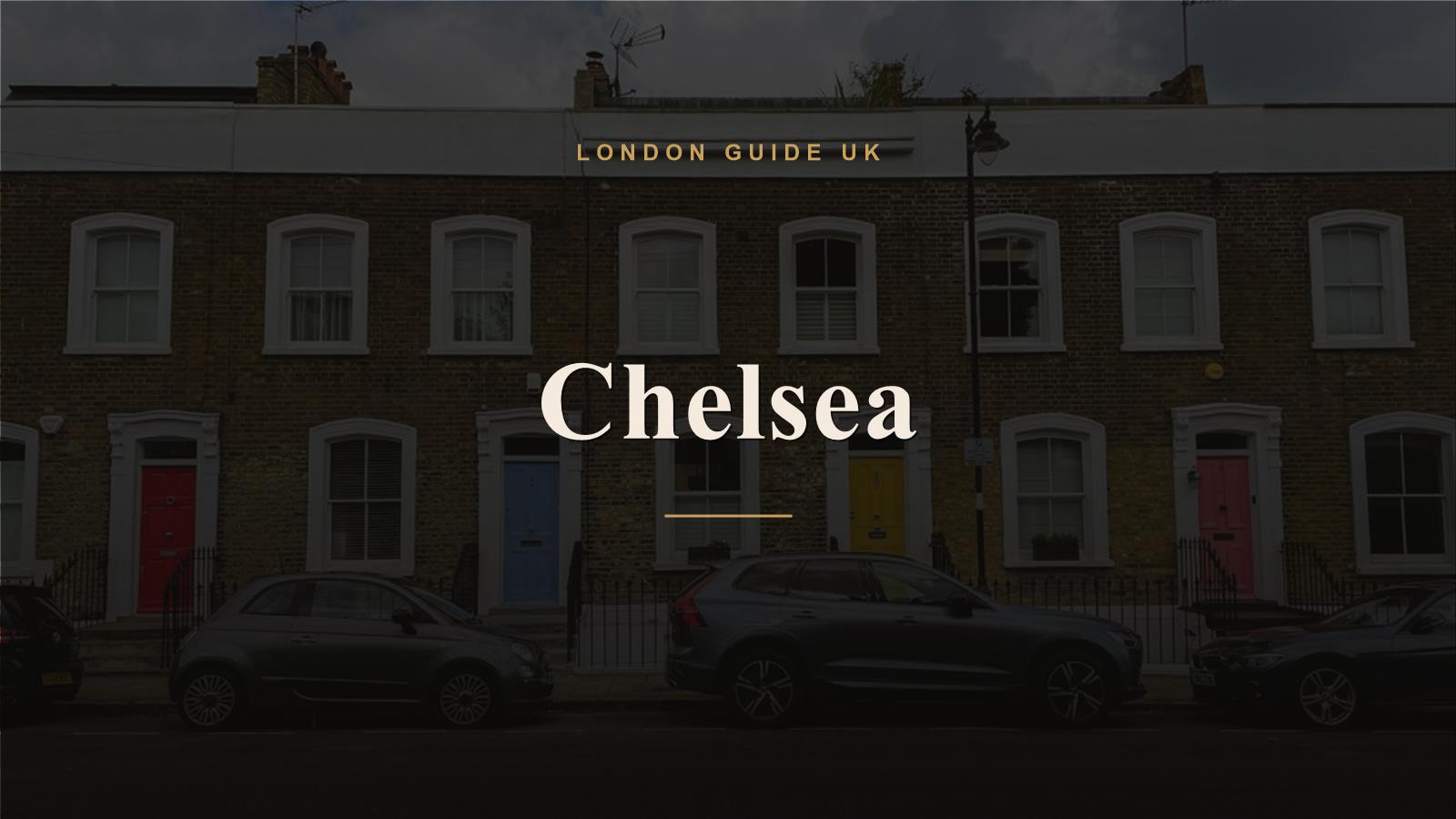
- Quiet side streets such as those around Bywater Street, lined with pastel townhouses.
Chelsea Physic Garden
The Chelsea Physic Garden is one of London's oldest botanic gardens, founded in 1673 by the Society of Apothecaries to grow medicinal plants. Tucked behind a wall on the Embankment, this walled enclosure holds thousands of plant species across themed beds, including a noted collection of medicinal and useful plants, all in a remarkably sheltered microclimate by the river.
It is a working garden of education rather than a grand pleasure ground, and that is its charm. Visitors come for the order of the beds, the glasshouses and the sense of stepping into a living museum. The garden is seasonal, so check opening arrangements before you travel, as it does not open year-round in the way a public park does.
The riverside and Cheyne Walk
Chelsea's riverside is its most atmospheric quarter. The Chelsea Embankment and Cheyne Walk run beside the Thames, fronted by handsome houses that have sheltered painters and writers for generations. A walk here takes in plane trees, houseboats, and views across to Battersea, with the green sweep of Battersea Park visible on the far bank.
Cheyne Walk in particular is studded with blue plaques marking former residents, from artists to engineers. Nearby, the painter J.M.W. Turner lived his final years in the area, and the riverside light that drew him remains. Things to look out for along the water include:
- Albert Bridge, the ornate suspension bridge that is especially striking when lit at night.
- Chelsea Old Church, with associations to Sir Thomas More, who lived in Chelsea.
- The moored houseboats along the western reaches of the Embankment.
- Quiet riverside benches that make a fine pause on a longer walk.
Art, history and the Royal Hospital
Chelsea's cultural anchors range from contemporary art to military history. The Saatchi Gallery shows ambitious contemporary exhibitions near Sloane Square, while the Royal Hospital Chelsea, designed by Sir Christopher Wren, is the home of the scarlet-coated Chelsea Pensioners and the grounds that host the famous flower show each spring.
The RHS Chelsea Flower Show, staged in the Royal Hospital grounds in late May, is the highlight of the British gardening calendar and transforms the neighbourhood for a week. Beyond it, the area's artistic past lives on in its gallery scene and former studio houses. For broader cultural context, the great institutions of South Kensington sit a short walk north, and you can plan a wider itinerary using our London museums guide.
Getting there and getting around
Chelsea has no Underground station deep in its heart, which keeps it quieter than many central districts. The most useful station is Sloane Square on the District and Circle lines, at the eastern end of the King's Road. South Kensington station, served by the Piccadilly, District and Circle lines, is also within easy walking reach of the north of the area.
Buses run frequently along the King's Road, and the area is flat and very walkable. Practical pointers:
- Arrive at Sloane Square and walk west to cover the King's Road on foot.
- Use buses along the King's Road if you want to reach the World's End stretch quickly.
- Combine Chelsea with South Kensington's museums, which lie just to the north.
- Allow a half day at minimum, or a full day if you add the Physic Garden and a riverside walk.
Chelsea FAQ
What is Chelsea best known for?
Chelsea is best known for the King's Road and its 1960s fashion heritage, its elegant riverside along Cheyne Walk and the Embankment, the historic Chelsea Physic Garden, and the Royal Hospital Chelsea, which hosts the RHS Chelsea Flower Show each spring. It is one of London's most refined neighbourhoods.
What is the nearest Tube station to Chelsea?
The nearest and most useful Underground station is Sloane Square, on the District and Circle lines, at the eastern end of the King's Road. South Kensington, on the Piccadilly, District and Circle lines, serves the northern edge of the area and links easily to the museum quarter.
How long should I spend in Chelsea?
Allow at least half a day to walk the King's Road and reach the river. A full day lets you add the Chelsea Physic Garden, a riverside stroll along Cheyne Walk, and the Saatchi Gallery, or combine the visit with the South Kensington museums just to the north.
Is Chelsea worth visiting for tourists?
Yes, particularly for visitors who prefer elegant, walkable neighbourhoods over crowded sights. Chelsea offers shopping, galleries, gardens and riverside views in a compact, refined setting. It is quieter than central London and pairs naturally with the nearby museums, making it an easy and rewarding addition to a city itinerary.
When is the Chelsea Flower Show?
The RHS Chelsea Flower Show takes place in late May in the grounds of the Royal Hospital Chelsea. It is the centrepiece of the British gardening year and draws large crowds, so book ahead and expect the neighbourhood to be busier than usual during the show week.
Where to go next
Explore more of the capital with our London neighbourhoods guide. For another riverside district with a different character, see our guide to Tower Hill and St Katharine Docks, or read about leafy, sporting Wimbledon on the city's south-western edge.
Pubs & Bars
Restaurants