Last updated:
Mayfair is the most polished quarter of central London, a grid of Georgian streets and garden squares set between Hyde Park, Oxford Street, Piccadilly and Regent Street. This guide is for the discerning visitor who wants to understand what to see, where to walk and how to read a district synonymous with grand hotels, fine art, tailoring and serious shopping.
Why visit Mayfair
Mayfair rewards visitors who appreciate refinement over spectacle. It is London at its most composed: handsome eighteenth-century terraces, art-filled galleries, flagship boutiques and some of the city's most storied hotels. There are few conventional tourist sights here, so the pleasure lies in walking the streets, browsing the shops and absorbing the atmosphere.
The district takes its name from the riotous May Fair once held near present-day Shepherd Market. The fair was long ago suppressed for unruliness, and the area was developed by aristocratic estates, chiefly the Grosvenors, into the elegant residential quarter it remains. That heritage explains the orderly squares, the consistent brickwork and the enduring sense of privilege.
Bond Street and luxury shopping
Bond Street is Mayfair's most famous address and one of the leading luxury shopping streets in Europe. Split into Old Bond Street and New Bond Street, it gathers the flagship boutiques of the world's foremost fashion houses, jewellers and watchmakers, alongside major auction houses and dealers in fine art and antiques. It is the natural starting point for serious shopping.
Beyond Bond Street, the wider luxury district extends in every direction. The streets around it form one of the most concentrated shopping quarters in the world.
- Bond Street for flagship fashion, jewellery and watches
- Savile Row for bespoke tailoring, the historic home of the made-to-measure suit
- Mount Street for designer boutiques set among red-brick Victorian facades
- Burlington Arcade, a covered Regency shopping promenade off Piccadilly
- Cork Street for contemporary commercial art galleries
Grand hotels and architecture
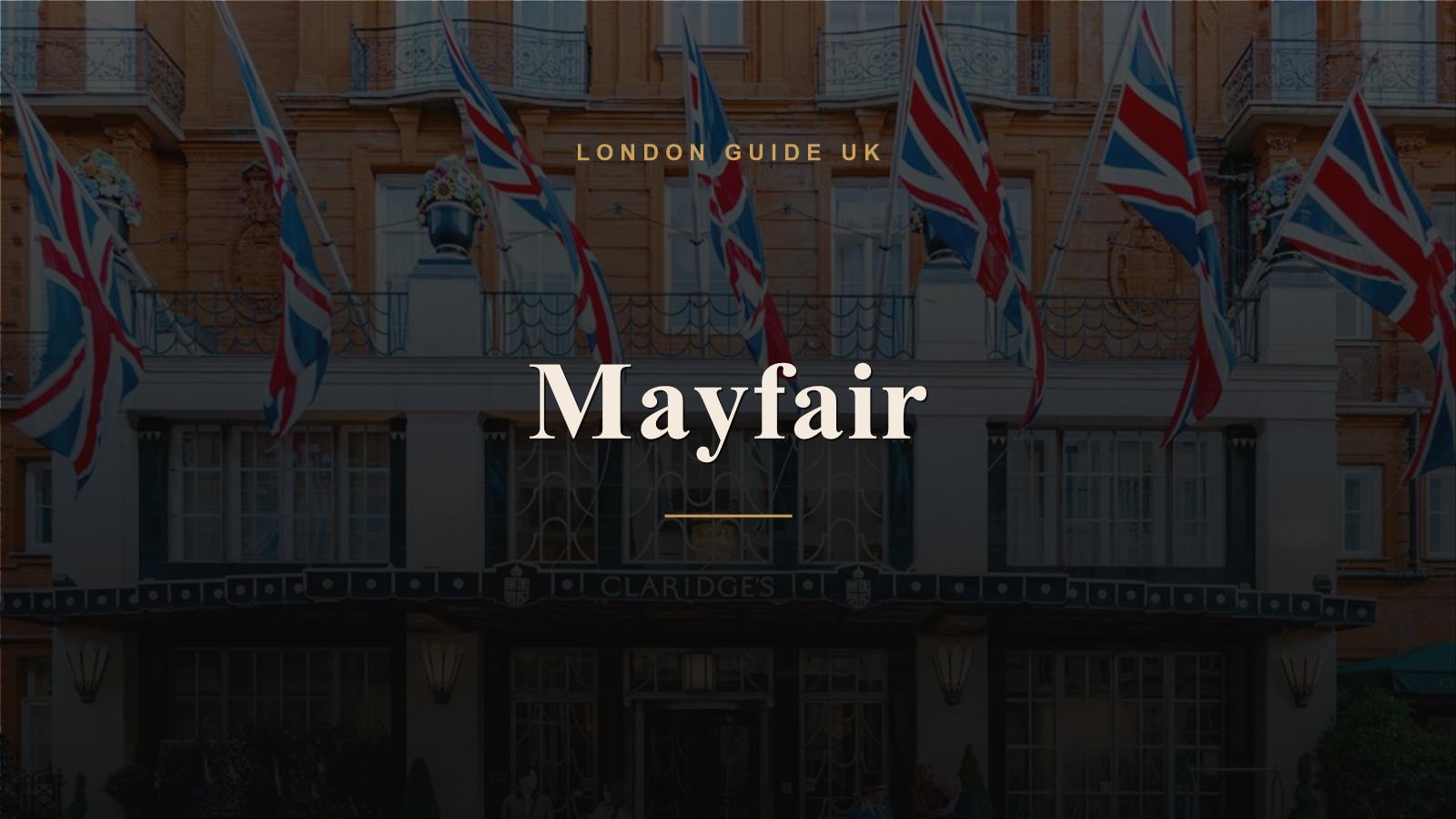
Mayfair is home to several of London's most celebrated grand hotels, including Claridge's, The Connaught and The Dorchester. These institutions are landmarks in their own right, admired for their Art Deco and traditional interiors. Even without a reservation, their facades and the surrounding streets repay a slow, attentive walk.
The architecture is overwhelmingly Georgian, with later Victorian and Edwardian additions. Look for the deep brick terraces, ironwork balconies and the rhythm of sash windows that define the conservation area. The garden squares are the set pieces of this townscape.
- Grosvenor Square, one of the largest squares in central London with strong American historical ties
- Berkeley Square, known for its mature London plane trees
- Hanover Square, near the eastern edge towards Oxford Circus
- Shepherd Market, an intimate village-like enclave of narrow lanes
Art, galleries and culture
Mayfair is the centre of the London art trade, with a high density of commercial galleries, dealers and auction houses within walking distance of one another. The streets around Cork Street, Bond Street and Dover Street host changing exhibitions that are typically free to enter, making the area an accessible cultural destination as well as a commercial one.
The cultural anchor is the Royal Academy of Arts at Burlington House on Piccadilly, which mounts major ticketed exhibitions throughout the year and stages its long-running summer show. For more on London's wider cultural offering, see our guide to museums and the broader things to do hub.
Green spaces and quiet corners
Mayfair sits between two of London's royal parks, giving visitors easy access to open green space. Hyde Park lies along the western edge and Green Park to the south, both within a short walk of the squares. Inside the district, the leafy garden squares and the lanes of Shepherd Market offer quieter pauses between the shopping streets.
These parks connect Mayfair to the wider sweep of royal London, with Buckingham Palace and St James's just beyond Green Park. A walk south through the parkland is one of the most pleasant ways to leave the district on foot.
Getting around Mayfair
Mayfair is best explored on foot, as its compact grid makes walking quicker and more rewarding than any other method. Several Underground stations ring the district, so you can enter from whichever corner suits your route. The area is well served and central, sitting within easy reach of the West End and the parks.
- Bond Street station, on the Central, Jubilee and Elizabeth lines, for the northern shops
- Green Park station, on the Jubilee, Piccadilly and Victoria lines, for the south and the hotels
- Oxford Circus station, on the Central, Victoria and Bakerloo lines, for the north-east corner
- Marble Arch and Hyde Park Corner for the western edges near the parks
Mayfair pairs naturally with neighbouring districts for a fuller day in central London. For ideas on how to string several areas together, browse our neighbourhoods hub and the itineraries section.
Mayfair FAQ
Is Mayfair worth visiting for tourists?
Yes, particularly if you enjoy elegant architecture, shopping and art. Mayfair has few conventional sights, so it suits visitors who like to walk, browse and observe. Its galleries, garden squares and grand hotel facades make it one of the most refined areas of central London to explore on foot.
What is Mayfair famous for?
Mayfair is famous for luxury shopping on Bond Street, bespoke tailoring on Savile Row, grand hotels such as Claridge's and The Dorchester, and the London art trade. It is also known for its Georgian architecture, its garden squares and its long-standing reputation as one of the city's wealthiest districts.
How do I get to Mayfair on the Underground?
Several stations serve Mayfair. Bond Street covers the north, Green Park the south, and Oxford Circus the north-east. Marble Arch and Hyde Park Corner reach the western edges near the parks. Because the district is compact, you can choose whichever station best matches the streets you plan to visit.
Can you visit Mayfair on a budget?
Yes. While the shops and hotels are expensive, walking the streets, browsing the commercial art galleries and enjoying the garden squares and nearby royal parks all cost nothing. Window shopping along Bond Street and Mount Street and exploring Burlington Arcade make for an absorbing visit at no cost.
How much time should I spend in Mayfair?
A half day is enough to cover the main shopping streets, the squares and a gallery or two at a relaxed pace. If you want to add the Royal Academy, browse several galleries or combine Mayfair with a walk through the adjoining royal parks, allow a full day in the area.
Where to go next
Continue exploring central London with our neighbourhoods hub, then compare Mayfair's polish with the historic core in our guide to the City of London or the riverside character of Tower Hill and St Katharine Docks.
Pubs & Bars