Last updated:
Few corners of west London carry as much visual shorthand as Notting Hill: rows of pastel-painted terraces, a market street that runs for the best part of a mile, and a carnival that fills the air every August bank holiday. This guide is for the discerning visitor who wants more than the photogenic surface, covering when to come, where the genuinely good shopping and culture sit, and how to navigate an area that rewards those who wander beyond the obvious frontages.
Why visit Notting Hill
Notting Hill is a prosperous residential district in the Royal Borough of Kensington and Chelsea, best known for Portobello Road Market, its rows of colourful stucco-fronted houses and the late-August Notting Hill Carnival. It draws visitors who want antiques, independent shops, leafy garden squares and a relaxed, village-like atmosphere within easy reach of central London.
The neighbourhood sits at the western edge of the city, bordered roughly by Holland Park to the south, Bayswater to the east and the elevated stretch of the A40 to the north. Its character shifts as you move along it: stately white terraces near Kensington Park Gardens give way to busier, more bohemian streets around the Westway. For first-time visitors it pairs naturally with neighbouring Holland Park and Kensington, making a full day of walking, browsing and people-watching.
Portobello Road Market
Portobello Road Market is the heart of Notting Hill and one of the world's most famous street markets, stretching along Portobello Road and Golborne Road. It is renowned for antiques and vintage collectables, but also carries fresh produce, street food, secondhand clothing and bric-a-brac, with the character of each section changing as you walk from south to north.
The market is busiest on Saturdays, when the antiques stalls are in full swing and the crowds are thickest near Notting Hill Gate. Arriving early in the morning gives you a calmer browse and better light for the painted houses before the day-trippers gather. Roughly, the street divides as follows:
- The southern end nearest Notting Hill Gate concentrates antiques, jewellery and vintage dealers, many in covered arcades.
- The central stretch is given over to fruit, vegetables and flowers, with general goods alongside.
- Heading north towards the Westway you find street food, secondhand clothing and emerging design.
- Golborne Road, at the far north, has a quieter, more local feel with Portuguese and North African cafes and additional bric-a-brac.
If markets are your reason for the trip, it is worth comparing Notting Hill with others across the city before you plan your week. Our wider London markets guide sets the scene.
The pastel houses and best streets to walk
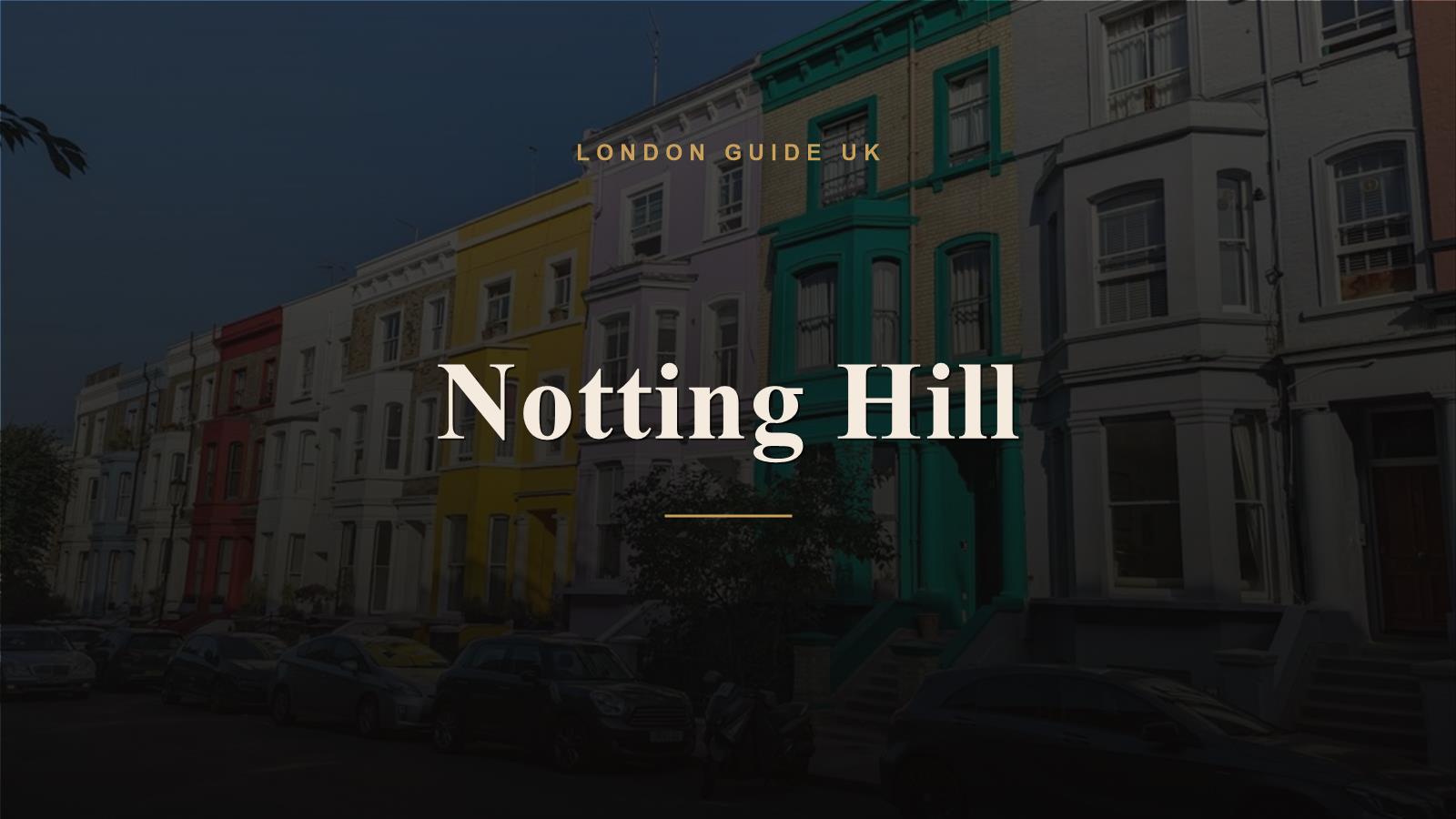
The famous candy-coloured terraces are concentrated on a handful of residential streets just off Portobello Road, most notably Lancaster Road, Elgin Crescent and the streets around Westbourne Park Road. These are private homes rather than attractions, so the pleasure is simply in walking past them, ideally early in the day when the streets are quiet and respectful of residents.
Beyond the painted frontages, Notting Hill is laid out around a series of communal garden squares, a legacy of its nineteenth-century development. A relaxed loop on foot lets you take in the best of it:
- Lancaster Road for the most photographed row of pastel houses.
- Elgin Crescent and Colville Terrace for elegant curved terraces.
- Stanley Crescent and the streets around Kensington Park Gardens for grander white stucco.
- Holland Park, just to the south, for one of west London's loveliest green spaces and the Kyoto Garden.
Notting Hill Carnival
Notting Hill Carnival is a Caribbean street festival held each year over the August bank holiday weekend, one of the largest of its kind in the world. Founded in the 1960s by London's Caribbean community, it fills the streets with elaborate masquerade costumes, steel bands, sound systems and Caribbean food across two days, drawing very large crowds to the area.
The event transforms the neighbourhood entirely. Many local roads close, public transport is exceptionally busy and the usual market activity pauses. If you are visiting specifically for Carnival, plan to arrive early, travel light and check the official route and transport advice in advance. If you prefer Notting Hill at its quietest, avoid that weekend altogether. For more on what fills the London calendar, see our seasonal events guide.
Shopping, antiques and independent shops
Notting Hill is a destination for antiques, vintage fashion and independent retail rather than chain stores. Beyond the Portobello stalls, the surrounding streets hold long-established antiques arcades, design-led boutiques, specialist bookshops and homeware studios, giving the area a reputation for considered, characterful shopping that rewards browsing on foot.
For visitors with a serious interest in collecting, the antiques arcades near the southern end of Portobello Road are the place to start, with dealers in silver, ceramics, prints and period jewellery. Westbourne Grove and Ledbury Road carry a more contemporary mix of fashion and interiors. To plan a wider day of browsing across the capital, our London shopping guide offers further ideas.
Getting there and getting around
The most useful station is Notting Hill Gate, served by the Central, Circle and District lines, which puts you a short walk from the southern end of Portobello Road. Ladbroke Grove and Westbourne Park on the Hammersmith and City and Circle lines are handy for the northern, Golborne Road end of the market.
Notting Hill is best explored on foot, as the market, the painted streets and the garden squares all sit within a compact, walkable area. A few practical notes:
- Walk from Notting Hill Gate northwards to follow the market from antiques to street food in logical order.
- Wear comfortable shoes; the cobbled and sloping side streets are uneven in places.
- Weekday mornings are calmest for photography and unhurried browsing.
- The area links easily on foot to Holland Park and Kensington Gardens for a longer day out.
For broader transport, ticketing and timing advice across the city, see our practical London guide.
Notting Hill FAQ
What is Notting Hill famous for?
Notting Hill is famous for Portobello Road Market, its rows of pastel-painted terraced houses and the Notting Hill Carnival held each August bank holiday. It is also known for antiques, independent shops and its leafy garden squares, and gained wider fame through the 1999 romantic comedy that took its name from the area.
What day is best to visit Portobello Road Market?
Saturday is the main market day, when the antiques dealers are out in full and the street is at its liveliest, though also its busiest. For a calmer visit with easier browsing and better photographs of the houses, arrive early on a Saturday morning or come on a quieter weekday instead.
Where are the colourful houses in Notting Hill?
The most photographed pastel houses sit on residential streets just off Portobello Road, especially Lancaster Road, Elgin Crescent and the streets around Westbourne Park Road. These are private homes, so admire them from the pavement, keep noise down and be considerate of residents when taking photographs.
Is Notting Hill worth visiting?
Yes. Notting Hill rewards visitors with one of London's best-known street markets, distinctive architecture, strong independent shopping and an easy link to Holland Park and Kensington Gardens. It suits anyone wanting a relaxed half or full day of walking, browsing and atmosphere away from the busier central sights.
How do I get to Notting Hill by Underground?
Take the Underground to Notting Hill Gate, served by the Central, Circle and District lines, for the southern end of Portobello Road. For the northern, Golborne Road end, Ladbroke Grove and Westbourne Park stations on the Hammersmith and City and Circle lines are closer.
Where to go next
Continue planning your London visit with these related guides:
- Browse the full London neighbourhoods guide for more districts to explore.
- Compare the city's other markets in our London markets guide.
- For a contrasting market and warehouse district south of the river, read our guide to Bermondsey.
- For a leafy village feel further out, see our guide to Wimbledon.
Restaurants