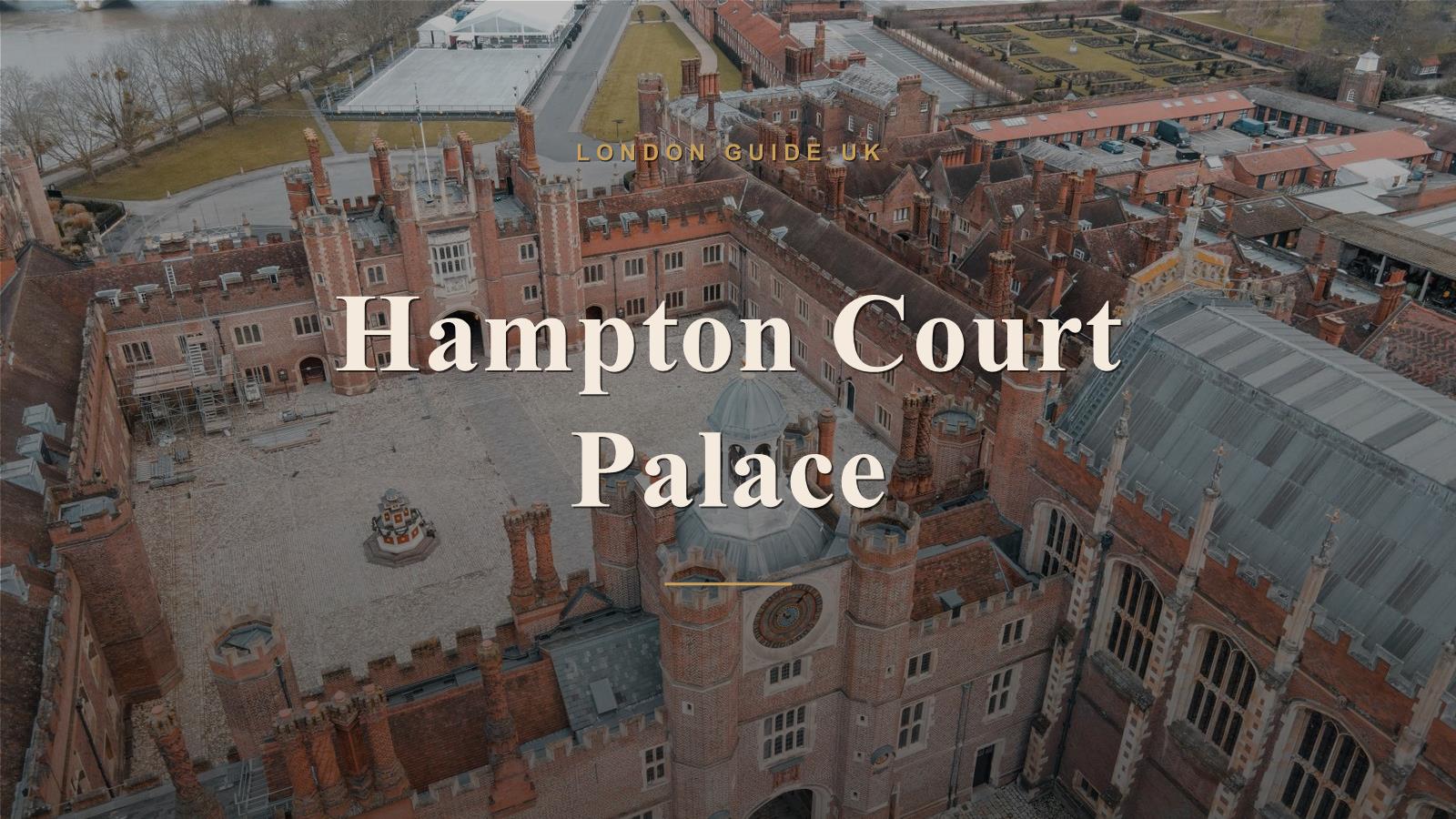
Hampton Court Palace stands on the north bank of the River Thames in the south west London borough of Richmond upon Thames, some distance upstream from the centre of the city. It is one of only two surviving palaces of Henry VIII, and arguably the grandest, a sprawling complex where mellow Tudor brickwork meets the airy baroque designed for William III and Mary II. For the visitor, it offers a rare chance to walk through five centuries of royal history in a single afternoon, set against more than sixty acres of formal gardens, a celebrated maze and the slow green expanse of the river.
Why visit Hampton Court Palace
Hampton Court is the most complete Tudor palace in England, a place where you can stand in the very kitchens, chapel and great hall that served Henry VIII and his court. Beyond its history, it rewards visitors with magnificent state apartments, world-class gardens and the famous hedge maze, all within easy reach of central London by train.
What makes the palace so unusual is its split personality. The Tudor half, begun by Cardinal Wolsey before he surrendered it to the king, is all turrets, twisting chimneys and dark panelled rooms. The other half is a confident baroque palace by Sir Christopher Wren, built when William and Mary wished to rival Versailles. The two styles sit side by side, and exploring the join between them is one of the genuine pleasures of a visit. Costumed historians, atmospheric lighting and well-judged displays bring the story to life without tipping into theme-park gimmickry, making it as engaging for curious adults as for children.
What to see at Hampton Court Palace
The palace is large, so it helps to know the highlights before you arrive. The most celebrated features include:
- The Great Hall, Henry VIII's grand banqueting space, crowned by a magnificent hammer-beam roof and hung with priceless tapestries.
- The Tudor Kitchens, among the largest surviving in Europe, which once fed a court of hundreds and are often brought to life with open fires and period cooking.
- The Chapel Royal, in near-continuous use for some five hundred years and famed for its vaulted blue-and-gold ceiling.
- The King's and Queen's State Apartments, the baroque rooms created for William III and Mary II, reached by grand painted staircases.
- The Hampton Court Maze, the United Kingdom's oldest surviving hedge maze, planted in the late seventeenth century.
- The formal gardens, including the Privy Garden and the ancient Great Vine, reputedly the largest grapevine in the world.
- The Haunted Gallery and Tudor courtyards, where the building's long history feels closest to the surface.
Getting there
Hampton Court Palace lies at East Molesey, just across Hampton Court Bridge from the palace grounds. The simplest approach is by National Rail to Hampton Court station, the terminus of a direct line from London Waterloo, with the palace a short walk over the bridge. The site is beyond the London Underground network, so there is no nearby tube station; rail is the recommended route, though river boats also run upstream from Westminster and Richmond in the warmer months for those with time to spare.
The palace and its gardens are extensive, so allow at least half a day, and comfortable footwear is sensible. Tickets, opening times and any seasonal closures change through the year, so check the official Historic Royal Palaces website before you travel. For more context on planning a day out of the centre, our guide to London attractions and our day trips from London are good starting points.
What's nearby
The palace sits within easy reach of some of London's most appealing green spaces and riverside walks. Bushy Park, the second largest of the royal parks, lies immediately to the north and is known for its roaming deer and the grand Diana Fountain. A riverside path follows the Thames towards Kingston upon Thames, a lively market town with shops and restaurants. Slightly further afield, Richmond Park and the gardens at Kew reward anyone making a broader day of it in this leafy corner of south west London.
Hampton Court Palace FAQ
How do I get to Hampton Court Palace from central London?
The easiest route is by train from London Waterloo direct to Hampton Court station, after which the palace is a short walk across Hampton Court Bridge. There is no nearby Underground station, as the site lies beyond the tube network. In summer, river boats also run from Westminster and Richmond.
How long should I spend at Hampton Court Palace?
Allow at least half a day to do the palace justice, and a full day if you wish to explore the gardens and maze at a relaxed pace. The Tudor and baroque apartments alone take a couple of hours, and the grounds are extensive, so unhurried visitors will find plenty to fill the time.
Is Hampton Court Palace good for children?
Yes. The maze, the cavernous Tudor kitchens and the costumed performances make the palace genuinely engaging for younger visitors, while the open gardens give them room to run. Family trails and seasonal activities are often available, so it suits a mixed-age group well.
Do I need to book tickets in advance?
Booking ahead online is strongly advised, particularly at weekends and during school holidays, when the palace can be busy. Prices, timed entry slots and any seasonal closures vary through the year, so check the official Historic Royal Palaces website for current details before you set out.
Plan your visit
Hampton Court rewards a little planning. Browse more of London's great attractions to build a wider itinerary, consider it among our recommended day trips beyond the centre, and explore the city's parks and palaces through our things to do in London.