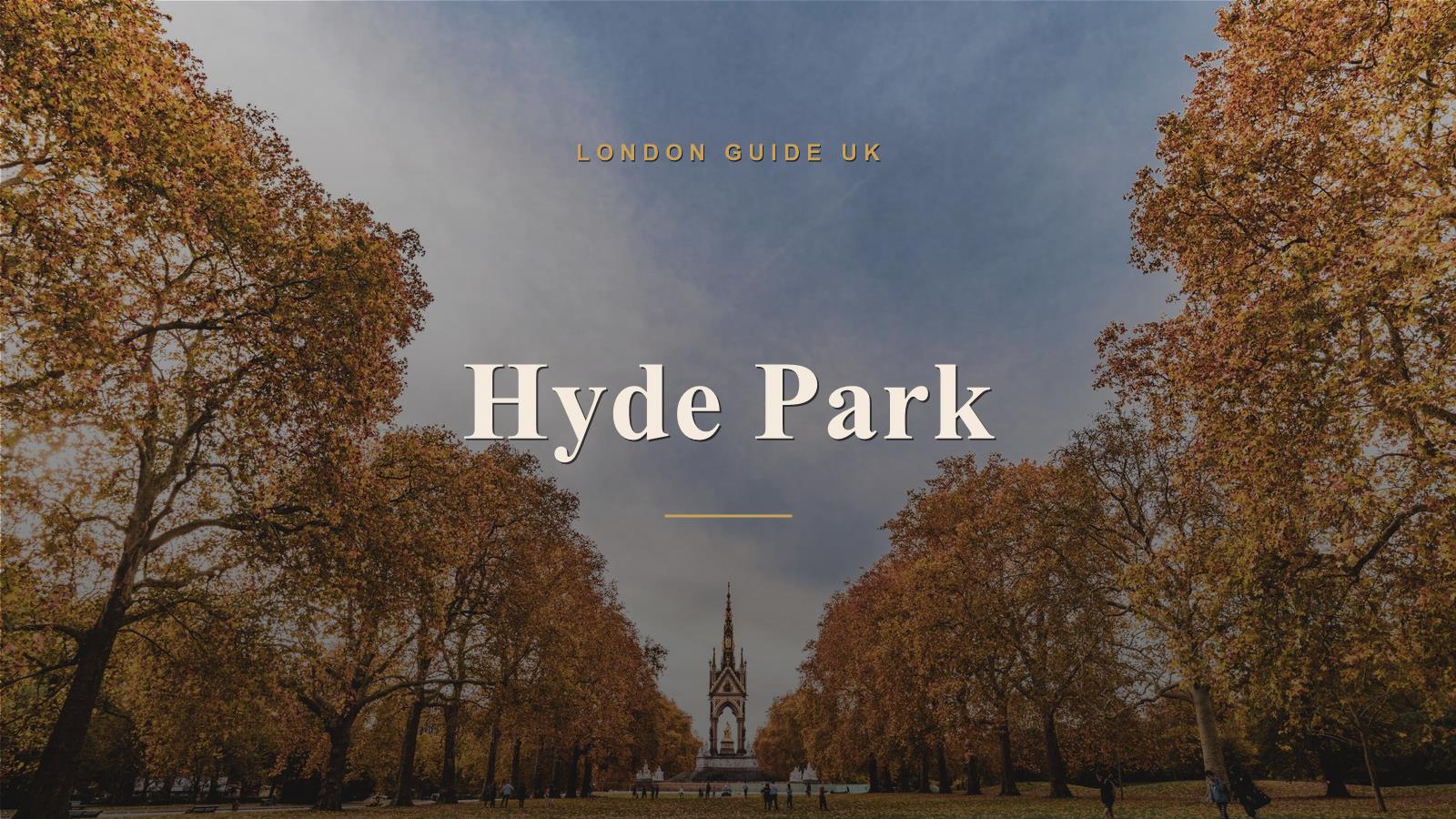
Hyde Park is one of London's eight Royal Parks and the largest of the green spaces in the centre of the capital, sweeping across some 350 acres between Kensington in the west and Mayfair in the east. For the visitor it offers the rare luxury of genuine open space within easy reach of the city's busiest districts, along with a roll-call of landmarks that includes the Serpentine lake and Speakers' Corner. Together with the adjoining Kensington Gardens, it forms a continuous expanse of lawns, avenues and water that has been at the heart of London life for centuries.
Why visit Hyde Park
Hyde Park is worth visiting because it gives you a vast, free and centrally located stretch of parkland where you can walk, sit by the water, watch open-air debate at Speakers' Corner and reach several of London's finest neighbourhoods on foot. It is the city's most versatile green space and a natural anchor for a day of sightseeing. Originally enclosed by Henry VIII as a royal hunting ground, the park opened to the public in the early seventeenth century and has since become a stage for everything from grand exhibitions to political gatherings. Its scale means it never feels crowded for long, and its position makes it an effortless pause between museums, palaces and shopping streets.
What to see in Hyde Park
The park rewards both the purposeful walker and the unhurried wanderer. A handful of landmarks anchor any visit:
- The Serpentine, the great curving lake at the heart of the park, where rowing boats and pedalos can be hired in the warmer months and the Serpentine Lido draws swimmers.
- Speakers' Corner, in the north-east corner near Marble Arch, the historic home of free public oratory where anyone may stand and address a crowd, especially on Sunday mornings.
- The Diana, Princess of Wales Memorial Fountain, an elegant ring of flowing Cornish granite set into the grass near the Serpentine.
- The Serpentine Galleries, two contemporary art spaces, with the celebrated annual Serpentine Pavilion commissioned from a leading architect each summer.
- Rotten Row, the long sand track that was London's first artificially lit public road and remains a route for horse riders.
- The Holocaust Memorial and the 7 July Memorial, quiet places of reflection within the park's grounds.
- Marble Arch, the monumental gateway standing at the park's north-east edge.
How to visit Hyde Park
Hyde Park sits in central London, bordered by Park Lane and Mayfair to the east, Knightsbridge to the south and Kensington to the west. It is free to enter and open daily, though particular attractions such as boat hire, the lido and the Serpentine Galleries keep their own seasons and times, so check the official Royal Parks website for current details before you go. Several Underground stations ring the park: Hyde Park Corner and Knightsbridge on the Piccadilly line serve the southern side, Marble Arch on the Central line is closest to Speakers' Corner, and Lancaster Gate on the Central line and Queensway on the Central line are handy for the north. Comfortable shoes are wise given the distances, and the park's many gates mean you can enter wherever suits your route. For more on moving around the city, see our practical guide to visiting London.
What's nearby
Few London parks are so well connected to the rest of the city. To the west, beyond Kensington Gardens, stand Kensington Palace and the great South Kensington museums. To the south lies Knightsbridge, home to Harrods and some of the capital's most famous department stores, while to the east the streets of Mayfair and the green of Green Park lead towards Buckingham Palace. Apsley House and the Wellington Arch stand at Hyde Park Corner. The park makes a fine starting point for exploring these surrounding London neighbourhoods or for combining a morning walk with an afternoon of shopping in Knightsbridge and beyond.
Hyde Park FAQ
Is Hyde Park free to visit?
Yes, Hyde Park is free to enter and open to the public every day. There is no admission charge to walk the grounds, see Speakers' Corner or stroll beside the Serpentine. Some activities within the park, such as boat hire, the Serpentine Lido and certain exhibitions, may carry their own fees, so check the official website for current prices.
What is Speakers' Corner?
Speakers' Corner is a corner of Hyde Park near Marble Arch where members of the public have long gathered to debate and make speeches on any subject. It is a celebrated symbol of free expression, busiest on Sunday mornings, where speakers stand and address whoever stops to listen. Anyone is welcome to speak or simply observe.
What is the difference between Hyde Park and Kensington Gardens?
Hyde Park and Kensington Gardens were once a single royal park and remain joined, divided only by the line of the Serpentine and West Carriage Drive. Kensington Gardens, to the west, is the more formal and quieter half, home to Kensington Palace, while Hyde Park to the east is livelier and hosts Speakers' Corner and most large events.
How long should I spend in Hyde Park?
A relaxed walk taking in the Serpentine and Speakers' Corner can be done comfortably in an hour or two, while a fuller visit combining the galleries, memorials and a stroll into Kensington Gardens easily fills half a day. The park's central position makes it simple to dip in for a short break between other sights.
Plan your visit
Hyde Park is one of the most rewarding free things any visitor can do in central London. Browse more of the city's leading London attractions to build your itinerary, discover other green spaces and landmarks among our pick of things to do in London, and read our practical visitor tips for getting the most from your time in the capital.