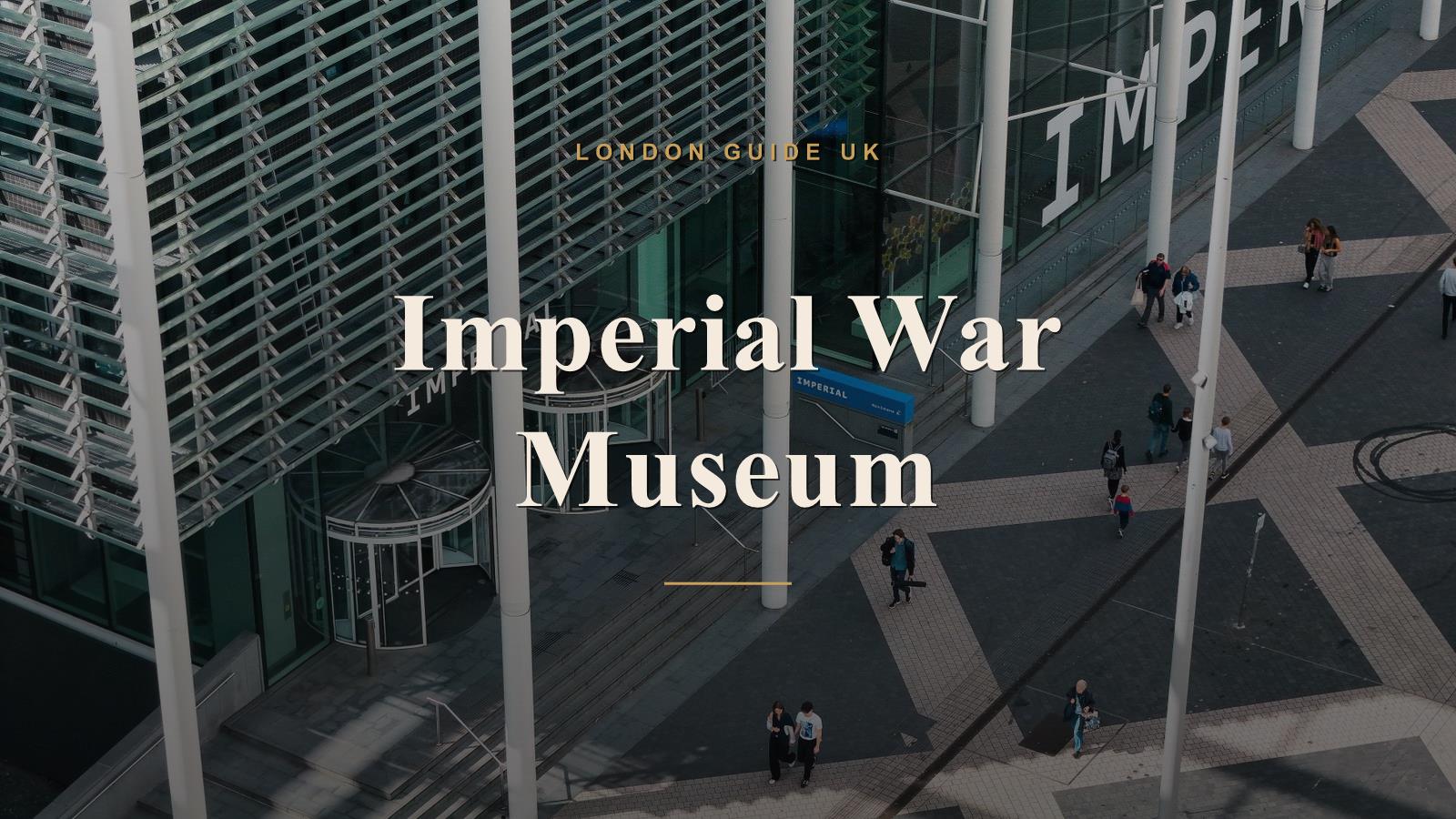
The Imperial War Museum, known to most Londoners simply as IWM London, occupies a grand domed building in Lambeth, south of the river and a short walk from the South Bank. Far from being a celebration of warfare, it is a thoughtful, often moving institution dedicated to understanding modern conflict and its effect on ordinary people's lives. For the visitor it offers one of the capital's most substantial free museums, a place where towering aircraft and tanks share space with quiet personal letters, art and the sobering testimony of those who lived through the twentieth century's defining events.
Why visit Imperial War Museum
Visit the Imperial War Museum to understand how war shaped the modern world and the people caught up in it, through an outstanding free collection spanning the First World War to recent conflicts. It is one of London's most significant cultural institutions, combining dramatic large objects, immersive galleries and deeply human stories in a single, accessible building.
The museum's particular strength is balance. The vast atrium impresses with its scale, yet the galleries never lose sight of the individual. Personal diaries, uniforms, photographs and recorded voices ground the sweep of history in lived experience, making this as rewarding for curious newcomers as for those with a deep interest in the period. It is also a serious place of remembrance and reflection, handling difficult subjects with care and intelligence.
What to see at Imperial War Museum
The collection is wide ranging, so it helps to arrive with a sense of the highlights. Among the displays that draw the most attention are the following.
- The dramatic main atrium, where aircraft, a Spitfire, rockets and artillery are suspended and arranged across several levels.
- The major First World War Galleries, tracing the causes, course and human cost of the conflict in remarkable depth.
- The Second World War Galleries, exploring the global scale of the war and life on the home front.
- The deeply affecting Holocaust Galleries, among the most important displays of their kind anywhere.
- Galleries on more recent conflicts, examining the nature of war from 1945 to the present day.
- A rich programme of war art, photography and rotating special exhibitions.
The Holocaust Galleries in particular are powerful and may be unsuitable for very young children, so families may wish to plan their route accordingly.
How to visit
The Imperial War Museum stands on Lambeth Road in the green setting of Geraldine Mary Harmsworth Park, on the south side of the Thames. The nearest Underground station is Lambeth North on the Bakerloo line, a few minutes' walk away, while Elephant and Castle on the Bakerloo and Northern lines and Waterloo, with its mainline and Underground connections, are also within comfortable walking distance. Several bus routes pass close by.
General admission to the museum is free, although some special exhibitions may carry a charge and donations are welcomed. Because opening times, ticketed exhibitions and any timed entry arrangements can change, it is best to check the official Imperial War Museum website before you travel for current details. Allow at least half a day to do the galleries justice, and consider visiting on a weekday morning to enjoy the quieter spaces.
What's nearby
The museum sits within easy reach of some of London's best loved sights. A walk north brings you to the South Bank, with its riverside promenade, the London Eye and the cultural cluster around the Southbank Centre. Across the river lie the Houses of Parliament and Westminster, while nearby Lambeth is home to the Garden Museum and the gardens of Lambeth Palace. The wider area rewards exploration of London's riverside neighbourhoods and offers plenty of further things to do within a short stroll.
Imperial War Museum FAQ
Is the Imperial War Museum free to enter?
Yes, general admission to the Imperial War Museum is free, so you can explore the permanent galleries without booking a paid ticket. Some special exhibitions may carry a separate charge, and the museum welcomes donations to support its work. Check the official website for current details on any ticketed displays.
How long should I spend at the museum?
Most visitors find that half a day allows a satisfying visit, taking in the main atrium and a couple of the major galleries at a relaxed pace. Those with a keen interest in modern history could happily spend a full day, particularly if they want to give the First World War and Holocaust Galleries the time they deserve.
Which Underground station is nearest?
Lambeth North on the Bakerloo line is the closest Underground station, only a few minutes on foot. Elephant and Castle, served by the Bakerloo and Northern lines, and Waterloo, with extensive mainline and Underground links, are also within easy walking distance, making the museum simple to reach from across London.
Is the museum suitable for families?
The museum can be very engaging for older children, especially the large aircraft and vehicles in the atrium. However, some content deals with distressing subjects, and the Holocaust Galleries in particular are intended for older visitors. Families are advised to plan their route in advance and consider which galleries suit their children's ages.
Plan your visit
The Imperial War Museum is a cornerstone of any cultural itinerary in the capital. Browse more of London's museums and galleries to pair it with other collections, explore the riverside neighbourhoods that surround it, and find further attractions to round out your day in this part of London.