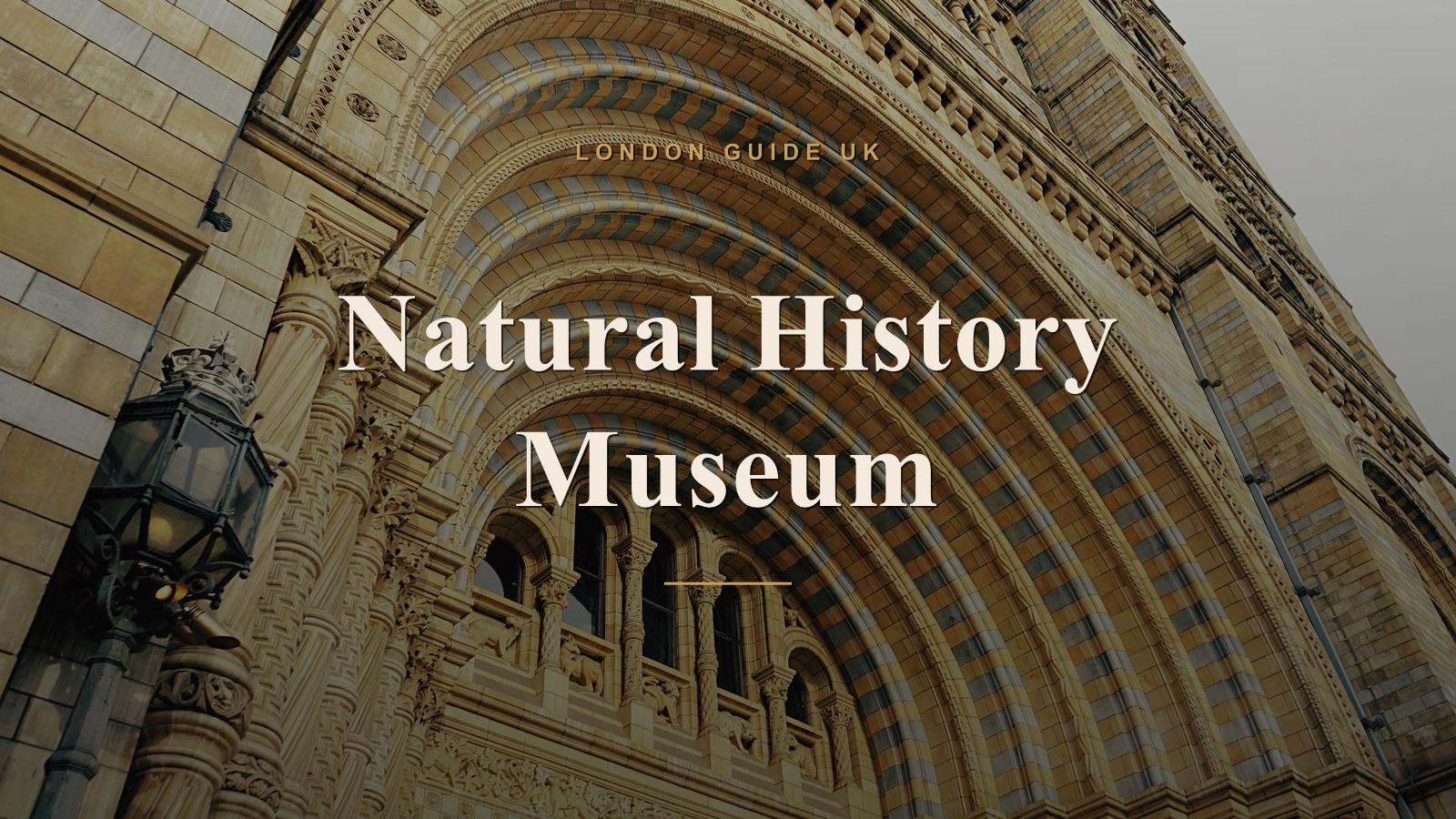
The Natural History Museum stands on Cromwell Road in South Kensington, a soaring monument to the living world and one of London's most beloved free institutions. Housed in Alfred Waterhouse's spectacular terracotta building, opened in 1881, it holds some eighty million specimens spanning botany, entomology, mineralogy, palaeontology and zoology. For the visitor it offers something rare: a great national collection of global importance, gathered under one cathedral-like roof, with no admission charge to its permanent galleries.
Why visit Natural History Museum
The Natural History Museum is among the finest museums of its kind anywhere, combining a breathtaking Romanesque building with world-class collections that trace the story of life on Earth, from dinosaurs and meteorites to whales and gemstones. It is free to enter, family-friendly and endlessly absorbing. Beyond the headline exhibits, the building itself is a Victorian masterpiece, every column and arch carved with plants and creatures. The museum balances spectacle with serious science, remaining an active centre of research while welcoming millions of visitors each year. Few attractions reward the curious so generously.
What to see
The collection is vast, so it helps to arrive with a short list of priorities. These are the highlights most visitors come to see.
- Hintze Hall, the grand central nave, crowned by Hope, the suspended skeleton of a blue whale that greets every visitor on arrival.
- The Dinosaurs gallery, the museum's most famous draw, featuring towering skeletons and casts that captivate children and adults alike.
- The Mammals gallery, home to a life-sized model of a blue whale, a long-standing favourite among returning visitors.
- The dazzling minerals and gemstones collections in the Vault, where rare specimens and meteorites are displayed.
- The Earth Hall and its galleries exploring volcanoes, earthquakes and the forces that shape our planet.
- The Darwin Centre, with its striking cocoon, offering a glimpse into the museum's scientific work and preserved specimens.
- The architecture itself, from the soaring terracotta facade to the carved animals woven throughout Waterhouse's design.
How to visit
The museum sits on Cromwell Road in South Kensington, in the cluster of great institutions sometimes called Albertopolis. The nearest Underground station is South Kensington, served by the Piccadilly, District and Circle lines, and a pedestrian subway connects it directly to the museum and its neighbours, a welcome shelter on a wet London day. Gloucester Road station is also within easy walking distance. Numerous bus routes stop nearby on Cromwell Road.
Entry to the permanent galleries is free, though some special exhibitions are ticketed and certain busy periods may require booking. The museum can be extremely popular at weekends and during school holidays, so arriving early or visiting later in the afternoon often makes for a calmer experience. For current opening times, special exhibition tickets and any visitor advice, always check the official Natural History Museum website before you travel.
What's nearby
South Kensington is one of London's richest cultural quarters. The Victoria and Albert Museum, the world's leading museum of art and design, stands immediately next door, while the Science Museum is a short walk behind, making a three-museum day entirely possible. Just to the north lie Hyde Park and Kensington Gardens, with the Royal Albert Hall and the Albert Memorial close by. The surrounding streets offer handsome architecture, cafes and the elegant shops of Kensington for a pause between galleries.
Natural History Museum FAQ
Is the Natural History Museum free?
Yes, entry to the museum's permanent galleries is free, which is one of the great pleasures of visiting. Some temporary exhibitions and seasonal events are ticketed and may carry a charge. Booking is sometimes recommended during busy periods, so it is worth checking the official website before you arrive to confirm current arrangements.
What is the nearest Underground station?
The nearest station is South Kensington, served by the Piccadilly, District and Circle lines. A pedestrian subway links the station directly to the museum, sheltering you from the weather. Gloucester Road station is also within walking distance, and several bus routes stop nearby on Cromwell Road for those arriving from other parts of the city.
How long should I spend there?
A focused visit to the main highlights takes around two to three hours, while enthusiasts can easily spend a full day. The collection is so large that few people see everything in one trip. Choosing a handful of galleries in advance, such as the dinosaurs and Hintze Hall, helps you make the most of your time without feeling rushed.
Is it suitable for children?
Very much so. The Natural History Museum is one of London's most rewarding attractions for families, with dinosaurs, giant whale skeletons and interactive galleries that fascinate younger visitors. It can become busy at weekends and during school holidays, so arriving early helps. Facilities for families are good, and the building itself is an adventure to explore.
Plan your visit
The Natural History Museum belongs at the top of any cultural itinerary. Browse more of the capital's great collections in our guide to London's museums, pair it with the surrounding institutions among the city's leading attractions, and read about the wider area in our guide to London's neighbourhoods to plan a full day in South Kensington.