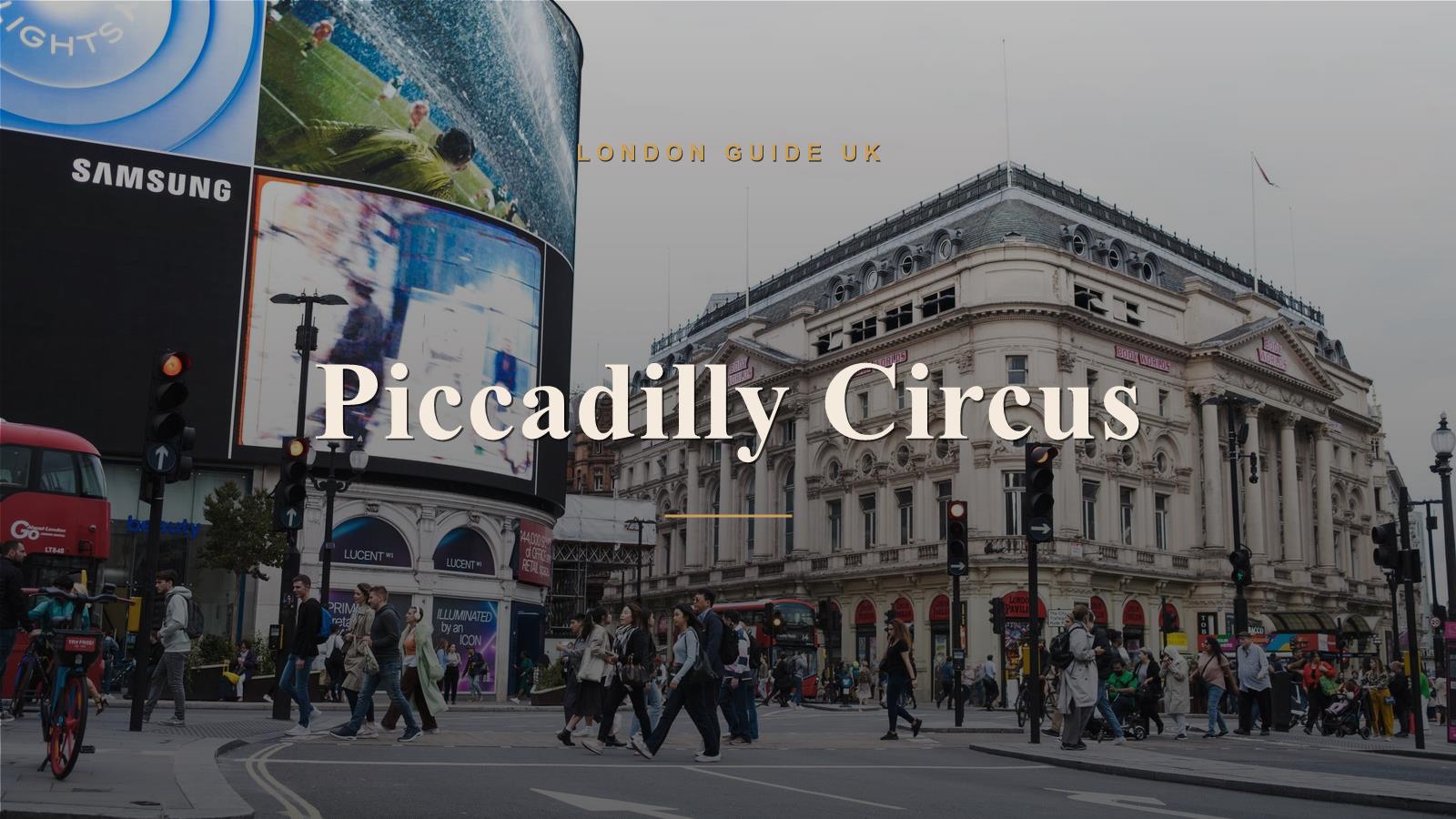
Piccadilly Circus is one of London's most recognisable public spaces, a busy road junction in the heart of the West End where several of the city's grandest thoroughfares converge. Famous for its luminous wraparound advertising screens, the winged statue popularly known as Eros and its position on the doorstep of theatreland, it has served as a meeting point and a symbol of London's energy for well over a century. For visitors, it is both a sight to tick off and a natural gateway to the shops, theatres and galleries that surround it.
Why visit Piccadilly Circus
Piccadilly Circus is worth visiting because it captures the spectacle and convergence of central London in a single spot: the glowing advertising signs, the famous fountain statue and the constant flow of people make it one of the city's defining urban scenes, and it sits within walking distance of the West End's theatres, restaurants and shops. Beyond the photograph, the square rewards a slower look. It is a genuine crossroads of London life, linking Regent Street, Shaftesbury Avenue, the Haymarket and Piccadilly itself. Standing on its steps, you sense the geography of the West End opening out in every direction, which is exactly why so many visitors begin their explorations here.
What to see at Piccadilly Circus
The junction itself is the attraction, but several individual features are worth seeking out as you arrive and orient yourself.
- The illuminated signs, the curved bank of giant digital advertising screens that has lit the corner of the square for generations and remains its most photographed feature.
- The Shaftesbury Memorial Fountain, topped by the winged aluminium figure long nicknamed Eros but officially representing the Angel of Christian Charity, erected in memory of the Victorian philanthropist Lord Shaftesbury.
- The view down Regent Street, the sweeping curve designed by John Nash that leads north towards Oxford Circus and is one of London's great shopping streets.
- Shaftesbury Avenue, the spine of theatreland, lined with historic playhouses and stage doors just steps from the square.
- The surrounding architecture, including the grand frontages of the London Pavilion and Criterion buildings that frame the junction.
How to visit and getting there
Piccadilly Circus sits in the West End of central London, at the meeting of Regent Street, Piccadilly, Shaftesbury Avenue, the Haymarket and Coventry Street, within the W1 postcode. As a public square it is open at all times and free to walk through and enjoy, with no ticket required.
The most direct way to arrive is by Underground. Piccadilly Circus station sits directly beneath the junction and is served by the Piccadilly and Bakerloo lines, with exits opening right onto the square. Nearby Leicester Square and Charing Cross stations are both a short walk away and offer further line connections. Numerous bus routes also pass through the area. The square is busiest in the evening when the signs are at their brightest, and it can be very crowded at peak times, so allow extra time if you are moving on to a show or dinner. If your plans include any nearby ticketed attractions, check each venue's official website for current opening times and prices before you set out.
What's nearby
Few parts of London pack in as much within a few minutes' walk. Leicester Square, with its cinemas and the half-price theatre booth, lies immediately to the east, while Chinatown and the lively streets of Soho sit just to the north. Head west along Piccadilly and you reach the Royal Academy of Arts at Burlington House and the elegant Burlington Arcade. Walk south down the Haymarket and Lower Regent Street towards St James's and you are soon at Trafalgar Square and the National Gallery. The theatres of Shaftesbury Avenue begin almost at the square's edge, making it an ideal starting point for an afternoon or evening in the West End.
Piccadilly Circus FAQ
Is Piccadilly Circus free to visit?
Yes. Piccadilly Circus is a public road junction and open square, so there is no admission charge and no ticket is needed to walk through, take photographs or watch the famous illuminated signs. You only pay if you choose to visit a nearby ticketed attraction, theatre, shop or restaurant in the surrounding West End streets.
What is the statue at Piccadilly Circus?
The statue tops the Shaftesbury Memorial Fountain and is popularly called Eros, though the sculptor intended it to represent the Angel of Christian Charity. It honours the Victorian reformer Lord Shaftesbury and has become one of London's best known landmarks and a traditional meeting point for visitors and Londoners alike.
Which Underground station serves Piccadilly Circus?
Piccadilly Circus station sits directly under the junction and is served by the Piccadilly and Bakerloo lines. Its exits open straight onto the square. Leicester Square and Charing Cross stations are also within a short walk and add further line options, so the area is very easy to reach by Tube from across London.
How long should I spend at Piccadilly Circus?
The square itself takes only a few minutes to see, so most visitors pause for photographs and a look at the signs before moving on. Because it sits at the heart of the West End, it works best as a starting point for a longer outing taking in nearby theatres, shops, galleries and the streets of Soho.
Plan your visit
Use Piccadilly Circus as the launch point for a wider day in central London. Browse more of the city's landmarks and sights on our guide to London attractions, line up an evening at the playhouses just around the corner with our things to do in London pages, and get your bearings on the surrounding districts through our overview of London neighbourhoods.