Regent's Park is one of London's grandest Royal Parks, a sweep of formal gardens, open meadow and tree-lined avenues laid out by the architect John Nash in the early nineteenth century. Set across the northern edge of central London, between Marylebone and Camden, it is at once a designed landscape of considerable elegance and a working green space that draws Londoners and visitors in equal measure. For the discerning traveller it offers rose gardens, an open-air theatre and the country's oldest scientific zoo, all within a short walk of Oxford Street.
Why visit Regent's Park
Regent's Park rewards visitors with the finest formal gardens in central London, an internationally important zoo, a long-running open-air theatre and panoramic views from Primrose Hill, all set within Nash's elegant Regency design. It is free to enter and easily reached, making it one of the capital's most rewarding green escapes.
What distinguishes the park is the marriage of grand design and genuine usefulness. Nash conceived it as the centrepiece of a royal scheme, ringed by the cream-stuccoed terraces that still define its perimeter. Within that frame sits a landscape of remarkable variety, from the manicured precision of the rose beds to the wide playing fields and the wilder fringes along the boating lake. It is a place to walk for an hour or to settle for an afternoon, and it sits close enough to the West End to fold neatly into a day of sightseeing.
What to see in Regent's Park
The park is large, so it helps to know its set pieces before you arrive. These are the features that most reward a visitor's time.
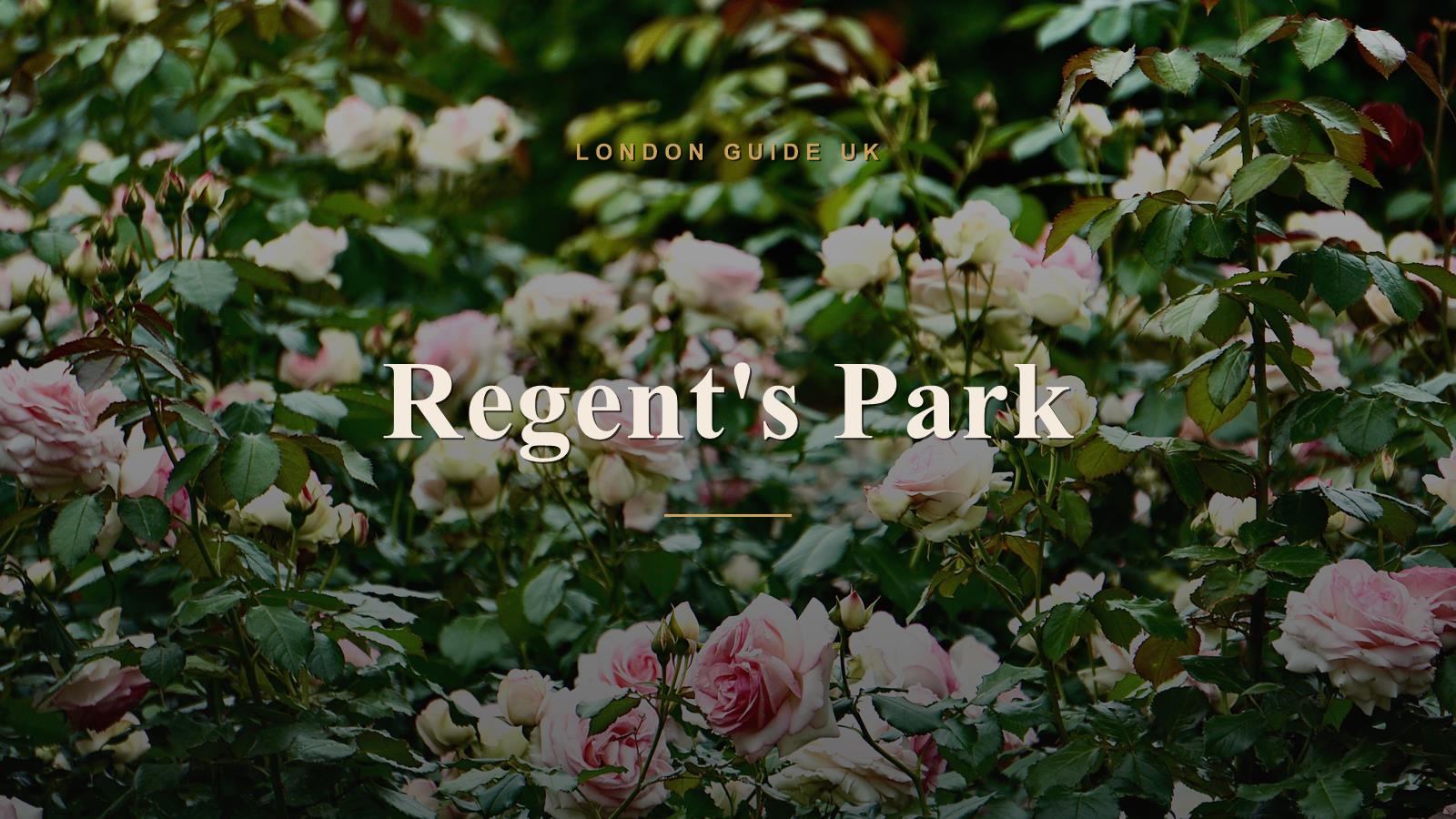
- Queen Mary's Gardens, the celebrated rose gardens at the heart of the Inner Circle, planted with thousands of roses across many varieties and at their most spectacular in early summer.
- London Zoo, run by the Zoological Society of London and the world's oldest scientific zoo, occupying the park's northern edge and home to a wide range of species.
- The Regent's Park Open Air Theatre, a long-established outdoor venue staging plays and musicals through the warmer months in a leafy natural amphitheatre.
- The Boating Lake, a graceful ornamental water with rowing boats in season and a notable population of waterfowl.
- Primrose Hill, the grassy rise just to the north, which offers one of the best free panoramas of the London skyline.
- The Avenue Gardens and the Broad Walk, formal Victorian-style plantings and a stately tree-lined promenade running the length of the park.
Getting there
Regent's Park lies in north-west central London, bordered by Marylebone, Fitzrovia and Camden. The most convenient Underground stations are Regent's Park on the Bakerloo line and Baker Street, served by the Bakerloo, Jubilee, Metropolitan, Circle and Hammersmith and City lines, both close to the southern gates. For the zoo and the northern half of the park, Camden Town on the Northern line and Great Portland Street on the Circle, Metropolitan and Hammersmith and City lines are useful. The park itself is free to enter and open daily, though individual attractions such as London Zoo and the Open Air Theatre charge admission and keep their own seasons. Check the official Royal Parks website and the relevant attraction sites for current opening times, ticket prices and event dates before you travel.
What's nearby
The park sits within easy reach of several of London's better-known draws. To the south, Marylebone offers handsome streets, independent shops and the waxworks of Madame Tussauds near Baker Street. A short walk east brings you to the galleries and squares of Fitzrovia and Bloomsbury. To the north lies Camden, with its famous markets and canalside walks along the Regent's Canal, which threads past the zoo. For more in this part of the city, browse our guide to London's neighbourhoods and the wider range of London attractions.
Regent's Park FAQ
Is Regent's Park free to enter?
Yes, Regent's Park is one of London's Royal Parks and is free to enter and to walk around, including the rose gardens and Primrose Hill. Some attractions within or beside the park, such as London Zoo and the Open Air Theatre, charge separate admission, so check their official sites for current ticket prices.
When are the rose gardens at their best?
Queen Mary's Gardens are generally at their most spectacular in early summer, when the thousands of roses come into full bloom across the Inner Circle. The display can vary year to year with the weather, so for the most striking show it is worth visiting on a fine day in June if you can time your trip to suit.
What is the nearest Underground station?
Regent's Park station on the Bakerloo line sits right by the southern edge, while Baker Street, served by five lines, is also very close. For the zoo and the northern part of the park, Camden Town on the Northern line and Great Portland Street are the most convenient stations to use.
How much time should I allow for a visit?
An hour is enough for a brisk walk through the formal gardens and along the Broad Walk. To take in the rose gardens, the boating lake and the view from Primrose Hill at a relaxed pace, allow a half day. Add a visit to London Zoo or an Open Air Theatre performance and the park can comfortably fill a full day.
Plan your visit
Set Regent's Park within a wider day out by exploring our full list of London attractions, find more green space and culture in our guide to the surrounding London neighbourhoods, or gather ideas for the rest of your trip from our suggested London itineraries.