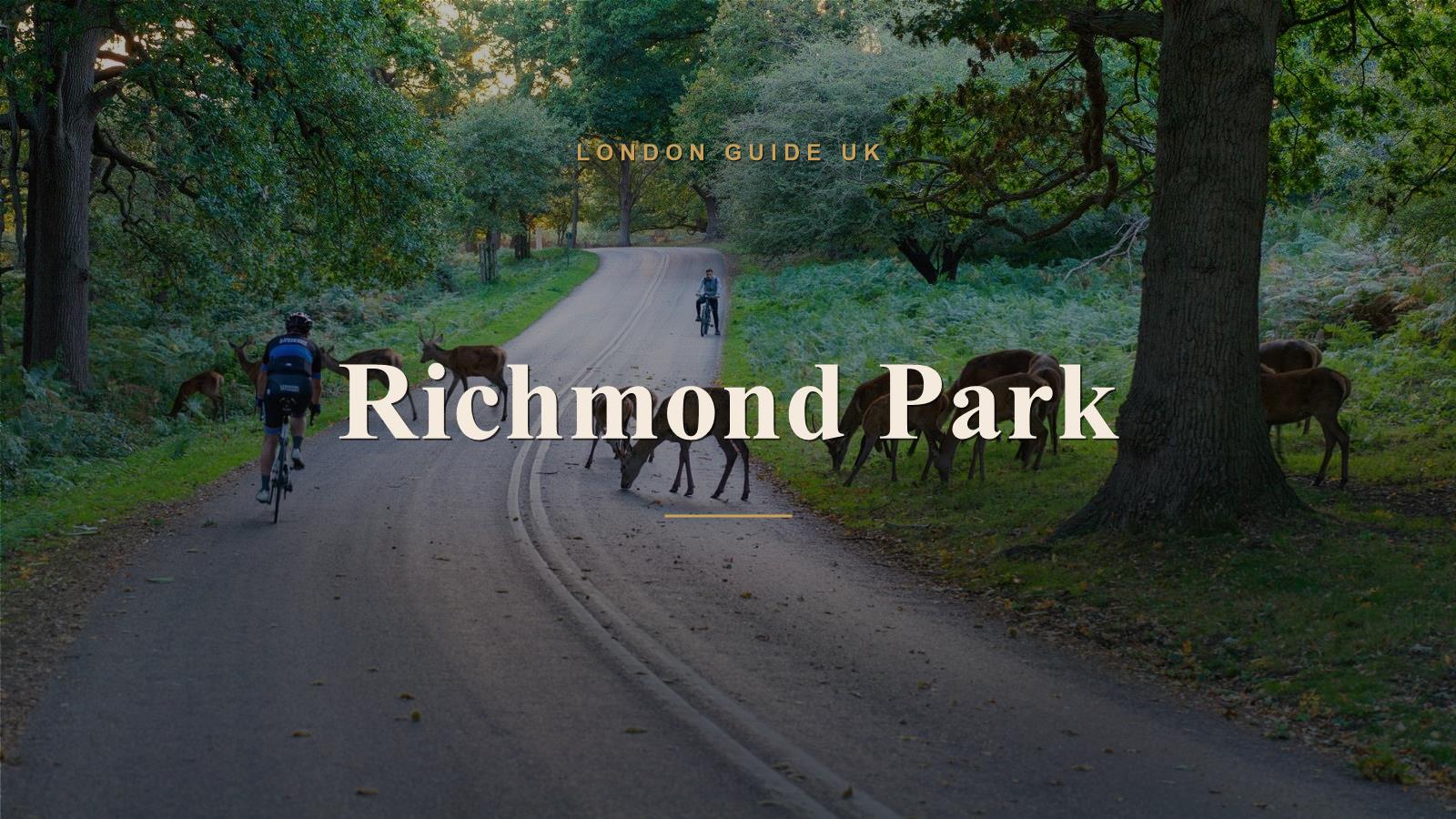
Richmond Park is the largest of London's eight Royal Parks, an expanse of nearly 2,500 acres in the south west of the capital where ancient oaks, open grassland and free-roaming herds of deer create a landscape that feels closer to wild countryside than a city park. Lying within the boroughs of Richmond upon Thames and Kingston upon Thames, it is one of the great escapes from the urban bustle, designated both a National Nature Reserve and a Site of Special Scientific Interest. For the discerning visitor, it offers a rare chance to encounter genuine pastoral grandeur within easy reach of central London.
Why visit Richmond Park
Richmond Park is worth visiting for its herds of red and fallow deer, which have grazed here freely since the seventeenth century, set within the largest enclosed open space in London. Few places so close to a capital city allow you to walk among wild deer, ancient trees and sweeping vistas. The park rewards slow exploration, whether on foot, by bicycle or simply from a quiet bench, and its scale means it never feels crowded even on the busiest days. It is also a place of genuine ecological importance, home to rare beetles, fungi, birds and veteran oaks that are several centuries old.
What to see
The park is generous with its highlights, and a single visit barely scratches the surface. Among the things most worth seeking out are the following.
- The deer herds, around 600 red and fallow deer that roam freely across the grassland and woodland, best observed quietly and from a respectful distance.
- The Isabella Plantation, an ornamental woodland garden celebrated for its azaleas, rhododendrons and camellias, at its most spectacular in late spring.
- King Henry's Mound, a small hill offering a famous protected view across to St Paul's Cathedral, more than ten miles away.
- Pen Ponds, two large lakes that are a haven for waterfowl and a fine spot for birdwatching.
- Pembroke Lodge, a Georgian mansion with terraced gardens and one of the highest points in the park, offering broad views over the Thames Valley.
- White Lodge, an elegant former royal residence now home to the Royal Ballet School.
- Ancient oaks and veteran trees, some more than 700 years old, which give the park its distinctive, timeless character.
Getting there
Richmond Park sits in south west London and is encircled by several gates, the principal ones being Richmond Gate, Roehampton Gate, Sheen Gate and Kingston Gate. It is free to enter. The nearest Underground station is Richmond, served by the District line and London Overground, from which it is a walk or short bus ride to the Richmond Gate entrance. Mainline rail services also reach Richmond, Norbiton and Mortlake, while several bus routes stop near the park's gates. The park is well suited to cyclists, though motor traffic is restricted in places and vehicle access can vary, so visitors should consult the official Royal Parks website for current opening times, gate arrangements and any seasonal closures, particularly during the deer culling periods in autumn and winter when access may be limited.
What's nearby
The surrounding area is among the most appealing in London's western reaches. The riverside town of Richmond itself, with its handsome green, independent shops and Thames-side walks, lies just beyond the park's northern edge. To the south lies Kingston upon Thames, a lively market town on the river. Nearby too are Ham House, a remarkable seventeenth-century mansion, and Kew Gardens, the world-renowned botanical collection a short distance to the north. Together they make Richmond Park an ideal anchor for a fuller day exploring this corner of the capital. See our guides to London's wider attractions and neighbourhoods to plan further afield.
Richmond Park FAQ
Is Richmond Park free to enter?
Yes, Richmond Park is free to enter, as are all of London's Royal Parks. There is no admission charge to walk or cycle through its grounds. Some facilities, such as car parking and refreshments, may carry a cost, so it is worth checking the official Royal Parks website for current details before you visit.
Can you see the deer in Richmond Park?
Yes, the park is home to around 600 red and fallow deer that roam freely throughout the year. They are most visible in open grassland, especially around dawn and dusk. Visitors are asked to keep a safe distance of at least fifty metres, never feed or touch them, and take particular care during the autumn rut and spring birthing seasons.
How large is Richmond Park?
Richmond Park covers nearly 2,500 acres, making it the largest of London's Royal Parks and the biggest enclosed open space in the capital. Its sheer scale, roughly three times the size of New York's Central Park, means there is ample room to walk, cycle and explore without ever feeling that the city is close at hand.
What is the best time of year to visit?
The park rewards visits in every season. Late spring brings the Isabella Plantation into glorious bloom, summer offers long open walks, and autumn delivers golden colour and the dramatic deer rut. Winter mornings can be strikingly atmospheric. Check the official website for any seasonal access restrictions, particularly during the deer management periods.
Plan your visit
Richmond Park pairs naturally with a broader day out in south west London. Browse our full guide to London's leading attractions for more ideas, explore other green spaces and outdoor experiences in our things to do section, or build a wider route through the area with our curated London itineraries.