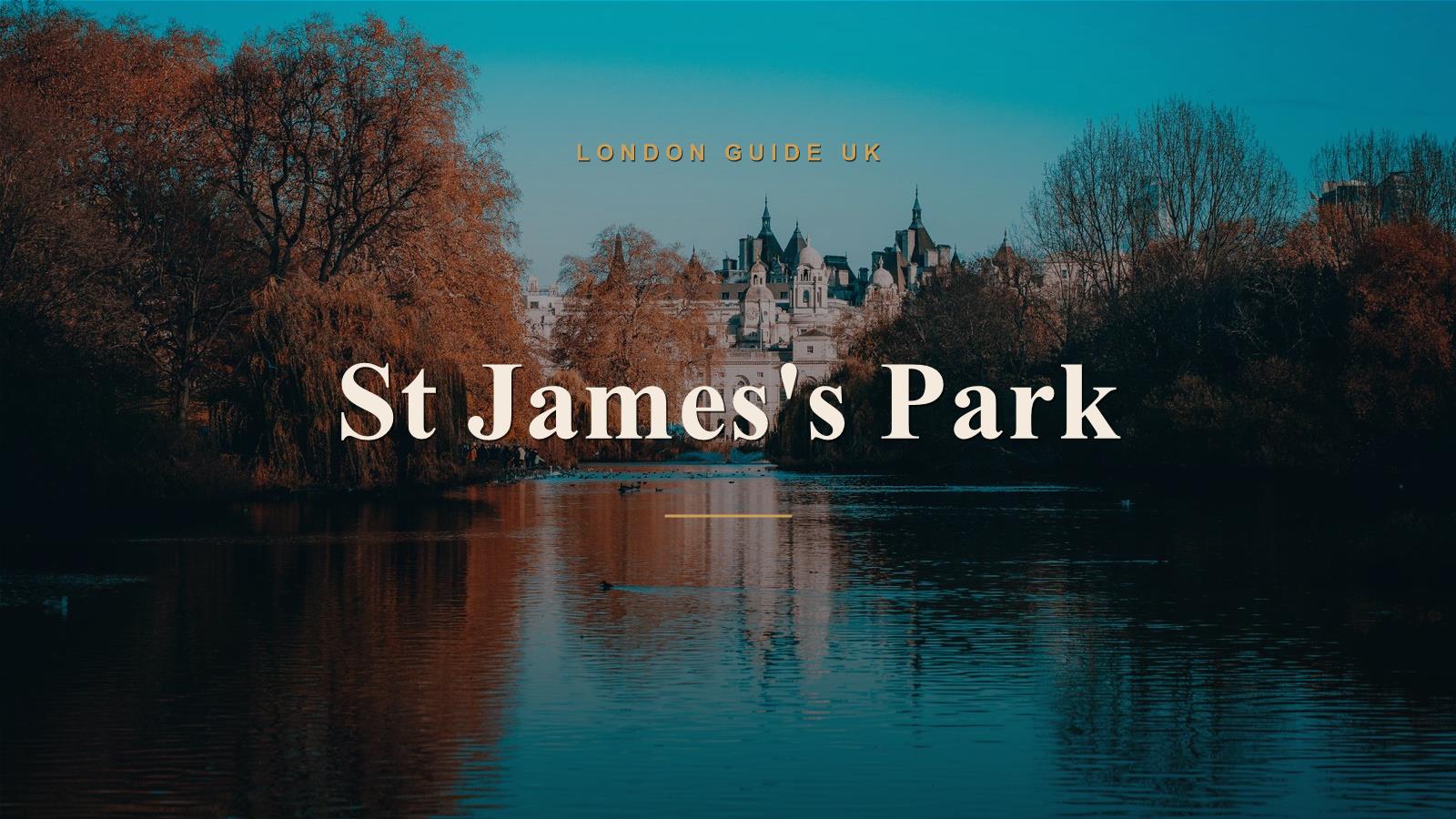
St James's Park is the oldest of London's eight Royal Parks and arguably the most quintessentially regal, a 57-acre sweep of lawns, mature trees and ornamental water sitting at the very heart of ceremonial London. Bordered by Buckingham Palace to the west, Horse Guards Parade to the east and The Mall along its northern edge, it occupies the ground between the monarchy and government, in the City of Westminster. For the visitor, it offers the rare combination of genuine tranquillity and front-row access to the grandest sights in the capital.
Why visit St James's Park
St James's Park is worth visiting because it places you at the symbolic centre of royal London, with celebrated views of Buckingham Palace, a graceful lake home to resident pelicans, and immediate access to ceremonial events such as Trooping the Colour. It is also one of the most beautifully planted and peaceful green spaces in the city.
The park's appeal lies in its layering of history and landscape. The land was first enclosed by Henry VIII in the 1530s and later transformed under Charles II, who opened it to the public, before John Nash gave it the romantic, picturesque form visitors enjoy today. That long royal stewardship explains both its central position and its exceptional upkeep. Few green spaces anywhere allow you to stand on a single bridge and take in a palace at one end and the domes and turrets of Whitehall at the other.
What to see in St James's Park
The park rewards an unhurried wander, but a handful of features stand out and reward a deliberate visit.
- The Blue Bridge, which crosses the lake and offers two of the finest free views in London: Buckingham Palace to the west, and the fairy-tale skyline of Whitehall, including the London Eye beyond, to the east.
- The pelicans, residents of the park since 1664 when they were first presented to Charles II by a Russian ambassador. They are usually found near Duck Island at the eastern end of the lake.
- The lake and its waterfowl, home to a remarkable variety of ducks, geese, swans and other wildfowl, making the park a quietly excellent spot for birdwatching.
- Duck Island Cottage, a picturesque lakeside lodge that adds to the storybook character of the eastern end.
- The Mall and the views toward Buckingham Palace, especially striking when lined with flags for state occasions.
- The flowerbeds and mature planting, considered among the most carefully tended in any Royal Park, with colour through much of the year.
Getting there
St James's Park lies in central Westminster, framed by The Mall, Birdcage Walk and Horse Guards Road. It is free to enter and open to the public. The most convenient Underground station is St James's Park on the District and Circle lines, on the park's southern side. Victoria (Victoria, District and Circle lines, plus National Rail) is a short walk to the south-west, while Westminster (Jubilee, District and Circle lines) and Charing Cross sit within easy reach to the east. The park is also a natural stop on any walk through ceremonial London.
Entry to the park is free, with no ticket required. Opening times for the grounds and any seasonal facilities can vary, so visitors should check the official Royal Parks website for current hours, event arrangements and any access restrictions during state occasions. For broader sightseeing ideas around the park, see our guide to London's leading attractions.
What's nearby
Few parts of London pack in so many landmarks within walking distance. Immediately to the east lies Horse Guards Parade, where the Changing the Guard ceremony and Trooping the Colour take place, and beyond it the government offices of Whitehall and Downing Street. To the south are the Houses of Parliament, Big Ben and Westminster Abbey. Just across The Mall sits Green Park, which connects northward toward Piccadilly, while the Churchill War Rooms are a short stroll along the park's southern edge. For more in the area, browse our overview of central London neighbourhoods and the city's best museums.
St James's Park FAQ
Is St James's Park free to visit?
Yes. St James's Park is free to enter, with no ticket required, as is the case across all the Royal Parks. You can walk in at any of its gates and explore the lawns, lake and pathways at no charge. Always check the official Royal Parks website for current opening hours and any temporary restrictions during major ceremonial events.
Are there really pelicans in St James's Park?
Yes. Pelicans have lived in St James's Park since 1664, when they were first presented to Charles II, and they remain one of the park's best-loved features. They are usually seen around Duck Island at the eastern end of the lake. The birds are wild residents, so sightings depend on the day, but they are a genuine highlight.
What is the nearest Underground station?
The closest station is St James's Park, served by the District and Circle lines and sitting on the park's southern side. Victoria, Westminster and Charing Cross are all within a short walk too, giving you access to the Victoria, Jubilee and other lines, plus National Rail services from Victoria and Charing Cross.
Why is St James's Park significant?
It is the oldest of London's Royal Parks, first enclosed under Henry VIII and reshaped by Charles II and later John Nash. Its position between Buckingham Palace and Horse Guards makes it the stage for great state occasions, and its lake, planting and pelicans give it a character unlike any other central park.
Plan your visit
St James's Park works beautifully as the green heart of a day spent exploring royal and ceremonial London. Pair it with the surrounding landmarks using our guide to the capital's top attractions, plan a logical route with our suggested London itineraries, and round out your trip with the practical essentials in our practical travel guide.