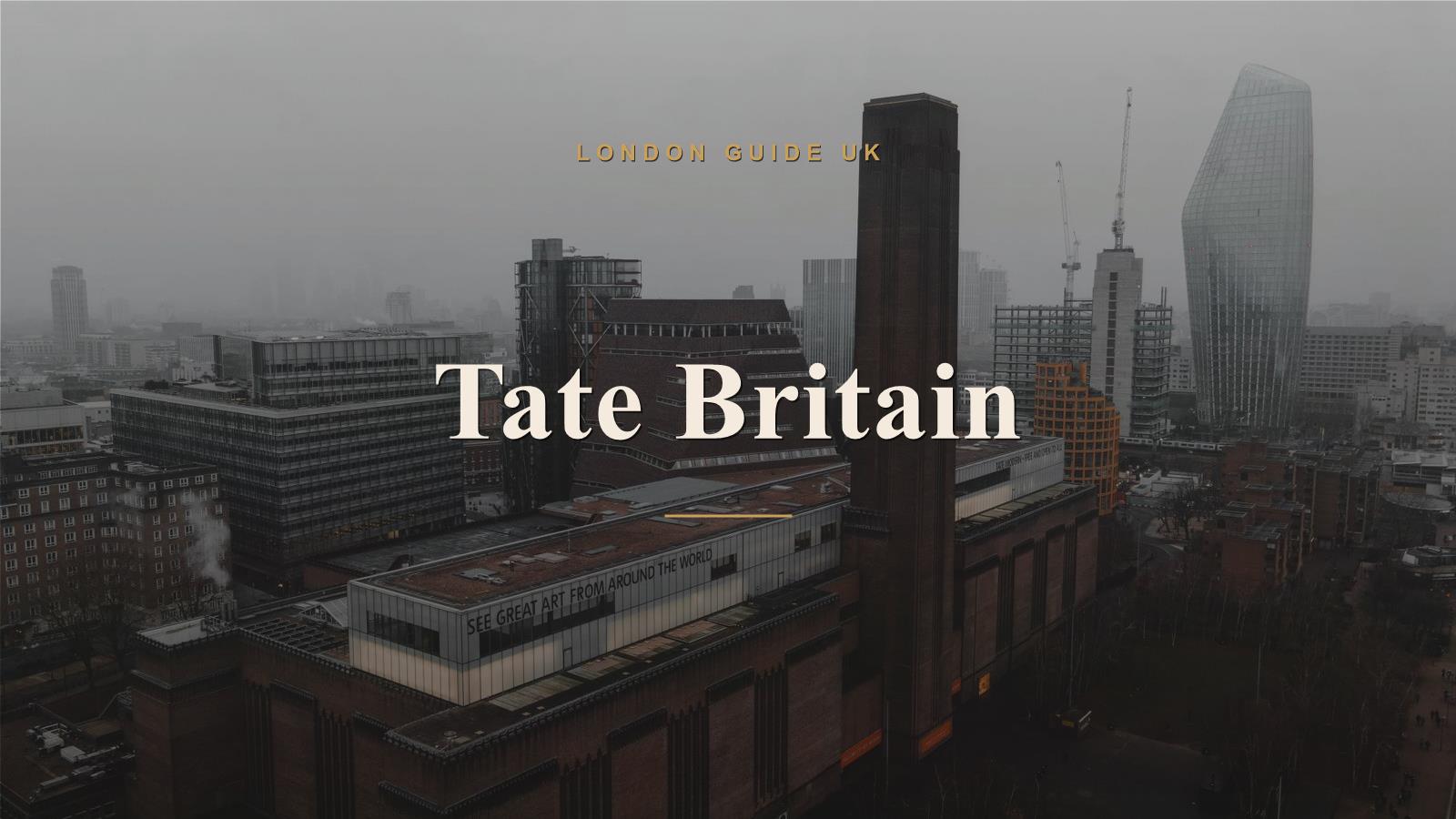
Tate Britain stands on Millbank, beside the River Thames in Pimlico, and holds the national collection of British art spanning the years from 1500 to the present day. It is the original Tate gallery, opened in 1897, and it remains the place to trace the whole sweep of art made in Britain under one grand, columned roof. Entry to the permanent collection is free, which makes it one of the most rewarding stops in London for any visitor with an interest in painting, sculpture and the story of a nation told through its artists.
Why visit Tate Britain
Tate Britain is the only place in the world that shows the complete arc of British art across five centuries, free to enter, in a calm riverside building away from the busier tourist crush. It is where you meet the country's defining painters in depth, from Tudor portraits to contemporary commissions, all arranged so the eye can follow how taste, technique and ambition shifted over time. For visitors who find the city's larger institutions overwhelming, it offers something rarer: room to breathe and to look properly. The collection is deep rather than sprawling, and the galleries reward a slow, considered visit. You can come for a single masterpiece or spend a whole afternoon walking the chronological displays, and either way the gallery makes the history of British art feel coherent and alive.
What to see
The strength of Tate Britain lies in its named collections and its chronological hang, which let you watch British art evolve gallery by gallery. Among the highlights visitors most often seek out are these.
- The Clore Gallery, home to the unrivalled Turner Bequest, with hundreds of works by J.M.W. Turner including luminous late seascapes and studies of light.
- The historic galleries of Tudor and Stuart portraiture, tracing English painting from the sixteenth century onward.
- Works by William Blake, whose visionary watercolours and prints form one of the gallery's most treasured holdings.
- British landscape and Romantic painting, including pieces by John Constable.
- The Pre-Raphaelite rooms, with celebrated paintings by artists such as John Everett Millais and Dante Gabriel Rossetti.
- Twentieth-century and modern British art, featuring figures including Francis Bacon, Lucian Freud and Barbara Hepworth.
- The annual Turner Prize exhibition, often staged here, which showcases leading contemporary British artists.
How to visit
Tate Britain occupies a prominent riverside site on Millbank, in the district of Pimlico, on the north bank of the Thames. The nearest Underground station is Pimlico on the Victoria line, a short walk away, while Vauxhall on the Victoria line is also within reach across the river. Westminster station, served by the Jubilee, Circle and District lines, is a slightly longer walk to the north. Several bus routes stop close by, and in fine weather the Uber Boat by Thames Clippers river service links Tate Britain directly with Tate Modern further downstream, a pleasant way to combine both galleries in one day.
Admission to the permanent collection is free, though major temporary exhibitions are usually ticketed. Because opening hours, exhibition dates and ticket prices change, visitors should check the official Tate website for current times and any booking requirements before setting out. The gallery is fully accessible, has a cloakroom, a shop and places to eat, and tends to be quietest on weekday mornings.
What's nearby
The riverside setting puts several notable sights within easy reach. A walk along the Thames towards Westminster brings you to the Houses of Parliament, the clock tower housing Big Ben and Westminster Abbey. The handsome streets and garden squares of Pimlico lie immediately around the gallery, while Vauxhall and its developing riverside sit just across the water. For art lovers, the river boat link to Tate Modern on Bankside makes a natural pairing, taking in views of the city skyline along the way. Explore more options across London's distinctive neighbourhoods to plan a fuller day in this part of town.
Tate Britain FAQ
Is Tate Britain free to enter?
Yes, entry to Tate Britain's permanent collection is free, in keeping with the tradition of free national museums in Britain. Major temporary exhibitions usually require a ticket, and prices vary by show. For the latest details on free displays and paid exhibitions, check the official Tate website before you visit so you can plan accordingly.
What is the difference between Tate Britain and Tate Modern?
Tate Britain, on Millbank, holds the national collection of British art from 1500 to today, arranged chronologically. Tate Modern, on Bankside, focuses on international modern and contemporary art in a converted power station. The two galleries are linked by a Thames boat service, so many visitors choose to see both in a single day.
How long should I spend at Tate Britain?
A focused visit to the highlights takes around one to two hours, while those who want to explore the full chronological displays and the Turner Bequest could happily spend half a day. The gallery is large but manageable, so you can tailor your time to your interest, whether you come for a single artist or the whole collection.
What is the nearest Underground station to Tate Britain?
The closest Underground station is Pimlico on the Victoria line, a few minutes' walk from the gallery. Vauxhall, also on the Victoria line, is reachable across the river, and Westminster on the Jubilee, Circle and District lines is a longer walk to the north. Buses and the Thames boat service offer further options.
Plan your visit
Tate Britain sits comfortably within a wider itinerary of culture and sightseeing. Browse our guide to London's finest museums and galleries to pair it with other collections, see what else fills a cultural day in our roundup of things to do in London, and explore the surrounding area through our overview of the city's neighbourhoods to make the most of your time on the riverside.