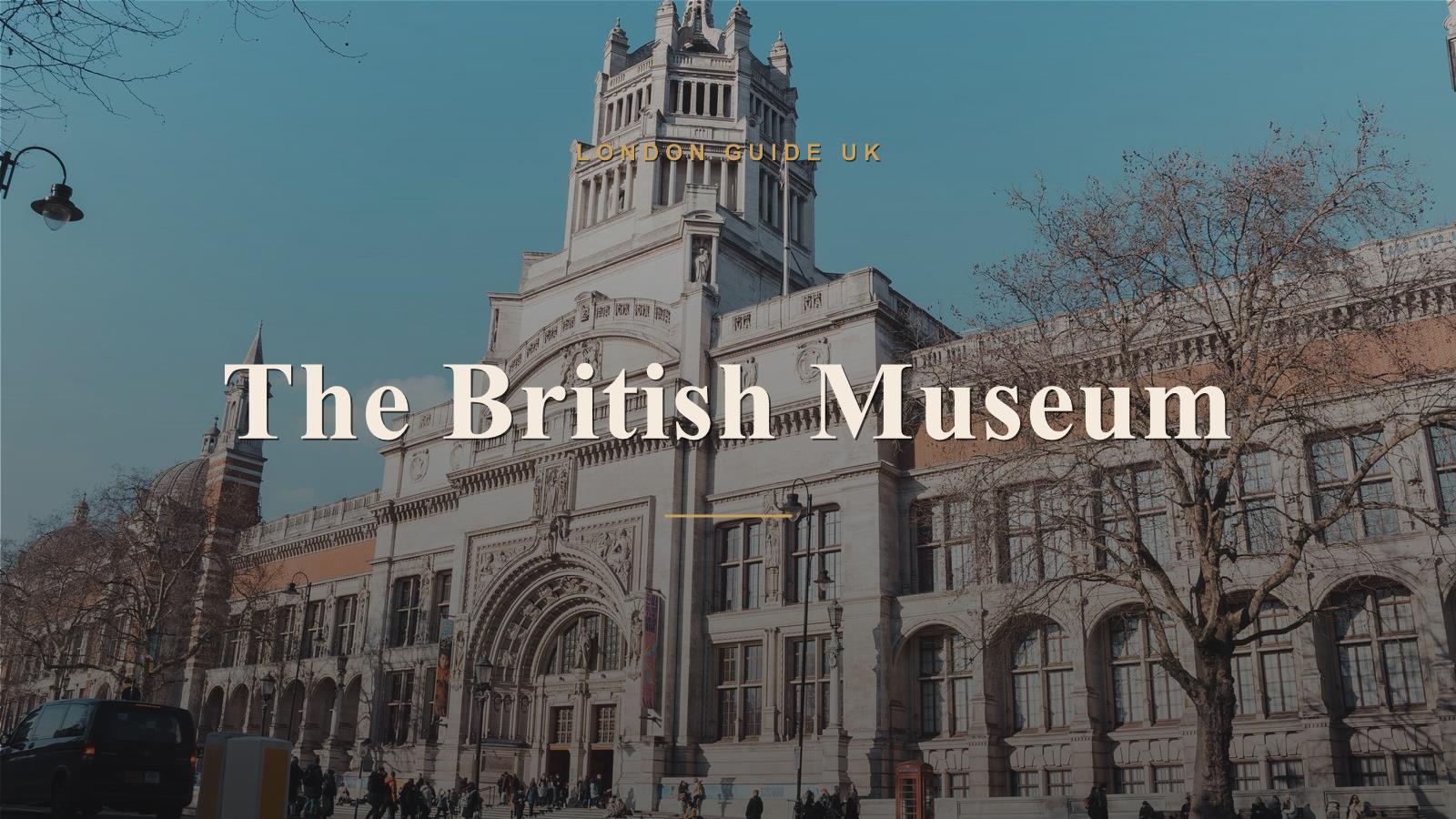
The British Museum is the United Kingdom's grandest treasury of human history, set within an austere neoclassical building in Bloomsbury, central London. Founded in 1753, it holds a collection spanning two million years of culture, from ancient Egypt and Mesopotamia to imperial China and the classical Mediterranean. For any visitor with curiosity about the wider world, it is among the most rewarding stops in the capital, and entry to the permanent collection is free.
Why visit The British Museum
The British Museum offers the single broadest survey of world civilisation available anywhere in London, all under one roof and free to enter. Its galleries trace humanity from prehistory to the present, holding objects of such fame that many visitors travel to London chiefly to see them. It rewards both the brief drop-in and the unhurried day.
Beyond the headline pieces, the museum's appeal lies in its breadth. You can walk from an Assyrian palace to a Japanese gallery in minutes, and the celebrated Great Court, with its sweeping glass-and-steel roof designed by Foster and Partners, gives the heart of the building a sense of light and scale found nowhere else in the city. It is a place that consistently makes the ancient world feel immediate.
What to see at The British Museum
The collection is vast, so most visitors do well to choose a handful of highlights rather than attempt everything. Among the most celebrated objects are these.
- The Rosetta Stone, the inscribed slab that allowed scholars to decipher Egyptian hieroglyphs, and one of the museum's most visited objects.
- The Parthenon Sculptures, the classical Greek marbles displayed in the purpose-built Duveen Gallery.
- The Egyptian mummies and funerary collection, among the finest outside Cairo, including richly painted coffins and grave goods.
- The Assyrian reliefs and Lamassu, the colossal winged human-headed bulls that once guarded Mesopotamian palaces.
- The Sutton Hoo treasures, including the celebrated Anglo-Saxon ship-burial helmet.
- The Lewis Chessmen, the intricately carved medieval gaming pieces found in the Outer Hebrides.
- The Great Court and the Reading Room, the architectural centrepiece at the building's core.
How to visit
The British Museum stands on Great Russell Street in Bloomsbury, in the WC1 district. The nearest Underground stations are Tottenham Court Road (Central and Elizabeth lines), Holborn (Central and Piccadilly lines), Russell Square (Piccadilly line) and Goodge Street (Northern line), each within a short walk. Numerous bus routes also serve the surrounding streets.
Entry to the permanent collection is free, though special exhibitions are usually ticketed and can sell out, so booking ahead is wise. The museum is busiest in the middle of the day and during school holidays; arriving early or later in the afternoon tends to be calmer. Large bags are restricted, and a security check operates at the entrances. For current opening hours, exhibition tickets and any visiting requirements, always check the official website before you travel, as these details change.
What's nearby
Bloomsbury is one of London's most walkable literary quarters, dense with garden squares, bookshops and academic institutions. A few minutes on foot brings you to Russell Square and the leafy gardens that give the area its character. The shops, cafes and theatres of Covent Garden lie a short stroll to the south, while the publishing houses and Georgian terraces around Bloomsbury Square reward an aimless wander.
Book lovers will find Charing Cross Road and its second-hand shops nearby, and the wider West End, with its galleries and restaurants, is within easy reach. The area makes a natural pairing with other cultural stops, so it slots neatly into a day exploring central London. See more options among our guides to the city's things to do and the surrounding neighbourhoods.
The British Museum FAQ
Is the British Museum free to enter?
Yes, entry to the permanent collection is free of charge, which is one of the museum's great strengths. Special temporary exhibitions usually carry a ticket price and can be very popular, so booking in advance is recommended. Donations towards the museum's upkeep are welcomed but entirely voluntary, and the main galleries remain open to all.
How long should I spend at the British Museum?
Allow at least two to three hours to take in the principal highlights without rushing, though enthusiasts could easily spend a full day. The collection is too large to absorb in one visit, so many regulars return repeatedly to explore different galleries. Choosing a few rooms in advance helps you make the most of a shorter stay.
Where is the Rosetta Stone in the British Museum?
The Rosetta Stone is displayed in the Egyptian sculpture gallery on the ground floor, a short walk from the Great Court. It is among the most popular objects in the building, so it often draws a crowd. Layouts can change, so it is worth picking up a museum map or checking the official website for its current location.
Do I need to book the British Museum in advance?
For the free permanent galleries, advance booking is not usually required, though arrangements can vary, so check the official website before you set out. Ticketed special exhibitions, by contrast, frequently sell out and should be booked ahead. Arriving early in the day generally means shorter queues at the security checks and a quieter experience overall.
Plan your visit
Use our wider guides to build the British Museum into a fuller day in the capital. Explore more of the city's collections through our guide to London's museums and galleries, browse the headline sights in our roundup of the best London attractions, and shape it all into a coherent route with our London itineraries.