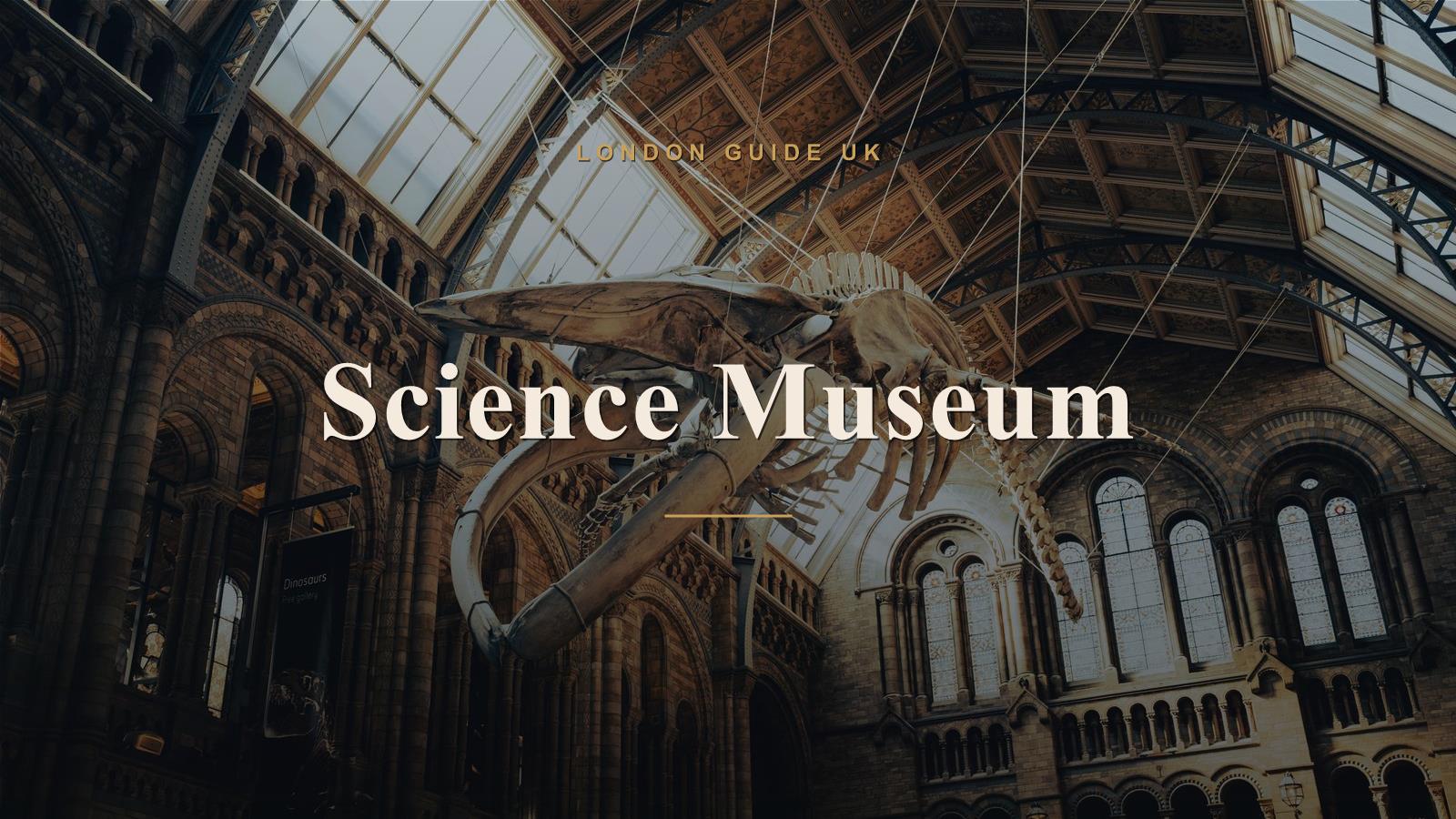
The Science Museum in South Kensington is one of London's great free institutions, a sprawling celebration of human ingenuity that traces the story of invention from the age of steam to the edge of space. Set on Exhibition Road within the capital's famous museum quarter, it holds a national collection of objects that shaped the modern world, presented across seven floors of galleries that range from quietly contemplative to gleefully hands-on. For the visitor, it offers a rare combination: serious cultural heft and genuine, unforced fun, all without an admission charge.
Why visit Science Museum
The Science Museum is one of the few world-class museums where you can stand beside a genuine steam locomotive, trace the invention of the modern world, and let children loose on interactive galleries, all for free. It rewards the curious visitor with depth and spectacle in equal measure. Few places in London tell the human story of progress so vividly, from early industry to medicine, communication and spaceflight, and it does so with clarity that suits newcomers and specialists alike. The objects on display are the real thing rather than replicas, which gives the galleries a quiet authority. Whether you have an hour between appointments or a full rainy afternoon to fill, the museum scales gracefully to the time you have.
What to see
The collection is vast, so it helps to arrive with a short list of highlights in mind. Among the objects and galleries most visitors single out are these.
- Exploring Space, where rockets and spacecraft, including a full-size replica of the Eagle lunar module, hang overhead in the entrance galleries.
- Making the Modern World, a single grand hall gathering landmark machines such as Stephenson's Rocket and the Apollo 10 command module that carried astronauts around the Moon.
- Information Age, which charts two centuries of communication, from the telegraph to the modern network, around a towering historic radio mast.
- Wonderlab: The Equinor Gallery, an interactive space of live demonstrations and experiments that delights younger visitors (a charge usually applies here).
- Medicine: The Wellcome Galleries, an extensive look at the history and science of health and the human body.
- The IMAX cinema, showing science and nature films on a giant screen (a separate ticket is required).
- Energy Hall, home to historic steam engines that powered Britain's industrial age.
Permanent galleries are free to enter, while a handful of special exhibitions, the IMAX cinema and certain interactive attractions carry a separate charge. It is always worth checking which of these you would like to add to your visit in advance.
Getting there
The Science Museum stands on Exhibition Road in South Kensington, in the heart of London's cultural quarter. The nearest Underground station is South Kensington, served by the District, Circle and Piccadilly lines, a short walk away via the pedestrian subway that connects the station to the museums. Several bus routes also stop nearby. The museum is free to enter for its permanent galleries, though some special exhibitions and attractions are ticketed. It is a popular destination, particularly at weekends and during school holidays, so arriving early or later in the day tends to make for a calmer visit. For current opening times, ticketed exhibitions and any booking requirements, check the official Science Museum website before you travel, as these can change.
What's nearby
South Kensington is one of the densest concentrations of culture in the city, and the Science Museum sits within a few minutes' walk of two other national institutions. The Natural History Museum, with its celebrated cathedral-like hall and natural world collections, is its immediate neighbour, while the Victoria and Albert Museum, the world's leading museum of art and design, is just across Exhibition Road. A short stroll north brings you to Hyde Park and Kensington Gardens, while the boutiques and cafes of Kensington and Knightsbridge lie within easy reach. The area makes an ideal base for a day built entirely around discovery. Explore more of the capital's collections on our guide to London's museums, or plan a wider day around the district's attractions.
Science Museum FAQ
Is the Science Museum free to enter?
Yes, entry to the permanent galleries is free, which is part of what makes the museum such a generous day out. A small number of special exhibitions, the IMAX cinema and certain interactive attractions carry a separate charge. Check the official website for details of what is ticketed during your visit and whether booking is advised.
What is the nearest Underground station?
South Kensington is the closest station, served by the District, Circle and Piccadilly lines. From there a covered pedestrian subway leads directly towards the museums, keeping you out of the weather. The walk takes only a few minutes, and clear signage along Exhibition Road guides you to the entrance.
How long should I spend at the Science Museum?
It depends on your interests, but most visitors find two to three hours covers the principal galleries comfortably. Enthusiasts and families with children could easily fill a full day, particularly with the interactive galleries and the IMAX cinema. If time is short, focus on a few key halls rather than attempting to see everything in one visit.
Is the Science Museum suitable for children?
Very much so. The museum is one of London's most family-friendly attractions, with hands-on galleries designed to make science tangible and engaging for younger visitors. The interactive Wonderlab gallery is especially popular, though it usually carries a charge. Older children and adults will find plenty to absorb across the historic and contemporary collections too.
Plan your visit
The Science Museum pairs naturally with the other great collections of South Kensington, so it is worth building it into a longer cultural day. Browse our full guide to London's museums to plan a route through the city's finest institutions, see what else fills a memorable day among the capital's things to do, and read more about the elegant streets and squares of the surrounding neighbourhoods before you set out.