Last updated:
The London Eye is the single most direct way to understand how London fits together. Rising from the South Bank of the River Thames, opposite the Palace of Westminster, it lifts you slowly above the rooftops for a calm, panoramic survey of the city. This guide is for the discerning visitor who wants the view to mean something: where to look, when to go, which ticket suits your plans, and how to weave the ride into a wider day along the river.
What the London Eye is and why it matters
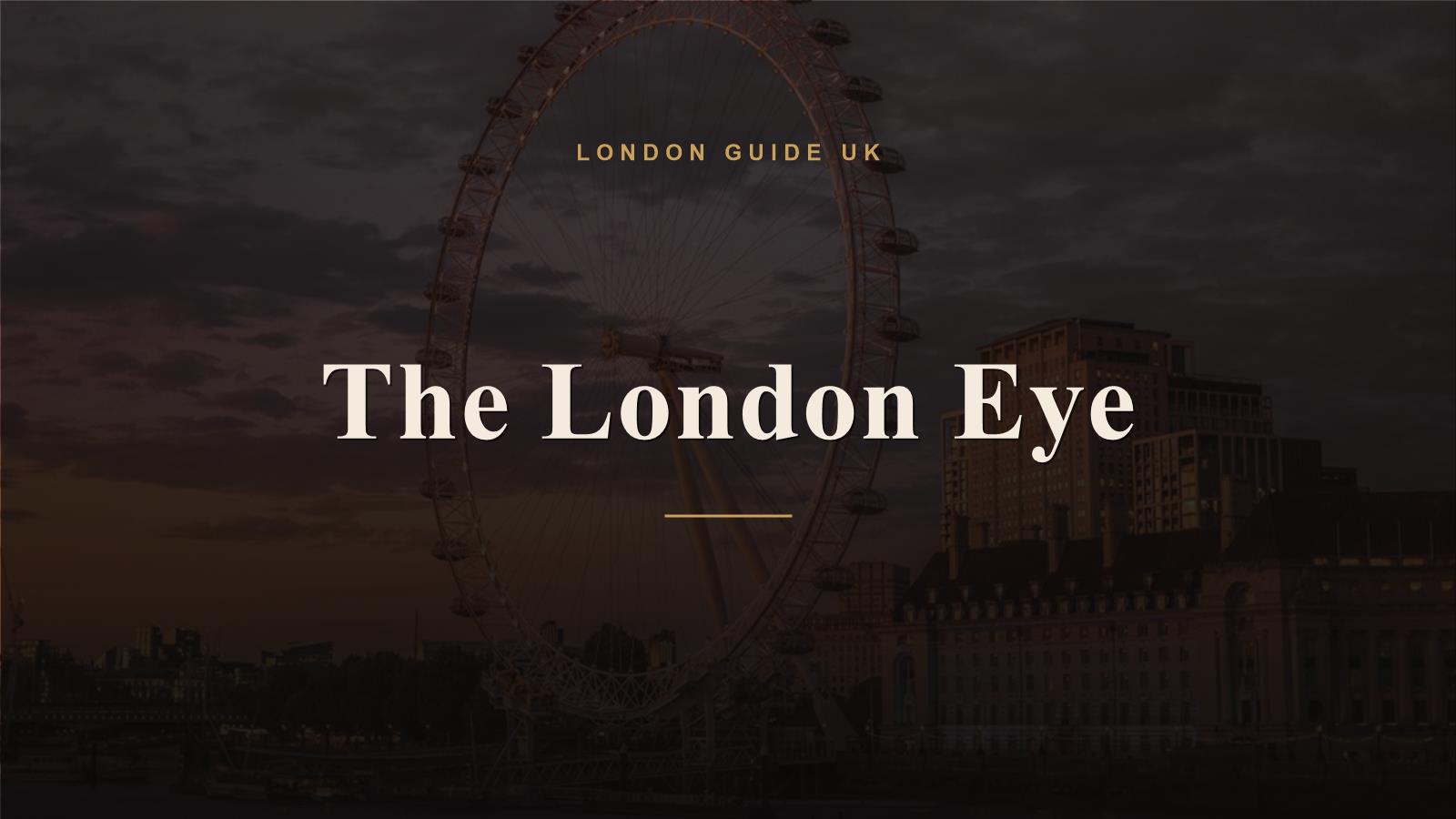
The London Eye is a giant cantilevered observation wheel on the South Bank, carrying enclosed glass capsules in a slow, continuous rotation high above the River Thames. Opened to mark the millennium, it quickly became one of the defining features of the central London skyline and the city's most popular paid attraction for first-time visitors seeking orientation.
Unlike a tower with a fixed deck, the wheel turns gently throughout your visit, so the panorama shifts as you rise and descend. The capsules are sealed and climate controlled, with seating in the centre and room to move freely from one side to the other. A single full revolution gives you a measured, unhurried sweep across the whole of central London.
What you can see from the top
From the top of the London Eye you can see across central London and, on a clear day, far beyond the city centre. The view takes in the River Thames as it curves through the capital, the towers of Westminster directly opposite, the spread of the West End and the City, and a horizon that on the clearest days reaches well into the surrounding countryside.
Because the wheel sits on the river, the landmarks are unusually well framed. Look out for these as you turn:
- The Palace of Westminster and Big Ben and the Houses of Parliament, directly across the water.
- The dome of St Paul's Cathedral rising among the towers of the City.
- Buckingham Palace and the green expanse of St James's Park to the west.
- The river snaking east towards the financial districts and, in the distance, the cluster at Canary Wharf.
- Trafalgar Square, the rooftops of Covent Garden, and the spread of the West End.
The best time to go
The best time to ride the London Eye is either early in the day, soon after opening, or in the hour before dusk when the light softens and the city begins to glow. Mornings are quieter and clearer, while the approach to sunset rewards you with the rare pleasure of seeing London by day and by night within a single rotation.
A few practical pointers to time your visit well:
- Weekday mornings tend to be the calmest, with shorter queues and emptier capsules.
- Weekends, school holidays and warm summer evenings are the busiest periods.
- Check the forecast: visibility is everything, and a crisp, clear day is worth far more than a particular hour.
- Winter brings long, low light and early sunsets, so a late-afternoon ride can catch the city lights without staying out late.
Tickets and how to ride
To ride the London Eye, book a timed ticket in advance online, choosing a slot and, if you wish, a fast-track or premium option. Booking ahead secures your preferred time, usually costs less than buying on the day, and lets you skip the longest queues. A standard ticket gives one full rotation in a shared capsule.
The main ways to ride differ in speed of entry and exclusivity rather than in the view itself:
- Standard timed entry, with a short wait and a shared capsule, suits most visitors.
- Fast-track entry shortens the queue and is worth considering at peak times.
- Premium or private capsule experiences offer a quieter, more exclusive rotation for those who prefer space and calm.
- Combined tickets bundle the wheel with nearby South Bank attractions if you plan a fuller day.
Arrive a little before your slot, travel light, and be ready for airport-style security screening near the entrance.
Getting there and the South Bank around it
The London Eye stands on the South Bank beside Westminster Bridge, easily reached on foot or by Underground. Waterloo station, served by the Jubilee, Northern, Bakerloo and Waterloo and City lines, is a few minutes' walk away, while Westminster station across the river puts you on the Jubilee, District and Circle lines.
The wheel is the gateway to one of London's great riverside walks. From here the South Bank promenade leads past cultural landmarks and open views, making it easy to combine the ride with a longer stroll:
- Walk east along the river towards the Southbank Centre, the National Theatre and Tate Modern.
- Cross Westminster Bridge for Parliament, Whitehall and Trafalgar Square within easy reach.
- Continue downriver and you eventually approach the City, with the Tower of London and Tower Bridge further along the bank.
- Browse the riverside book market and food stalls that appear along the walkway in fine weather.
Making the most of your rotation
To get the most from the London Eye, treat the rotation as a slow, deliberate viewing rather than a quick photo stop. Move around the capsule as it turns, give each direction your attention, and save some moments simply to take in the scale of the city rather than viewing it all through a screen.
- Stand near the glass on the way up, then cross to the far side as you near the top for the opposite view.
- Photograph through clean glass at a slight angle to reduce reflections, and avoid pressing the lens flat against it.
- Pick out a single landmark and trace the streets around it to understand how the districts connect.
- If you suffer from a fear of heights, the gentle motion and enclosed capsule make it far more manageable than it looks.
The London Eye FAQ
How long does the London Eye take?
One full rotation on the London Eye takes around half an hour, turning slowly enough that you board and step off without it stopping. Allow extra time on top for security screening, the queue and photographs, so a complete visit comfortably fills the best part of an hour from arrival to departure.
Do you need to book in advance?
Booking in advance is strongly recommended. A timed online ticket secures your preferred slot, generally costs less than buying at the door, and lets you avoid the longest queues. Walk-up tickets are sometimes available, but at busy times you risk a long wait or missing your ideal hour of light entirely.
Is the London Eye worth it?
For a first visit, the London Eye is well worth it as an orientation. No other central viewpoint frames the river, Westminster and the City so clearly in one slow sweep. Choose a clear day and a good hour of light, and the ride becomes a memorable introduction to how the capital is laid out.
Is it suitable for children and wheelchair users?
Yes. The capsules are spacious, enclosed and step-free, with central seating, so the London Eye suits families with children and visitors using wheelchairs. The wheel slows for boarding where assistance is needed. As with any attraction, checking current accessibility arrangements when you book helps ensure a smooth arrival.
What is the highest viewpoint in central London?
The London Eye is among the highest accessible viewpoints in central London and the tallest on the South Bank, giving an open, panoramic survey of the city centre. Taller viewing platforms exist further east in the City and at Canary Wharf, but few match the wheel's central position over the Thames.
Where to go next
The view from the wheel is a perfect prelude to exploring the landmarks you have just picked out on the horizon. Continue with our guide to Big Ben and the Houses of Parliament directly across the river, climb to the galleries of St Paul's Cathedral, or browse the full collection of London attractions to plan the rest of your day.