Last updated:
Covent Garden is one of London's most rewarding shopping districts for the visitor who wants character as well as quality. Within a few compact, largely pedestrianised streets you will find a restored Victorian market hall, independent boutiques, established British heritage brands, beauty houses and flagship stores, all wrapped around a public piazza famous for its street performers. This guide explains where to shop, what each pocket of the area is known for and how to navigate it confidently.
What is Covent Garden known for shopping?
Covent Garden is known for combining a historic covered market with independent boutiques, British heritage labels and beauty flagships across a pedestrianised quarter in the West End. The central Market Building houses craft stalls and shops, while surrounding streets such as Neal Street, Floral Street and the spokes of Seven Dials hold fashion, footwear and lifestyle retailers.
The appeal is variety within walking distance. You can move from a long-established perfumer to a contemporary fashion flagship in minutes, with the piazza and its performers giving the area a theatrical, sociable mood that sets it apart from the high-street scale of Oxford Street.
The Market Building and the piazza
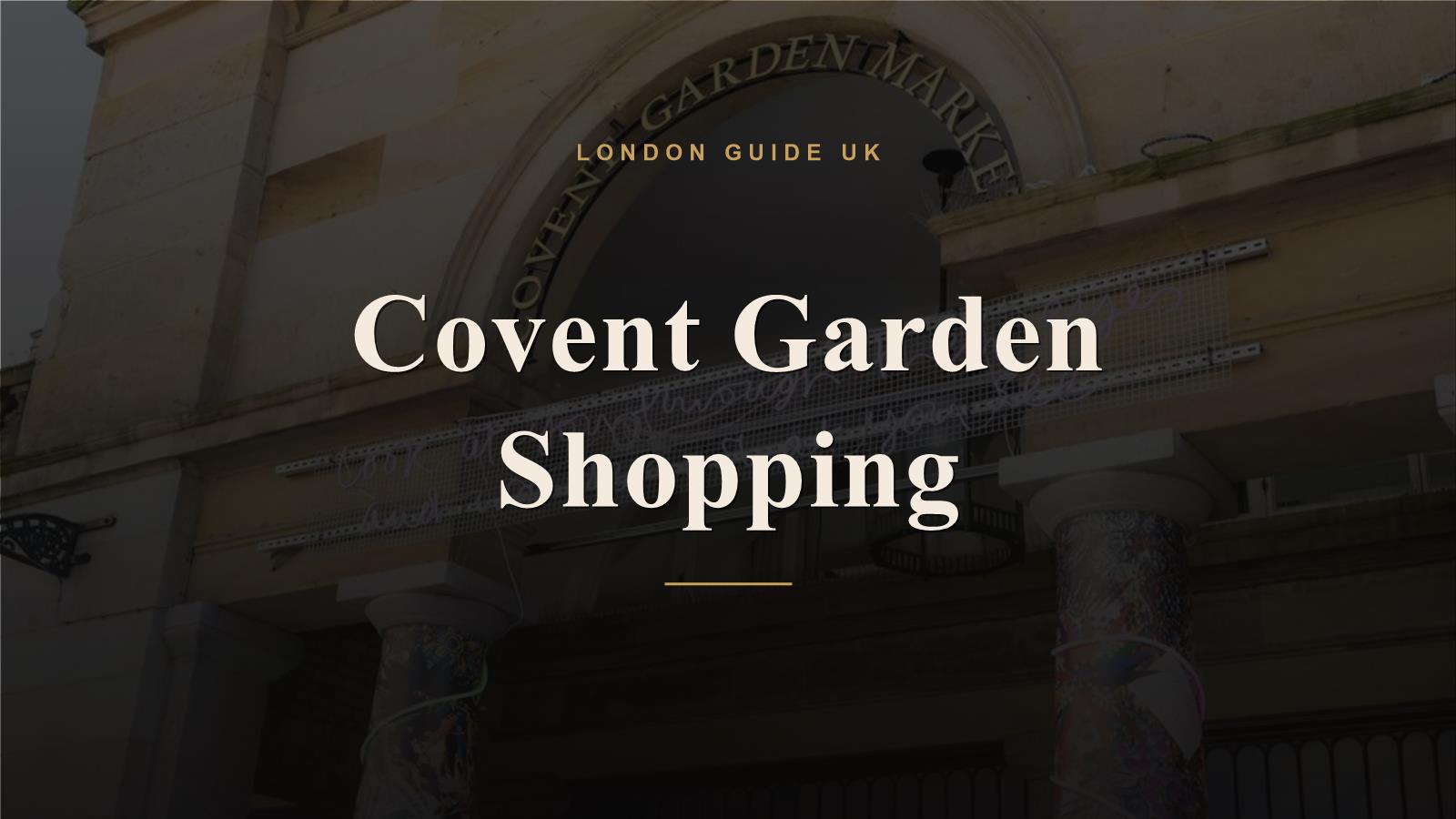
The Covent Garden Market Building is the restored 19th-century hall at the heart of the piazza, now divided into the Apple Market and the Jubilee Market, where stallholders sell crafts, jewellery, prints and antiques alongside permanent shops and cafes. It is the natural starting point, and the surrounding square is where street performers entertain crowds throughout the day.
The two main trading areas each have their own rhythm. Knowing the difference helps you time a visit around what you actually want to buy.
- Apple Market: inside the central hall, with handmade crafts, jewellery and design-led goods on most days and antiques traditionally featured on Mondays.
- Jubilee Market: on the south side, mixing antiques, general goods and arts and crafts depending on the day of the week.
- The piazza: the open square in front of St Paul's Church, long associated with licensed street performance and a focal point for photographs.
Neal Street, Seven Dials and Neal's Yard
Neal Street is the busy pedestrian spine running north from the market towards Seven Dials, lined with footwear, streetwear and lifestyle stores. It leads to Seven Dials, a distinctive junction where seven streets meet at a sundial pillar, and to the colourful courtyard of Neal's Yard, known for wellbeing and natural beauty.
This northern cluster is where Covent Garden feels most independent and browseable. The Seven Dials streets reward wandering rather than a fixed list.
- Neal Street: a strong run of shoe shops, casual fashion and accessories.
- Seven Dials: a hub of independent and emerging brands spread across Earlham Street, Monmouth Street and Mercer Street.
- Neal's Yard: a small, brightly painted courtyard associated with natural health, beauty and specialist food.
- Monmouth Street: known for boutiques and the area's reputation for good coffee.
Heritage brands and beauty flagships
Covent Garden is a strong place to find British heritage names and beauty houses, with several long-established perfumers, apothecaries and lifestyle brands maintaining shops in and around the piazza and on Floral Street. The area suits visitors looking for distinctive, often London-rooted labels rather than purely international chains, making it a refined complement to the city's luxury enclaves.
For travellers building a wider luxury shopping itinerary, Covent Garden pairs well with the grander stores of Harrods and Knightsbridge, offering a more intimate scale of heritage retail. The Royal Opera House on the eastern edge also lends the quarter a cultural anchor worth combining with a shopping visit.
Markets, vintage and one-off finds
Beyond the fashion flagships, Covent Garden rewards shoppers hunting for crafts, antiques and unusual gifts, chiefly through the Apple and Jubilee markets and the independent boutiques of Seven Dials. The antiques trading days in particular draw collectors, while small specialist shops scattered through the area carry prints, jewellery and design pieces that you will not find on a standard high street.
If your interest is in pre-loved and characterful pieces specifically, it is worth widening the net to other parts of the city. Our guide to vintage shopping in London covers the districts best suited to that pursuit, and you can browse more open-air trading through the wider London markets hub.
Getting there and practical tips
Covent Garden is served by its own Underground station on the Piccadilly line, though the small station and lifts can become very busy, so many visitors prefer to walk from nearby Leicester Square, Holborn, Charing Cross or Tottenham Court Road. The district is largely pedestrianised, compact and best explored on foot.
- Arriving: consider exiting at Leicester Square or Holborn and walking in, especially at peak times, to avoid queues for the station lifts.
- When to go: mornings are calmer for browsing, while afternoons bring the largest crowds and the liveliest street performances.
- On foot: the piazza, Neal Street and Seven Dials are all within a short, flat walk of one another.
- Combine it: pair shopping with the surrounding theatres, the Royal Opera House and the nearby galleries of the West End.
Covent Garden Shopping FAQ
Is Covent Garden good for shopping?
Yes. Covent Garden is one of central London's most enjoyable shopping areas, combining a historic covered market with independent boutiques, British heritage brands and beauty flagships, all within a compact, pedestrianised quarter. The street performers and piazza add atmosphere, making it as much an experience as a place to buy.
What is the difference between the Apple Market and Jubilee Market?
The Apple Market sits inside the central Market Building and focuses on handmade crafts, jewellery and design goods, with antiques traditionally featured on Mondays. The Jubilee Market lies on the south side of the piazza and rotates between antiques, general goods and arts and crafts depending on the day of the week.
Which Underground station is best for Covent Garden?
Covent Garden has its own station on the Piccadilly line, but it is small and often crowded, with lifts rather than escalators. Many visitors find it quicker to walk from Leicester Square, Holborn, Charing Cross or Tottenham Court Road, all of which are only a short stroll from the piazza.
Is Covent Garden expensive for shopping?
Covent Garden spans a broad range. You will find heritage brands, beauty houses and design-led boutiques at premium prices, alongside more affordable craft stalls, casual fashion on Neal Street and independent finds around Seven Dials. The mix means it suits both serious shoppers and those simply browsing for a gift.
Is Covent Garden walkable from other shopping areas?
Yes. Covent Garden sits in the heart of the West End and is within walking distance of the theatres, Leicester Square and Soho, with Oxford Street and Regent Street reachable on foot or one short Tube ride away. This makes it easy to fold into a wider day of central London shopping and sightseeing.
Where to go next
Continue planning with the main London shopping hub, then explore the contrasting scale of Oxford Street or the indoor options in our guide to London shopping centres. For pre-loved treasures, see vintage shopping in London.