Last updated:
Oxford Street is the spine of London's West End retail, a mile and a half of flagship stores, department halls and high-street giants running between Marble Arch and Tottenham Court Road. This guide is for the visitor who wants to navigate it efficiently rather than be swept along by the crowds: where the genuine landmarks are, how it connects to the smarter streets on either side, and when to arrive so the experience rewards rather than exhausts.
What is Oxford Street known for?
Oxford Street is widely described as Europe's busiest shopping street, lined with hundreds of shops along its length in central London. It is best known for its concentration of flagship stores, department stores led by Selfridges, and the seasonal Christmas lights, drawing huge numbers of visitors year round.
The street is a destination in its own right and a convenient base for exploring the wider West End. It is high street rather than luxury in character, though its scale and the quality of its anchor stores keep it on every first-time visitor's list. The two halves have slightly different personalities: the eastern stretch near Tottenham Court Road is busier and more youthful, while the western end towards Marble Arch holds the grandest buildings.
- Large flagship stores for major British and international fashion brands
- Department stores, with Selfridges the headline name
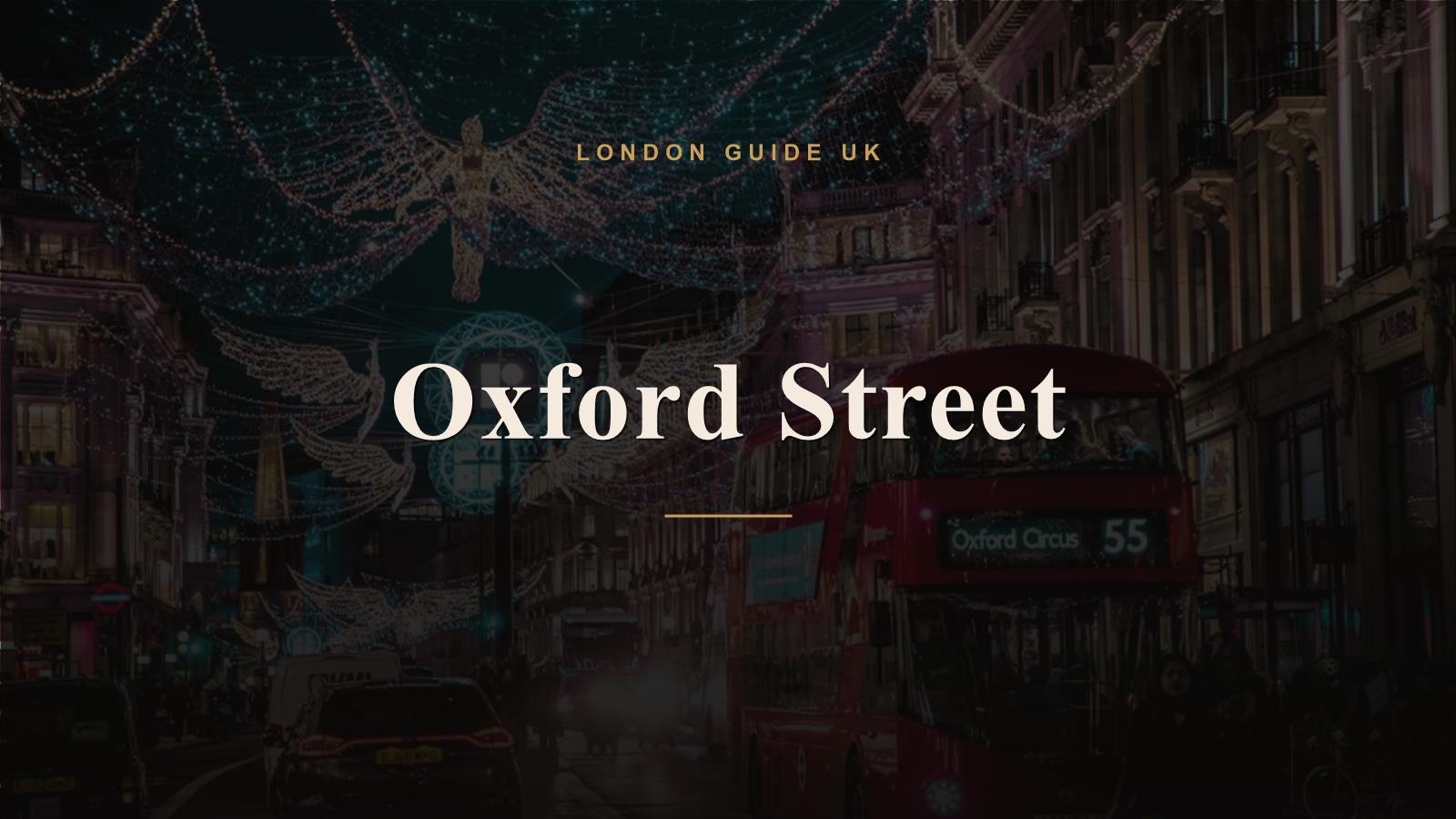
- The annual Christmas lights switch-on and festive window displays
- Easy onward access to Regent Street and Bond Street
Selfridges and the flagship stores
Selfridges is the anchor of Oxford Street, a grand department store at the Marble Arch end famous for its monumental facade, elaborate window displays and sprawling fashion, beauty and food halls. Around it sit the flagship stores of the country's biggest high-street names, making this the place to find the largest branches under one roof.
Founded by the American retailer Harry Gordon Selfridge in the early twentieth century, Selfridges helped invent the modern idea of shopping as entertainment. Its food hall and beauty floors are worth a visit even if you buy nothing. Beyond it, the street is essentially a parade of flagships, which means generous floor space, full ranges and the latest collections rather than the edited selections you find in smaller branches.
- Selfridges for department-store browsing, beauty and a celebrated food hall
- Flagship fashion and high-street stores along the central and eastern stretch
- Larger format stores carrying fuller ranges than suburban branches
- For more department-store grandeur, pair it with Harrods and Knightsbridge
Regent Street and Bond Street nearby
Regent Street and Bond Street sit immediately south of Oxford Street and are easily combined with it. Regent Street, with its sweeping curve and uniform architecture, holds heritage stores and global flagships, while Bond Street is London's address for luxury houses, jewellers and art galleries. Together they form a natural shopping circuit.
The practical move is to treat the three streets as one quarter. Oxford Circus is the crossing point where Oxford Street meets Regent Street, and a short walk down Regent Street brings you to the elegant arcades and shopfronts that lead towards Piccadilly. Bond Street, split into Old and New Bond Street, runs parallel a little to the west and is where the luxury maisons cluster, so step off Oxford Street here when you want a quieter and more refined pace.
- Regent Street for heritage stores, flagships and grand architecture
- Bond Street for luxury fashion, fine jewellery and galleries
- Oxford Circus as the natural pivot between Oxford Street and Regent Street
- Carnaby Street, just east of Regent Street, for independent and lifestyle brands
When is the best time to visit Oxford Street?
The best time to visit Oxford Street is a weekday morning soon after the shops open, when the pavements are clearest and staff have most time. Weekends, school holidays and the run-up to Christmas are the busiest by far, so avoid those windows if crowds tire you, and aim for early in the day whatever the season.
Late November through December brings the famous Christmas lights and festive windows, which are a spectacle but draw the heaviest crowds of the year. The January sales period is another high point for shoppers chasing discounts. If you simply want to see the street at its calmest, a mid-week morning outside the holidays is ideal, leaving the afternoon free for the quieter luxury streets nearby.
- Weekday mornings for the thinnest crowds and best service
- Late November to December for the Christmas lights and window displays
- The January sales for the keenest discounts
- Avoid Saturday afternoons and school holidays if crowds bother you
Getting there and getting around
Oxford Street is exceptionally well served by the Underground, with four stations along or beside it: Marble Arch, Bond Street, Oxford Circus and Tottenham Court Road. Bond Street and Tottenham Court Road also sit on the Elizabeth line, making the street one of the easiest places in London to reach from across the city.
Oxford Circus is the central station and the most useful if you want to start in the middle and walk in either direction. The street itself is largely pedestrian-friendly and traffic is restricted to buses, taxis and cycles along much of it, so the most pleasant way to cover the distance is simply on foot, dipping south into the side streets whenever the main drag feels overwhelming.
- Marble Arch, Bond Street, Oxford Circus and Tottenham Court Road serve the street
- Bond Street and Tottenham Court Road connect to the Elizabeth line
- Oxford Circus is the most central starting point
- Walk the length and detour into Regent Street, Bond Street and Carnaby Street
How to shop Oxford Street like a local
To shop Oxford Street well, treat it as a hub rather than the whole trip: hit the flagships and Selfridges early, then escape the crowds by heading into the calmer streets around it. Decide in advance which stores you actually want, keep valuables secure in the crush, and pace yourself with breaks off the main thoroughfare.
The street rewards a plan. Because the big names all have flagships here, you can compare and buy in one focused stretch, then use the side streets for character and breathing space. The covered arcades and squares of the wider West End offer a change of tempo, and many visitors find a half day on Oxford Street is plenty before moving on to somewhere more relaxed.
- Start early and prioritise the stores you came for
- Use Selfridges as a one-stop browse across fashion, beauty and food
- Step into side streets when crowds peak, then return refreshed
- Keep bags and pockets secure in the busiest pinch points
- Browse our London shopping guides to plan a fuller day
Oxford Street FAQ
How long should I spend on Oxford Street?
Most visitors find a half day is enough to walk the length, browse the flagships and explore Selfridges. If you intend to shop seriously or combine it with Regent Street and Bond Street, allow a full day, ideally starting in the morning before the crowds build to their peak.
Is Oxford Street good for luxury shopping?
Oxford Street is high street rather than luxury, anchored by department stores and flagship chains. For luxury houses, fine jewellery and designer boutiques, walk a few minutes to Bond Street, or visit Harrods and Knightsbridge. Selfridges bridges the two, carrying premium fashion and beauty alongside more accessible brands.
Which Underground station is best for Oxford Street?
Oxford Circus is the most central station and a good place to start, with the street running east and west from there. Choose Marble Arch or Bond Street for the Selfridges end, and Tottenham Court Road, which also serves the Elizabeth line, for the eastern stretch nearest Soho and Covent Garden.
When are the Oxford Street Christmas lights on?
The Christmas lights are typically switched on in November and remain lit through the festive season into the new year. They are among London's most famous seasonal displays and draw very large crowds, so visit on a weekday evening if you can and expect the area to be at its busiest in December.
Is Oxford Street safe for tourists?
Oxford Street is a busy, well-policed central thoroughfare and is generally safe for visitors. As in any crowded place, the main risk is opportunistic pickpocketing, so keep bags closed, wallets and phones secure, and stay aware of your surroundings in the densest crowds, particularly around station entrances and the busiest store doorways.
Where to go next
Plan the rest of your retail day with our London shopping guides. For grand department-store browsing head to Harrods and Knightsbridge, explore the cobbled lanes and piazza of Covent Garden shopping, or seek out one-off finds with our guide to vintage shopping in London.