Last updated:
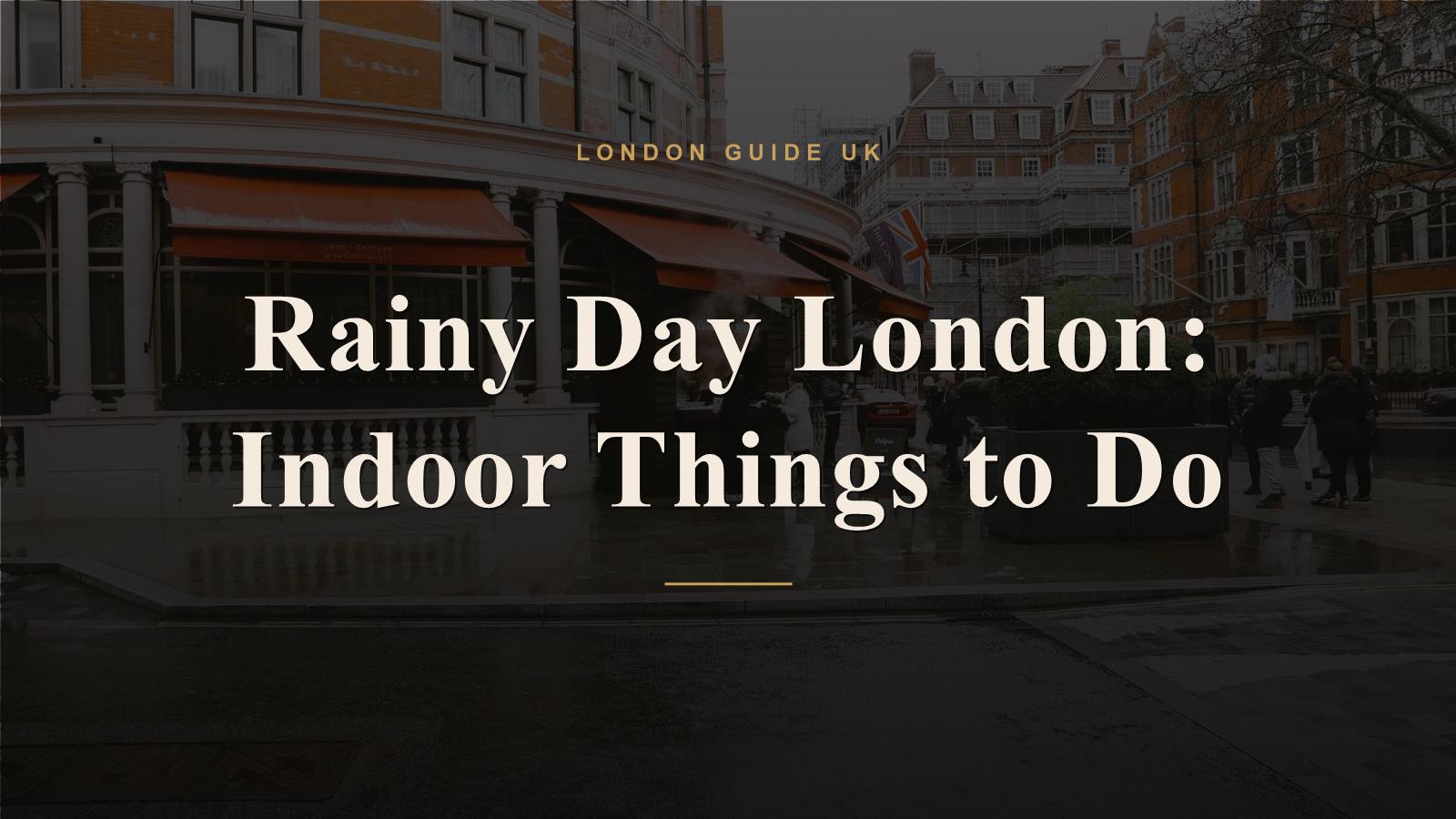
London does its best work under grey skies. A wet afternoon is not a setback but an invitation to step inside the city's great cultural institutions, its glass-roofed arcades and its covered markets, where the rain becomes a distant percussion on the roof. This guide is for the discerning visitor who wants more than a place to shelter: a properly considered day of museums, galleries, grand interiors and serious shopping, with the practical detail to move between them without getting soaked.
The free national museums
London's national museums charge no admission for their permanent collections, which makes them the natural anchor of any rainy day. The British Museum in Bloomsbury, the National Gallery on Trafalgar Square and the great trio in South Kensington can each absorb hours without you noticing the weather at all.
South Kensington is the single best wet-weather address in the city, with three world-class institutions clustered together and linked to the Underground by a covered subway from the station. You can spend a full day there without stepping outdoors.
- Victoria and Albert Museum, the national museum of art, design and performance, with sculpture courts, fashion galleries and a glorious tiled cafe.
- Natural History Museum, famous for its cathedral-like Hintze Hall and its dinosaur collection, a reliable hit with all ages.
- Science Museum, hands-on and absorbing, strong on space, flight and the history of invention.
- British Museum, home to the Rosetta Stone and the Parthenon sculptures beneath Norman Foster's Great Court roof.
Galleries to lose an afternoon in
London's art galleries reward slow, unhurried looking, exactly the pace a rainy day encourages. The riverside Tate Modern in a former power station and the National Gallery on Trafalgar Square are both free to enter, while smaller house-museums offer a more intimate, weatherproof pleasure.
Beyond the obvious giants, the city is full of compact collections where you can sit, dry off and look properly. These suit visitors who prefer one masterpiece studied closely to ten galleries rushed.
- Tate Britain in Pimlico for British art and the world's greatest Turner collection.
- The Courtauld Gallery at Somerset House, a jewel-box of Impressionist and Post-Impressionist painting.
- The Wallace Collection in Marylebone, an aristocratic townhouse hung with old masters, plus a covered courtyard restaurant.
- Sir John Soane's Museum in Holborn, the architect's own house preserved exactly as he left it, atmospheric and free.
Grand arcades and covered shopping
The Victorians built handsome glass-roofed arcades precisely so that elegant shopping could carry on whatever the weather. Burlington Arcade, running off Piccadilly, is the most famous, a covered parade of jewellers, cashmere and leather still patrolled by its top-hatted Beadles. It remains one of the most civilised places in London to be when it pours.
For sustained dry browsing, the great department stores and a handful of nearby arcades let you wander for hours under cover. They are concentrated in Mayfair and Knightsbridge.
- Fortnum & Mason on Piccadilly, the grand grocer with its tea hall and food halls.
- Liberty near Carnaby Street, a mock-Tudor emporium famous for prints, fabrics and homeware.
- Harrods in Knightsbridge, vast enough to be a rainy day in itself, with its tiled Egyptian Hall and food halls.
- The Royal Arcade and Princes Arcade, smaller Victorian and Edwardian passages near Piccadilly for quieter browsing.
Covered markets that stay dry
Several of London's best markets sit under permanent roofs, so the trading carries on through any downpour. The piazza at Covent Garden shelters its Apple Market and Jubilee Market stalls beneath nineteenth-century iron and glass, with street performers, craft sellers and cafes all under cover. It is among the city's most enjoyable wet-weather wanders.
- Covent Garden Market for crafts, antiques and people-watching beneath the historic roof.
- Leadenhall Market in the City, a spectacular Victorian arcade of cobbles, ornate ironwork and painted ceilings.
- Old Spitalfields Market near Liverpool Street, largely covered, strong on design, vintage and food traders.
- Seven Dials Market in Covent Garden, an indoor food hall a short walk from the piazza.
For a fuller picture of where to browse and buy under cover, see our guides to London's markets and shopping.
Historic interiors and grand buildings
Some of London's finest experiences are entirely indoors by design: cathedrals, palaces and concert halls whose interiors are the whole point. A grey day flatters them, throwing the candlelight, stained glass and gilding into sharper relief. St Paul's Cathedral and Westminster Abbey are the obvious choices, both vast, both magnificent.
- St Paul's Cathedral, Wren's masterpiece, with its Whispering Gallery and dome interior.
- Westminster Abbey, the coronation church, dense with royal tombs and Poets' Corner.
- The Churchill War Rooms, the underground wartime bunker beneath Whitehall, completely weatherproof.
- Somerset House, whose neoclassical wings and galleries shelter exhibitions and cafes.
Planning a rainy day that flows
The trick to a good wet-weather day is clustering: pick one neighbourhood and stay within it, so you swap one roof for another rather than crossing the city in the rain. South Kensington, Trafalgar Square to Covent Garden, and Piccadilly to Mayfair each offer a full day within easy walking distance.
- Use the Underground generously; many central stations sit close to or directly beneath major attractions.
- Carry a compact umbrella and book timed entry to ticketed sights in advance, as queues lengthen when it rains.
- Build in long lunches and cafe stops; the city's museum restaurants are destinations in their own right.
- Visit popular free museums earlier in the day, when everyone else shares the same idea later on.
If the skies clear, our guide to the best walks in London will get you back outdoors, and families can pair these ideas with our family guide to London with kids.
Rainy Day London: Indoor Things to Do FAQ
What is the best free thing to do in London when it rains?
The national museums are the best free option, as their permanent collections charge no admission. South Kensington is ideal, with the Victoria and Albert Museum, Natural History Museum and Science Museum clustered together. The British Museum and National Gallery are equally rewarding and also free to enter.
Where can I shop indoors in London on a wet day?
Head for the Victorian arcades and grand department stores. Burlington Arcade off Piccadilly is covered and elegant, while Fortnum & Mason, Liberty and Harrods offer hours of dry browsing. Covered markets such as Leadenhall and Covent Garden let you wander among stalls without stepping into the rain.
Which London neighbourhood is best for a rainy day?
South Kensington is the strongest choice, with three major museums linked to the Underground by a covered subway. Trafalgar Square to Covent Garden and Piccadilly to Mayfair are also excellent, each offering galleries, shopping and historic interiors within a short, walkable radius that minimises time spent outdoors.
Are London markets open when it rains?
Many of London's best markets are covered and trade through any weather. Covent Garden, Leadenhall Market, Old Spitalfields Market and Seven Dials Market all sit under permanent roofs. Open-air street markets are more weather-dependent, so favour the covered options when the forecast looks unsettled.
How do I avoid getting soaked between attractions?
Cluster your day within a single neighbourhood so you move short distances between roofs, and lean on the Underground, as many central stations sit beside or beneath major attractions. Carry a compact umbrella, book timed entry in advance, and plan long indoor lunches to break up the day.
Where to go next
Browse more ideas on our things to do in London hub, swap rooftops for skyline panoramas with the best views in London, or lace up for the city's finest routes in the best walks in London.