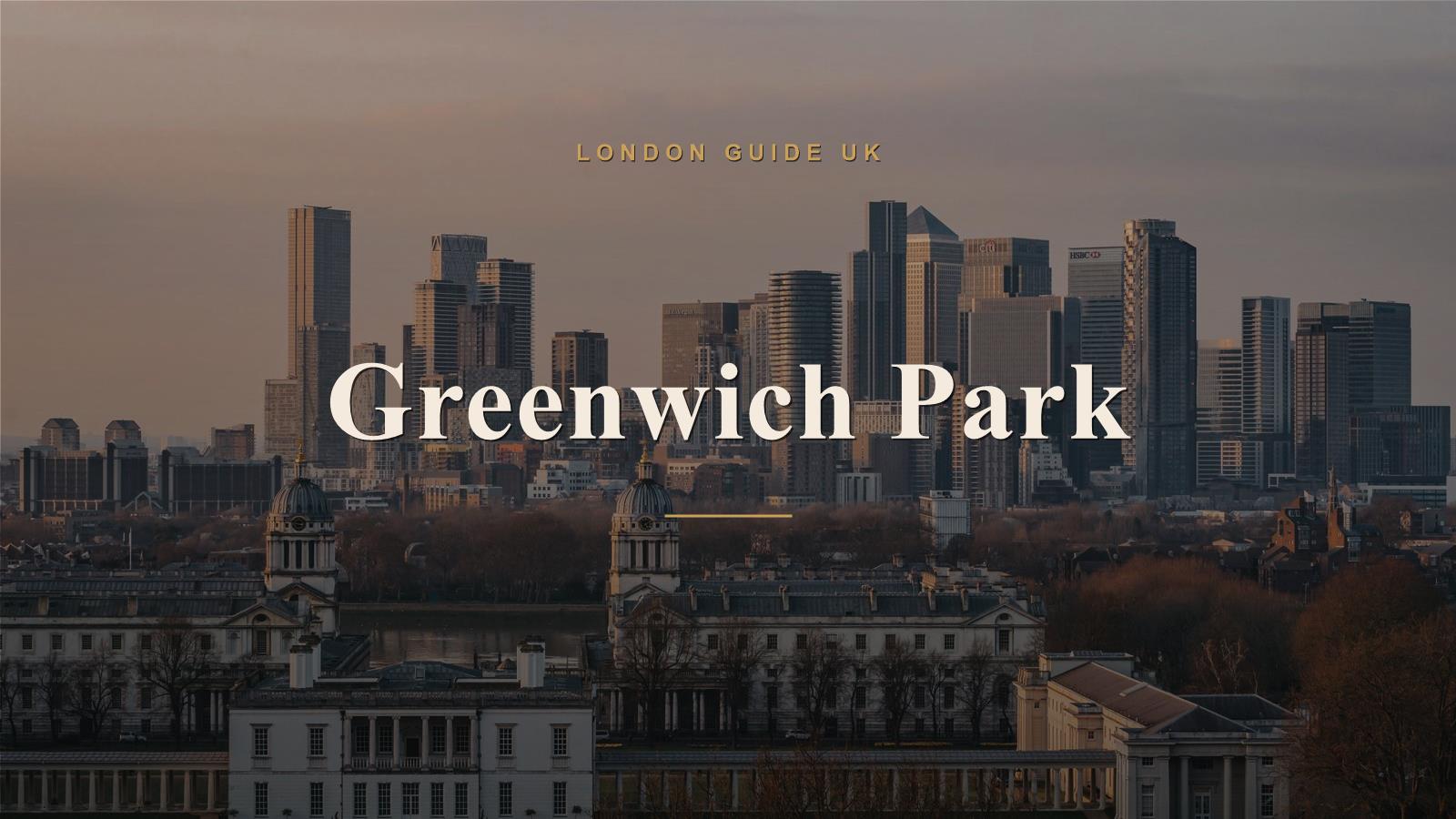
Greenwich Park is the oldest of London's enclosed Royal Parks, a sweeping expanse of grassland, ancient trees and formal avenues set on the south bank of the Thames in Greenwich, south east London. Rising steeply from the river to a crown of high ground occupied by the Royal Observatory, it rewards visitors with one of the capital's most celebrated panoramas, taking in the masts of the Cutty Sark, the white colonnades of the Old Royal Naval College and, beyond the river, the towers of Canary Wharf and the City. For the visitor it offers history, science, sport and open sky within a short journey of central London.
Why visit Greenwich Park
Greenwich Park is worth visiting because it combines a genuine Royal Park landscape with the home of the Prime Meridian and Greenwich Mean Time, all crowned by a hilltop view over the Thames to the City that ranks among the finest in London. Few green spaces pack so much heritage and outlook into one walk uphill.
The park covers some 180 acres and forms part of the Maritime Greenwich UNESCO World Heritage Site, a designation that recognises the extraordinary concentration of Stuart and Georgian architecture, royal history and scientific achievement gathered here. Originally enclosed as a royal hunting ground in the fifteenth century, it retains avenues laid out in the seventeenth century and a sense of designed grandeur that distinguishes it from London's more pastoral commons. A visitor can stand on the Meridian Line, watch the Thames slide past below and trace four centuries of British history in a single afternoon.
What to see in Greenwich Park
The park layers its attractions across the slope, with the great set pieces clustered at the summit and along the avenues. The most rewarding things to seek out include:
- The Royal Observatory, home to the Prime Meridian of the world, the Meridian Line, the historic Flamsteed House and a planetarium devoted to astronomy.
- The General Wolfe statue and viewpoint, the hilltop terrace that delivers the classic panorama over the river to Canary Wharf and the City.
- The Queen's House, an elegant Palladian villa designed by Inigo Jones, sitting below the hill at the park's northern edge.
- The Flower Garden and the ancient sweet chestnut avenues, planted with specimens dating back centuries.
- The Deer Park, an enclosed wilderness area where a herd of fallow and red deer has been kept for generations.
- The boating lake, bandstand and broad lawns, which make the lower park a relaxed spot for families and picnickers.
Getting there and how to visit
Greenwich Park sits in the heart of Greenwich, bordered by the town centre to the north and Blackheath to the south. The most convenient rail option is the DLR to Cutty Sark for Maritime Greenwich, a short walk from the park's northern gates. Greenwich and Maze Hill stations, served by National Rail from London Bridge and Cannon Street, are also close by, while the riverboat services to Greenwich Pier offer a memorable approach along the Thames. Note that the park lies south of the river and is not served directly by the Underground, so the DLR or rail is usually the simplest route.
The park itself is free to enter and open to the public, though paid attractions within it, such as the Royal Observatory and planetarium, have their own admission and timed entry. The walk to the summit is steep, so allow time and comfortable footwear. For current opening times, ticket prices and any seasonal access changes, visitors should always check the official Royal Parks and Royal Museums Greenwich websites before setting out. The park is a popular fixture among London's leading attractions, so weekends and summer afternoons can be busy at the viewpoint.
What's nearby
Greenwich rewards a full day of exploration beyond the park gates. At the foot of the hill stand the National Maritime Museum and the Queen's House, while the riverside is dominated by the baroque magnificence of the Old Royal Naval College, designed by Sir Christopher Wren, with its celebrated Painted Hall. The clipper Cutty Sark sits in dry dock beside the pier, and the covered stalls of Greenwich Market are a few minutes' walk away. Across the river, reached by the foot tunnel or cable car, lies the entertainment district around the dome at North Greenwich. Plan around these with our guides to London museums and the city's markets.
Greenwich Park FAQ
Is Greenwich Park free to enter?
Yes, Greenwich Park is a Royal Park and is free to enter and enjoy. However, certain attractions within its grounds, including the Royal Observatory and the planetarium, charge for admission and may require timed tickets. Check the official Royal Museums Greenwich website for current prices and booking before you arrive.
Where is the Prime Meridian in Greenwich Park?
The Prime Meridian, the line of zero degrees longitude, runs through the Royal Observatory at the top of the hill. Visitors can stand astride the marked Meridian Line within the Observatory courtyard, placing one foot in the eastern hemisphere and one in the western. Access to the courtyard line is part of the paid Observatory experience.
How do I get to Greenwich Park without the Underground?
The park is not on the Underground network, but it is easily reached by the DLR to Cutty Sark for Maritime Greenwich, or by National Rail to Greenwich or Maze Hill from central London. Riverboat services from piers such as Westminster also call at Greenwich Pier, giving a scenic arrival along the Thames.
What is the best view in Greenwich Park?
The finest view is from the terrace beside the General Wolfe statue, in front of the Royal Observatory at the top of the hill. From here the eye sweeps down over the Old Royal Naval College and the river to the towers of Canary Wharf and the City beyond. It is one of London's most photographed panoramas.
Plan your visit
Greenwich Park pairs naturally with a wider day in this corner of London. Browse more of the capital's attractions to build your itinerary, line up the area's outstanding museums, and see what else is on with our guide to the best things to do in London.