Last updated:
Tower Bridge is the great Victorian bascule bridge that spans the Thames beside the Tower of London, and for many visitors it is the single most recognisable structure in the city. This guide is for those who want more than a photograph from the riverbank. It covers the high-level glass floor walkways, the original steam engine rooms, when the bridge actually lifts, and where to stand for the best view.
What is Tower Bridge and why visit
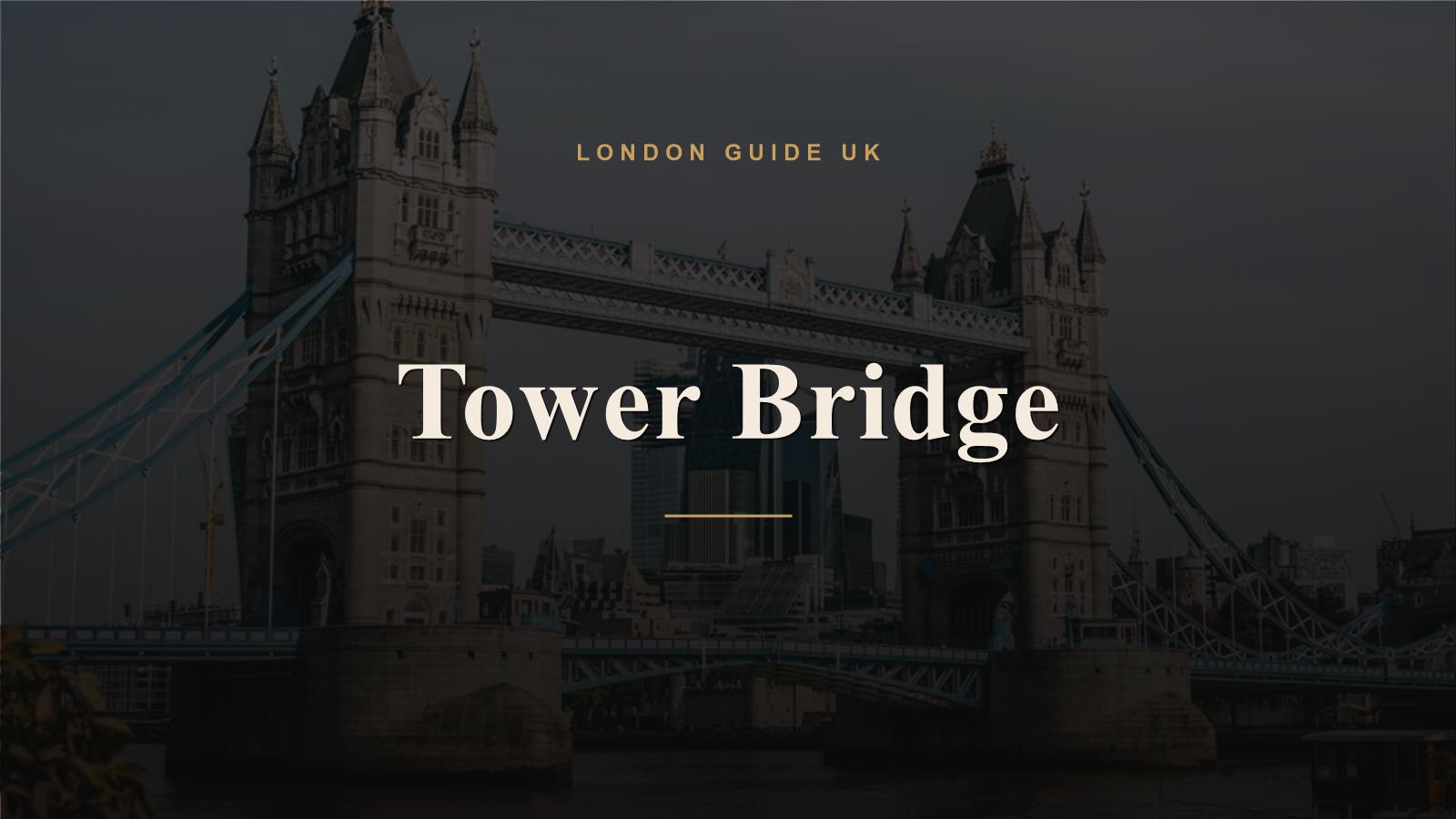
Tower Bridge is a combined bascule and suspension bridge that opened in the 1890s, designed so its two roadway sections, or bascules, can lift to let tall vessels pass. Visitors come for the engineering story, the high walkways with glass floors, and the panoramic views over the Thames and the City of London skyline.
It is often confused with London Bridge, the plainer crossing slightly upstream. Tower Bridge is the one with the two Gothic-style towers and the blue and white ironwork. The structure carries both road traffic and pedestrians, and a paid exhibition route takes you up into the towers, across the elevated walkways and down into the historic machinery below the southern approach.
The glass floor walkways
The high-level walkways sit between the two towers, around forty-two metres above the river, and were originally built so pedestrians could cross while the bascules were raised. Today they house glass floor panels that let you look straight down onto the road, the river traffic and, if your timing is right, a bridge lift happening directly beneath your feet.
The walkways are reached by lift and stairs from the north tower and offer two perspectives: one looking east towards Canary Wharf and the river as it widens, the other looking west across the Pool of London towards The Shard and the City. Useful things to know before you go up:
- The glass floor is a strip set into the walkway, not the entire surface, so nervous visitors can stand to the side.
- The walkways are fully enclosed and weatherproof, making them a reliable choice on a wet day.
- Looking down through the glass during a bridge lift is the rarest sight here, so check lift times before booking if that matters to you.
- The views pair naturally with a later stop at the nearby Tower of London.
The Victorian engine rooms
The engine rooms, on the south side of the bridge, hold the original steam-powered machinery that once raised the bascules. For decades, coal-fired boilers drove steam engines that pumped water into accumulators, storing the energy needed to swing the heavy roadway sections open. The preserved engines are a highlight for anyone interested in industrial heritage.
The bridge switched from steam to electro-hydraulic power in the twentieth century, but the Victorian engines have been kept and restored as part of the exhibition. Displays explain how the system worked and how the modern mechanism lifts the bascules today. The engine rooms are usually visited at the end of the route, after you descend from the south tower.
When does Tower Bridge lift
Tower Bridge lifts roughly several hundred times a year whenever a vessel tall enough to require clearance is due to pass. Lifts are requested in advance by river users, so the bridge operators publish a schedule of forthcoming lift times. Checking that list before your visit is the surest way to see the bascules in action.
A lift is brief, often only a few minutes from the moment the bascules begin to rise to the moment road traffic resumes, so punctuality matters. To watch one well:
- Consult the published lift schedule and arrive ten to fifteen minutes early to claim a viewpoint.
- The riverside walkways on either bank give a clear side-on view of the raised roadway.
- For a view from above, time a walkway visit to coincide with a scheduled lift.
- Tall ships and the occasional naval vessel draw the largest crowds, so expect company at those.
Best spots to photograph Tower Bridge
The most celebrated angle is from the south bank near Shad Thames and Butler's Wharf, where the bridge fills the frame with the river in the foreground. For a cleaner, lower viewpoint, the riverside path by St Katharine Docks on the north bank and the open space beside City Hall both deliver classic compositions across the water.
Light changes the bridge completely through the day, so the right spot depends on when you arrive. A few reliable choices:
- Butler's Wharf promenade for the postcard view, best in the afternoon when the sun is behind you.
- St Katharine Docks for foreground boats and a quieter setting on the north bank.
- The riverside near City Hall for a low, wide angle and reflections at dusk.
- From a Thames boat, for a moving perspective that includes the towers, the Tower of London and the wider river.
Getting there and planning your visit
The nearest Underground station is Tower Hill on the District and Circle lines, a short walk across the approach from the north bank. London Bridge station, served by the Jubilee and Northern lines and by National Rail, is the closest stop for the south side. River boat services and the Tower Pier add a scenic way to arrive.
Walking across the bridge itself is free at any time; the paid exhibition covers the walkways and engine rooms. Because the bridge sits within easy reach of several major sights, it slots neatly into a day spent along the river. A sensible pairing is the Tower of London on the north bank, with the South Bank walk leading west towards more of the city's headline attractions.
Tower Bridge FAQ
Is Tower Bridge the same as London Bridge
No. Tower Bridge is the ornate Victorian bascule bridge with two towers and blue ironwork, beside the Tower of London. London Bridge is a plainer modern crossing slightly upstream. The confusion is so common that many first-time visitors photograph one believing it is the other, so it helps to know the difference.
Do you have to pay to cross Tower Bridge
No. Walking or driving across the bridge on the lower roadway and pavement is free at any time. The ticket applies only to the exhibition, which takes you up into the towers, across the high-level glass floor walkways and down to the Victorian engine rooms on the south side.
How can I find out when the bridge will lift
Bridge lifts are scheduled in advance, because river vessels must request passage ahead of time. The operators publish a list of upcoming lift dates and times, so the most reliable approach is to consult that schedule before your visit and plan to arrive a little early to secure a viewing spot.
Is the glass floor walkway suitable for nervous visitors
Generally yes. The glass panels form a strip set into the walkway floor rather than the whole surface, so you can walk alongside on solid flooring and look down only if you wish. The walkways are fully enclosed and reached by lift, which suits those who would rather avoid stairs.
How long should I allow for a visit
Most visitors find an hour to ninety minutes comfortable for the full exhibition, taking in the towers, the walkways and the engine rooms without rushing. Allow extra time if you want to wait for a scheduled bridge lift or linger on the walkways for the views over the Thames and the City skyline.
Where to go next
Continue exploring with our wider London attractions guide, or pair Tower Bridge with the neighbouring Tower of London just across the road on the north bank. For more riverside landmarks, our guides to St Paul's Cathedral and the London Eye round out a classic day along the Thames.